
S&P 500 Tumbles to Year-to-Date Low Amid Middle East Tensions

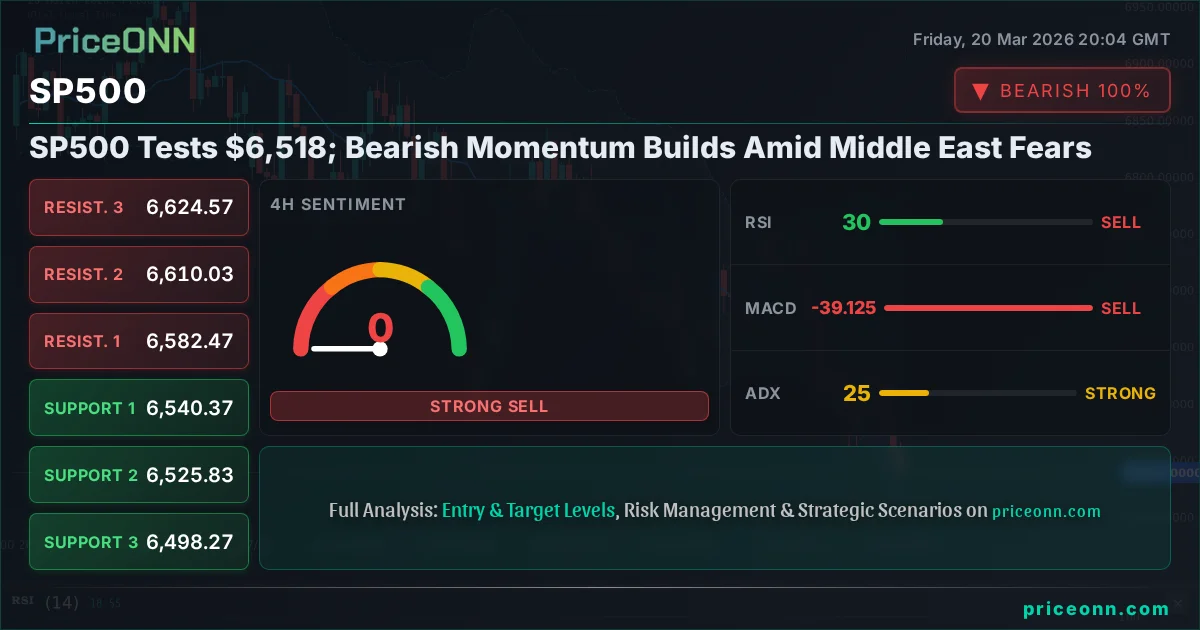
The S&P 500 index has breached the 6,570 level, reaching its lowest point of 2026. This significant move places the equity market on the cusp of its fourth consecutive weekly decline, with the index now trading below its crucial 200-day moving average.
Market Context
Yesterday's sharp decline saw the S&P 500 falter, breaking through a previously identified support channel. This downturn is occurring as the market grapples with a confluence of challenging factors. The immediate trigger appears to be the escalating conflict in the Middle East, which has sent shockwaves through global markets. Elevated oil prices, a direct consequence of these geopolitical developments, are fueling concerns about a resurgence of inflation. This, in turn, is leading market participants to anticipate that the Federal Reserve may maintain higher interest rates for an extended period, a scenario that typically weighs on economic growth and corporate profitability.
Analysis & Drivers
The primary driver behind the current bearish sentiment is the heightened geopolitical risk emanating from the Middle East. The ongoing military conflict has led to a substantial increase in crude oil prices, raising alarms about a potential inflationary spiral. This inflationary pressure is expected to influence the Federal Reserve's monetary policy decisions. Remarks from Fed officials, including those from Chair Powell this week, have reinforced the view that interest rates are likely to remain elevated for longer than initially anticipated. This prospect of sustained higher borrowing costs creates headwinds for businesses and can depress equity valuations. Furthermore, investors are increasingly worried about the possibility of a prolonged US involvement in the Middle East conflict, specifically with Iran. Despite official assurances aimed at calming market nerves, the uncertainty surrounding potential US military engagement is adding to market volatility. Statements from US officials, such as President Trump indicating no consideration of ground troops and Treasury Secretary Bessent suggesting potential internal collapse for the Iranian regime, aim to mitigate these fears. Similarly, remarks from Israeli Prime Minister Netanyahu about potentially refraining from further strikes on Iran's energy infrastructure offer a glimmer of hope for de-escalation, but the market remains cautious.
Trader Implications
From a technical perspective, the S&P 500's break below its established descending trendline and the new low at point B suggest strong selling pressure. The index has moved decisively below a previously identified channel boundary, indicating a potential shift in market momentum. Analysts note that the price action may have entered a Sell-Side Liquidity zone. This technical observation suggests that the recent bearish breakout below the channel could be a false signal, potentially leading to a sharp reversal. Traders should closely monitor key levels. A sustained move below the 200-day moving average at approximately 6,550 would confirm the bearish trend. Conversely, a reclaim of the 6,600 level could signal a short-term bounce. Given the uncertainty, risk management is paramount. Traders might consider strategies that protect against further downside while remaining alert for potential opportunities if the market sentiment shifts rapidly.
Outlook
The immediate outlook for the S&P 500 remains challenging as geopolitical tensions persist and the prospect of higher-for-longer interest rates looms. The market will be highly sensitive to any further developments in the Middle East and any new economic data that could influence the Federal Reserve's policy path. Investors should brace for continued volatility as the market digests these complex factors. The potential for a false bearish breakout offers a speculative opportunity for nimble traders, but broader market sentiment is likely to remain cautious until geopolitical risks subside and inflation trends become clearer.
Frequently Asked Questions
What is the current support level for the S&P 500?
The S&P 500 has fallen below the 6,570 level, its year-to-date low. A significant technical support level to watch is the 200-day moving average, currently around 6,550.
Why are stock markets experiencing a downturn?
The primary drivers are escalating geopolitical tensions in the Middle East, leading to higher oil prices and renewed inflation concerns. This is prompting expectations that the Federal Reserve will maintain higher interest rates for an extended period, impacting corporate performance and economic growth.
What is the outlook for the S&P 500 in the short term?
The outlook remains cautious, with potential for continued volatility. Traders should watch for a sustained break below 6,550, which would confirm a bearish trend. A reclaim of 6,600 could indicate a temporary rebound.
Track markets in real-time
Empower your investment decisions with AI-powered analysis, technical indicators and real-time price data.
Join Our Telegram Channel
Get breaking market news, AI analysis and trading signals delivered instantly to your Telegram.
Join Channel



PriceONN