Silver Price Forecast: XAG/USD weakens to $66.50, bears retain control below 100-day SMA
Silver's Volatile Session Under Pressure
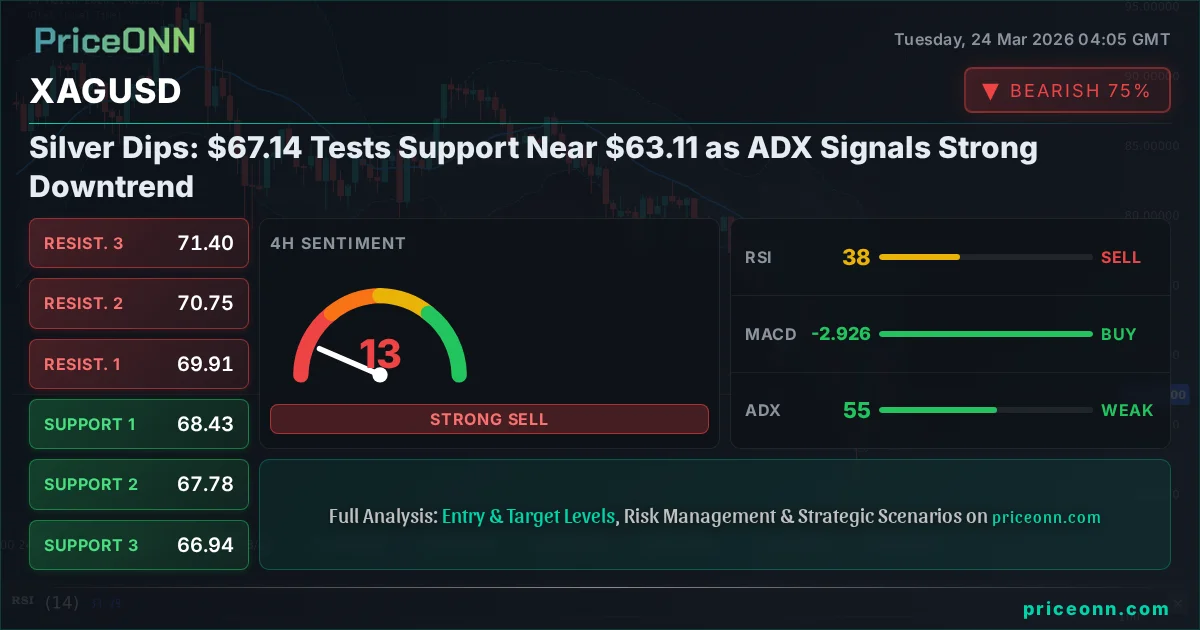
Silver is experiencing a challenging period, struggling to maintain upward momentum after a brief rebound from recent lows. The precious metal, often seen as a secondary safe haven and a diversifier to gold, found itself facing renewed selling pressure in early Asian trading on Tuesday. This pullback saw its value dip below the significant $66.50 level, a move that has allowed bearish sentiment to regain control of the market dynamics.
Yesterday's recovery attempt from the $61.00 mark, the lowest point observed since December 12th, proved short-lived. The bulls were unable to sustain the upward trajectory, and a fresh wave of supply emerged, capping further gains. This failure to capitalize on previous strength suggests underlying weakness in the current market structure for XAG/USD.
Understanding the Drivers of Silver's Value
The intricate dance of silver prices is influenced by a complex interplay of factors, extending beyond its role as a traditional store of value. While its historical significance is undeniable, traders often look to silver as a means to diversify portfolios, especially during periods of elevated inflation where its tangible asset status can offer a perceived hedge.
Investment vehicles like Exchange Traded Funds (ETFs) provide accessible avenues for market participants to gain exposure to silver's price movements on global exchanges. The metal's value is not solely dictated by investor sentiment; it also reacts to shifts in global stability. Periods of geopolitical unease or heightened recession fears can bolster silver's appeal as a safe haven, though typically to a lesser degree than gold.
As an asset that does not generate yield, silver's attractiveness often increases when interest rates are on the decline. Furthermore, the performance of the US Dollar plays a critical role; since silver is priced in dollars, a stronger dollar generally exerts downward pressure on its price, while a weaker dollar tends to provide a supportive tailwind for higher valuations.
Industrial Demand and Supply Dynamics
Beyond financial markets, silver's unique properties make it indispensable in various industrial applications. Its status as one of the most electrically conductive metals, surpassing even copper and gold in this regard, drives significant demand from sectors like electronics and solar energy. Consequently, surges in industrial activity or technological innovation can translate into increased demand for silver, potentially driving prices upward. Conversely, a slowdown in these key sectors can lead to reduced demand and put downward pressure on prices.
The supply side is also a crucial consideration. Unlike gold, silver is considerably more abundant, with mining operations and recycling rates playing a substantial role in overall availability. The economic health of major global players, particularly the United States and China, carries significant weight due to their large industrial bases that consume substantial quantities of silver. In India, consumer demand for silver, often linked to cultural practices and jewelry, also contributes to global price formation.
Historically, silver's price movements have often mirrored those of gold, given their shared safe-haven characteristics. The Gold/Silver ratio, a metric indicating how many ounces of silver are required to purchase one ounce of gold, offers insights into their relative valuations. A high ratio may suggest silver is comparatively undervalued, while a low ratio could imply gold is relatively cheaper.
Market Ripple Effects
The current weakness in the silver market, underscored by its retreat below the 100-day moving average, warrants attention from a broader market perspective. This price action is not occurring in a vacuum and carries implications for several related financial instruments and asset classes. Traders should monitor the performance of gold (XAU/USD) closely, as any sustained divergence or correlation breakdown could signal shifts in safe-haven demand. The trajectory of the US Dollar Index (DXY) remains a critical factor; a continued strengthening of the dollar could further suppress silver prices, while any signs of dollar weakness might offer some respite.
Furthermore, the industrial demand component cannot be overlooked. A prolonged downturn in silver prices, coupled with economic slowdowns in major manufacturing hubs like China, could signal broader industrial sector weakness. This might also cast a shadow over related industrial commodities and equity sectors, such as semiconductor manufacturers or renewable energy firms heavily reliant on silver's unique properties. Investors might also consider the performance of mining stocks, which often exhibit leveraged exposure to silver price movements.
The $61.00 level represents a significant recent low, and its defense will be crucial for any potential recovery. A decisive break below this point could open the door for further substantial declines, potentially attracting bargain hunters but signaling a deeper bearish trend. Conversely, a sustained move back above the 100-day moving average and the recent highs around $67.00 would be necessary to alleviate immediate bearish pressure and suggest a potential shift in sentiment.
Track markets in real-time
Empower your investment decisions with AI-powered analysis, technical indicators and real-time price data.
Join Our Telegram Channel
Get breaking market news, AI analysis and trading signals delivered instantly to your Telegram.
Join Channel