
Is Stagflation Looming? March PMIs to Gauge Economic Shock Amid Rising Oil Prices
The global economic landscape faces a critical juncture as markets transition from acknowledging an energy price shock to scrutinizing its real-world consequences. With oil prices remaining elevated due to disruptions in key export regions, the inflationary impulse is now deeply entrenched. The central question dominating financial discussions is whether this sustained cost pressure is beginning to erode economic growth, potentially ushering in a period of stagflation.
Market Context: From Energy Shock to Growth Concerns
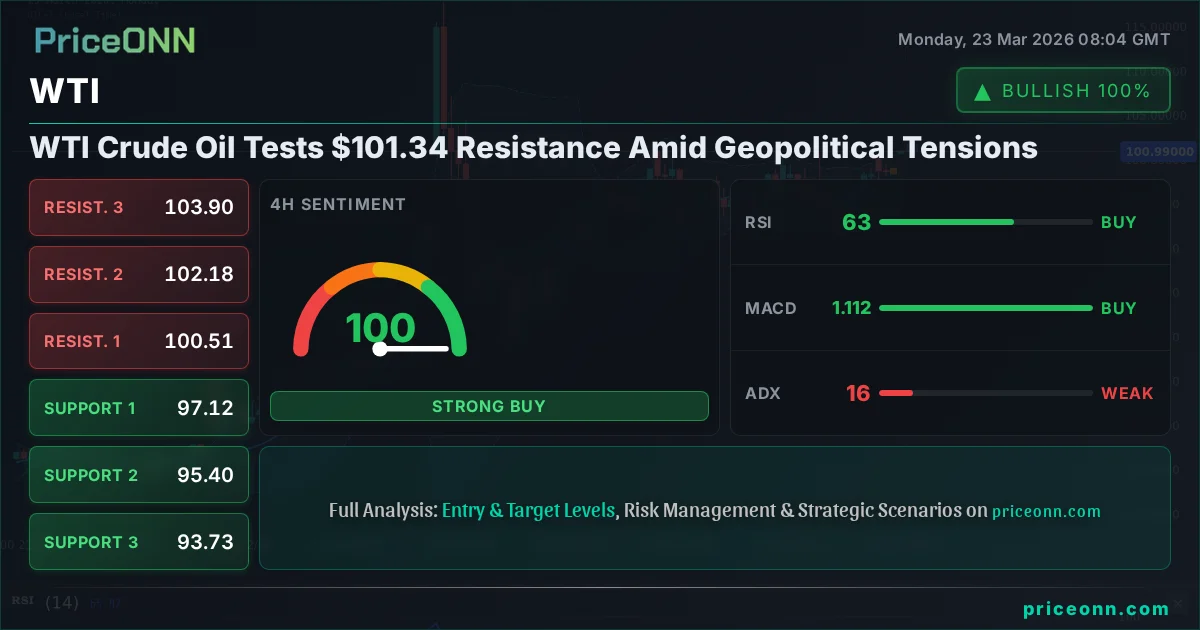
The final full week of March presents a crucial test for economic resilience. While central bank policy divergence has been a prominent theme, the focus has decisively shifted to empirical evidence. Markets have largely digested a more hawkish monetary policy outlook from various central banks, driven by energy-driven inflation. The key challenge this week is to determine if upcoming economic data will support this repricing or signal weakening demand and economic slowdown. Last week saw markets grappling with the implications of persistent inflation, with crude oil benchmarks holding firm above $80 per barrel due to geopolitical tensions impacting Persian Gulf exports. This sustained energy cost surge is a primary driver behind the current inflation concerns.
Analysis & Drivers: PMI Data Under the Microscope
The upcoming release of Purchasing Managers' Index (PMI) data across major economies will be the primary determinant of market sentiment this week. These surveys provide a timely snapshot of manufacturing and services sector activity, offering early insights into economic momentum. Analysts will be scrutinizing these figures for signs of demand destruction, a key indicator of stagflationary pressures. If PMIs show a significant contraction or a sharp deceleration in new orders and output, it would validate concerns that higher energy and input costs are beginning to bite into business activity and consumer spending. Conversely, resilient PMI readings would suggest that economies can absorb current price levels without a substantial growth shock, potentially reinforcing the case for continued monetary tightening. The United Kingdom's Consumer Price Index (CPI) for February, released prior to the energy shock's full impact, is expected to show headline inflation holding steady at 3.0% year-over-year, with core inflation at 3.1%. While backward-looking, any deviation from these forecasts could influence the Bank of England's policy stance.
Trader Implications: Watching Key Levels and Data Releases
Traders should closely monitor the release of the March PMI data, particularly from the UK, Eurozone, and the United States. A significant miss in these figures, signaling a sharp economic slowdown, could trigger a risk-off sentiment, potentially weakening currencies like the Euro and Sterling against the US Dollar. Conversely, robust PMI data would likely support a more hawkish central bank narrative and could lead to a strengthening of commodity-linked currencies. Key technical levels to watch include support for the S&P 500 around 5100 and resistance near 5250. For EUR/USD, the 1.0800 level remains a critical psychological support, while 1.0950 acts as immediate resistance. Oil traders will be watching crude oil prices for any signs of a sustained move below $80, which could signal demand weakness, or a continued grind higher above $85, reinforcing inflation fears. The overarching risk remains that persistent inflation coupled with slowing growth could force central banks into a difficult policy dilemma.
Outlook: Navigating Uncertainty
The coming week is pivotal for determining the near-term economic trajectory. The market's ability to digest current energy prices without a severe growth shock will be tested by the PMI data. If stagflationary signals emerge, expect increased volatility and a potential shift in central bank communication. Traders should remain nimble, focusing on data-driven decisions and closely watching for any indication of a significant economic downturn or persistent inflation, which could reshape monetary policy expectations and asset prices significantly.
Frequently Asked Questions
What are the key economic indicators to watch this week for stagflation risks?
The primary focus will be on the March Purchasing Managers' Index (PMI) data for manufacturing and services sectors globally. These surveys offer real-time insights into economic growth and inflationary pressures. A significant decline in PMI figures below 50, which indicates contraction, would heighten stagflation concerns.
How are elevated oil prices impacting the market narrative?
Elevated oil prices, currently holding above $80 per barrel, are embedding inflationary pressures across economies. This sustained cost increase is shifting market focus from simple inflation to the potential for stagflation, where high inflation coexists with slowing economic growth.
What are the implications for currency traders if stagflationary signals emerge?
If stagflationary data, such as weak PMIs and persistent inflation, emerges, traders might see a flight to safety, benefiting currencies like the US Dollar. Pairs like EUR/USD could face pressure, potentially testing support around 1.0800, while riskier assets may decline.
Track markets in real-time
Empower your investment decisions with AI-powered analysis, technical indicators and real-time price data.
Join Our Telegram Channel
Get breaking market news, AI analysis and trading signals delivered instantly to your Telegram.
Join Channel
PriceONN