
Is Stagflation Looming as Oil Prices Surge and Growth Slows?
The global financial landscape faces a critical juncture as markets pivot from acknowledging an energy shock to rigorously assessing its real-world economic repercussions. With significant disruptions impacting exports from the Persian Gulf, crude oil prices remain elevated, embedding sustained inflationary pressures across economies. The central question now is whether this persistent cost shock will begin to curtail economic growth, ushering in a period of stagflation.
Market Context: From Energy Shock to Stagflation Test
The final full week of March marks a pivotal moment. While central banks' diverging monetary policy paths remain a backdrop, the immediate focus has decisively shifted to empirical data. Financial markets have largely repriced expectations for a more hawkish stance from various central banks in response to energy-driven inflation. The crucial test this week will be whether upcoming economic statistics validate this hawkish sentiment or reveal early signs of demand destruction, challenging the prevailing narrative.
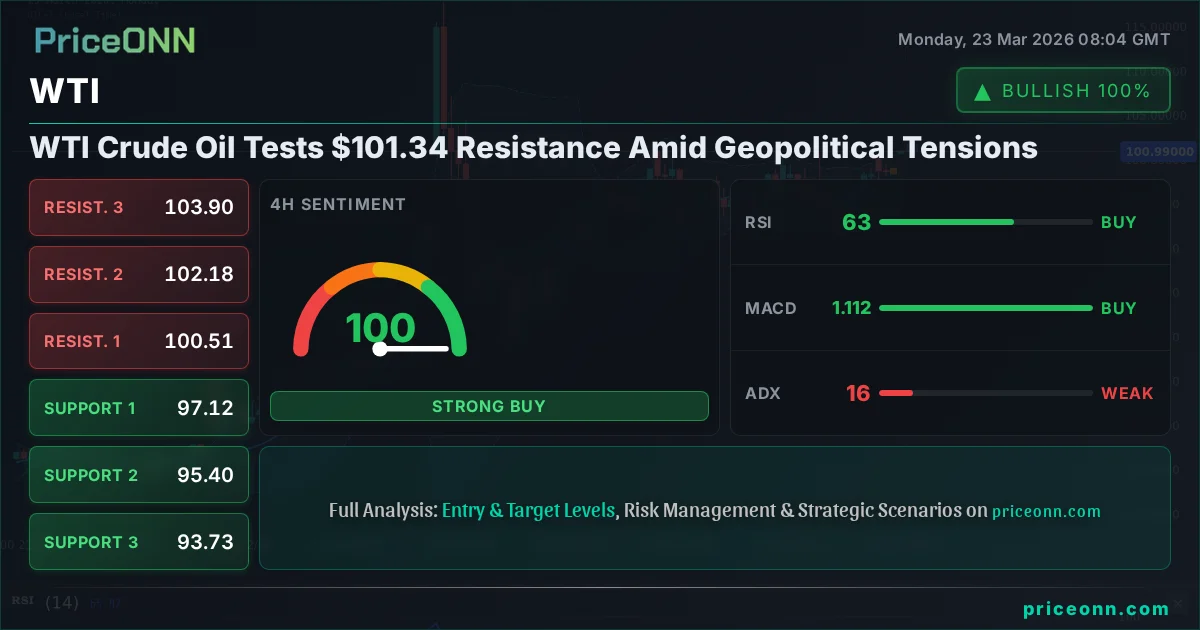
Last week saw continued volatility, with oil benchmarks holding firm. For instance, Brent crude traded around $85 per barrel, a level that signals significant ongoing cost pressures for businesses and consumers. This sustained high energy cost is a primary driver for embedded inflation, forcing a reassessment of economic resilience.
Analysis & Drivers: PMI Data and Inflationary Pressures
The primary economic data releases this week are expected to provide crucial insights into the dual threat of rising costs and slowing growth. Purchasing Managers' Index (PMI) data from major economies will be closely scrutinized. These surveys offer a timely pulse on manufacturing and services sector activity, including new orders, employment, and crucially, input prices and output prices. Any significant dip in PMI figures, particularly new orders, coupled with persistent or rising price pressures, would strongly suggest that economic momentum is waning under the weight of inflation.
The United Kingdom's Consumer Price Index (CPI) for February, released this week, is a key indicator. While it largely reflects pre-escalation conditions, analysts will interpret it as a baseline for inflation's trajectory under the new energy cost regime. Market consensus anticipates the headline inflation rate holding steady at 3.0% year-over-year, with the core measure at 3.1%. However, any deviation suggesting inflation is proving stickier than expected would reinforce the hawkish stance of the Bank of England and potentially impact GBP/USD.
Geopolitical factors stemming from the Persian Gulf continue to be a significant undercurrent. The prolonged disruption to oil exports not only supports higher prices but also introduces supply chain uncertainty, further complicating inflation dynamics and potentially impacting trade balances for energy-importing nations.
Trader Implications: Watching Key Levels and Data
For forex traders, the key implication is increased volatility and a potential divergence in currency performance based on individual economies' resilience to stagflationary pressures. Currencies of nations heavily reliant on energy imports and showing early signs of demand weakness may face headwinds. Conversely, those with stronger domestic energy production or more resilient consumer bases could see relative outperformance.
Key levels to watch include:
- EUR/USD: A break below 1.0800 could signal increasing global growth concerns, while a sustained move above 1.0950 might indicate market confidence in European resilience despite energy costs.
- GBP/USD: The UK CPI data is critical. A print above expectations could push the pair towards 1.2700, while a weaker-than-expected inflation figure or a concerning PMI could see it test 1.2500.
- Oil Prices: Continued elevated prices above $85 for Brent will maintain upward pressure on inflation expectations and could indirectly weaken currencies of net importers.
Traders should prepare for potential whipsaws as markets digest incoming PMI and inflation data. A cautious approach, focusing on risk management and clear entry/exit strategies based on established support and resistance levels, is advisable. Any indication that central banks are forced to prioritize inflation control over growth support could lead to sharper currency movements.
Outlook: Navigating Uncertainty
The coming week's economic data will be instrumental in defining the market's narrative for the remainder of the quarter. If PMIs confirm slowing growth alongside sticky inflation, the stagflationary thesis will gain significant traction, likely leading to increased market volatility and a re-evaluation of risk assets. Conversely, surprisingly robust economic data could alleviate some fears and support a more optimistic outlook, potentially strengthening risk-on currencies. The interplay between energy prices, inflation, and economic growth will remain the dominant theme, demanding close attention from all market participants.
Frequently Asked Questions
What is stagflation and why is it a concern now?
Stagflation is a challenging economic condition characterized by stagnant economic growth, high inflation, and high unemployment. It's a concern now because elevated oil prices are embedding inflation, and upcoming PMI data will reveal if this is starting to suppress economic activity, a classic precursor to stagflation.
Which economic data releases are most critical this week for forex markets?
The most critical releases are the Purchasing Managers' Index (PMI) surveys from major economies, which gauge manufacturing and services activity, and the UK's Consumer Price Index (CPI) for February. These will offer insights into growth momentum and inflation persistence, impacting central bank policy expectations and currency valuations.
What are the key price levels to watch for EUR/USD and GBP/USD?
For EUR/USD, traders should monitor 1.0800 as a potential downside support and 1.0950 as a resistance level. For GBP/USD, key levels are around 1.2500 on the downside and 1.2700 on the upside, with the UK CPI data likely to be a catalyst.
Track markets in real-time
Empower your investment decisions with AI-powered analysis, technical indicators and real-time price data.
Join Our Telegram Channel
Get breaking market news, AI analysis and trading signals delivered instantly to your Telegram.
Join Channel
PriceONN