
Trump Orders Oil Companies to Cut Gas Prices, Targets Chevron CEO
 PriceONN Editorial Desk
Multi-source verification
PriceONN Editorial Desk
Multi-source verification
Fuel Costs Under the Microscope
In a dramatic public intervention, President Donald Trump issued a direct command on Monday for American oil producers to slash gasoline prices without delay. This urgent directive followed a sharp retreat in crude oil futures, a market shift prompted by the President’s decision to halt a planned military action against Iran. Trump took to his Truth Social platform to declare, "get your consumer (retail!) Oil Prices DOWN, NOW!"
The President did not shy away from naming specific industry leaders. He directly targeted Chevron CEO Mike Wirth, whose recent television appearance discussing the company's operations apparently irked the President. Trump asserted that Wirth had overlooked the current administration's crucial role in facilitating Chevron's renewed presence in Venezuela.
"They threw Mike and Chevron out of Venezuela, but now they’re back, far bigger and stronger than ever before, expecting to make a fortune," Trump posted. This statement references the administration’s policy shift that allowed Chevron to resume operations in the South American nation. The U.S. government’s actions subsequently placed Venezuelan oil exports under American oversight, paving the way for domestic refiners to become major purchasers of the country's crude and reviving a market previously stifled by sanctions.
Consumer Impact and Industry Response
Despite the falling price of crude, the national average for a gallon of regular gasoline registered around $3.29 on Monday, according to AAA data. This figure represented only a modest decrease from the previous week’s peaks, even as crude oil prices experienced a more than 6% slide in a single trading session. The lag in retail fuel prices is a common market dynamic; service stations continue to dispense inventory acquired at earlier, higher wholesale costs.
This isn't the first time the President has intervened in fuel pricing. In June, he requested the Justice Department to investigate gasoline prices after they had risen significantly. Shortly thereafter, he urged fuel retailers to aim for pump prices near $2.50 per gallon, issuing a stern warning to companies that did not comply, suggesting they would face "big problems."
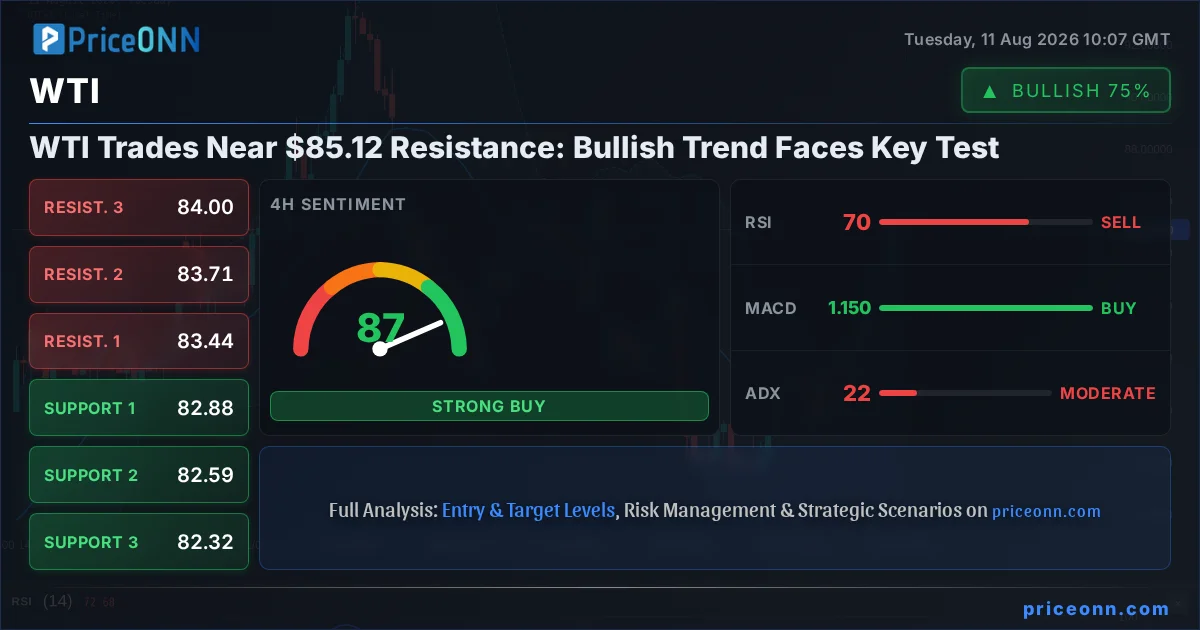
On Monday, West Texas Intermediate (WTI) crude futures saw a decline exceeding 6%, while Brent crude futures dropped more than 5%. These movements occurred after President Trump announced new diplomatic overtures toward Iran and canceled a planned "massive" military engagement. The typical delay in retail price adjustments stems from refiners, wholesalers, and retailers selling fuel that was purchased based on prior crude oil price levels.
The situation is further complicated by recent earnings reports. Major players like Chevron, Exxon Mobil, Valero Energy, and Marathon Petroleum all posted substantial increases in their second-quarter profits. This surge in earnings, fueled in part by elevated crude prices and strong refining margins during the recent geopolitical tensions surrounding Iran, now stands in contrast to the President's demand that the industry pass recent crude cost reductions onto consumers.
Market Ripple Effects
The President's direct call for lower pump prices injects a new layer of political pressure onto an energy sector that has recently enjoyed significant profitability. While retail prices naturally trail movements in the underlying commodity markets, the administration's vocal stance could influence market sentiment and corporate behavior. The focus on Chevron and its Venezuelan operations also highlights the intricate geopolitical factors influencing energy supply chains.
This development could have implications for several key markets. The immediate focus remains on gasoline prices and the profitability of U.S. refining companies. However, the underlying cause of the crude price drop – the de-escalation of tensions with Iran – could also impact broader energy commodities. Additionally, the President's direct engagement with corporate leaders might be observed by other sectors facing scrutiny over pricing or market conduct. The dynamic between government pressure and corporate earnings presents a critical tension point for investors.
Track markets in real-time
Empower your investment decisions with AI-powered analysis, technical indicators and real-time price data.
Join Our Telegram Channel
Get breaking market news, AI analysis and trading signals delivered instantly to your Telegram.
Join Channel PriceONN News
Crude oil inventories in the United States saw a massive increase of 17.4 million barrels during the week ending August 7, according to new data from the U.S. Energy Information Administration (EIA) released on Wednesday. The increase brings commercial stockpiles to 424.4 million barrels, according to government data, which are now just 2% below the five-year average for this time of year. The EIA’s data release follows API’s figures that were released a day earlier, which reported that crude...
PriceONN News
Indian state-controlled oil refiners continue to search the market for spot crude supply as term deliveries are constrained by the ongoing crisis in the Middle East and its key oil chokepoint, the Strait of Hormuz. Mangalore Refinery and Petrochemicals Limited (MRPL) and Hindustan Petroleum Corporation Limited (HPCL) are looking to buy a combined 6 million barrels of crude oil via spot tenders, Reuters reported on Wednesday, citing tender documents it has seen. HPCL is seeking up to 4 million...
PriceONN News
The IEA has slashed its 2026 global oil supply forecast, with output now expected to plunge 4.3 million barrels per day this year as the failure to reopen the Strait of Hormuz pushes the market deeper into deficit. The latest forecast is considerably worse than the 3.7-million-bpd decline the agency projected just last month and would leave global supply at 102.02 million bpd, its lowest forecast for 2026 yet. Supply is now expected to fall 1.27 million bpd short of demand for the year,...
PriceONN News
The American Petroleum Institute (API) estimated that crude oil inventories in the United States rose by 9.072 million barrels in the week ending August 7, compared to analyst expectations for a 500,000-barrel draw. In the week prior, U.S. crude oil inventories rose by 2.69 million barrels. The larger-than-expected build was driven in part by higher crude imports relative to exports during the week. Commercial crude oil inventories excluding the SPR have lost just over 49 million barrels over...
PriceONN News
(RTTNews) - Crude oil prices have surged on Tuesday, extending the gains from the two previous sessions as the U.S.-Iran stalemate over new demands for compensation for war-related damages continued, diminishing the expectations of an early reopening of the Strait of Hormuz.
PriceONN News
Five months after the U.S. and Israel opened a war with Iran, global fuel markets still haven't settled down, and the latest IEA data prove it. The IEA's monthly end-use price tracker, updated Aug. 7 and covering prices through July, shows the average per-liter cost of automotive diesel across the countries it tracks sitting near $1.94 in U.S. dollar terms. That's roughly 14% above where it stood in February, before the war started, and it's actually higher than June, even as crude oil kept...
PriceONN News
The national oil company of the United Arab Emirates has issued its eighth spot tender since June, trade sources told Reuters on Tuesday, as the Gulf producer that has just left OPEC pushes to sell increased crude volumes to international markets. Abu Dhabi National Oil Company (ADNOC) is offering in the latest spot tender cargoes of the Upper Zakum, Umm Lulu, and Das crude grades for loading in October and November’ sources. These crudes are produced within the Persian...
PriceONN News
OPEC’s total oil production jumped by 1.17 million barrels per day in July from June as many Gulf producers restored some output that was shut in for three months due to the closed Strait of Hormuz. Output at the 11-member OPEC rose to 19.85 million bpd in July, extending the monthly increases for the second consecutive month, according to a based on ship-tracking data and information provided by sources at OPEC, oil companies, and consultants. In May, when major Gulf producers...
PriceONN News
The U.S. oil industry got a scare last week. News reports claimed that the Trump administration may be considering an export ban on crude oil and refined petroleum products such as gasoline and diesel in order to bring those prices down-prices which have been elevated considerably by the reduction of oil supplies worldwide in the wake of the Iran war. But a Trump administration spokesperson said the administration has no plans to ban exports of oil or natural gas products. It's important to...
PriceONN News
As energy companies explore innovative ways to increase clean power production and gain public support for new projects, many solar firms are investing in developing dual-purpose operations that utilise agricultural land for solar farms. A common criticism of solar farms is that installing panels on arable land for the sole purpose of energy production restricts land use for other purposes. However, installing solar panels on agricultural land, where farming practices can still take place,...
PriceONN News
Norwegian aluminum producer Norsk Hydro's Alunorte plant in Brazil, one of the world's largest alumina refineries, reduced output by 50% following disruptions to natural gas availability. Bloomberg reports that disruptions to NatGas availability at Alunorte forced a 50% reduction in output and sent aluminum prices in London to a seven-week high. Hydro said production would return to full capacity once gas supplies normalize. Aluminum rose nearly 2% in London and traded at $3,373 a metric ton....
PriceONN News
The UK could see a power supply margin shortfall during the solar eclipse on Wednesday amid high demand in the new heatwave that is sweeping through Britain and the rest of Europe this week. There is no risk to customer supplies, but a notice has been issued to the market and power generators as the eclipse will block sunlight between 6 p.m. and 8 p.m. local time on Wednesday evening. The National Energy System Operator issued a notice today to encourage market actions to increase system...