U.S. Locks In $56 Billion of Asian Energy Deals Amid Gulf Disruptions
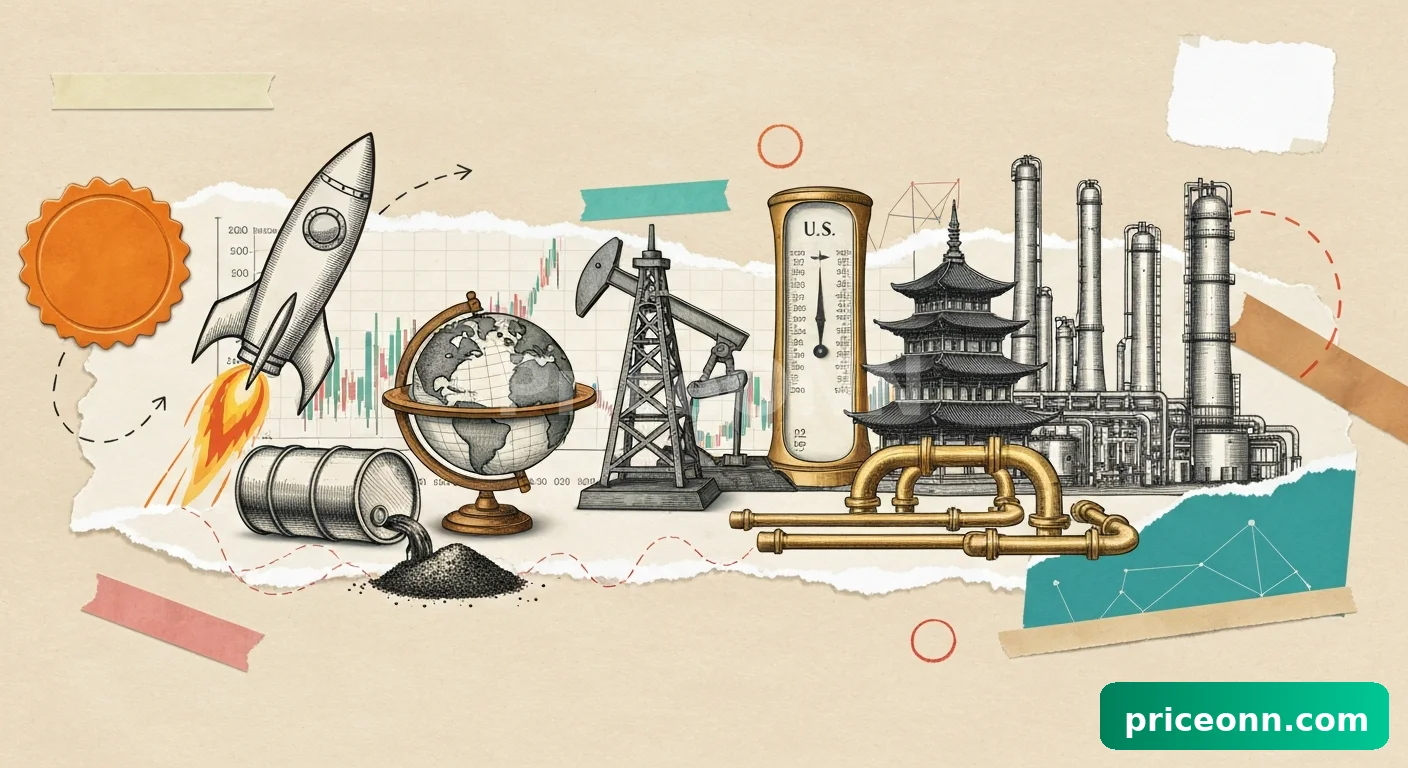
Asian nations that are the most exposed to the fallout of the Hormuz crisis have sealed energy deals worth $56 billion with American companies, helping advance President Trump’s energy dominance agenda. Whether this is an actual pivot from the Middle East to the U.S. is yet to be seen.
The news about the financial commitments was announced by Interior Secretary Doug Burgum following the Indo-Pacific Energy Security Forum that took place in Tokyo at the end of last week. The deals involve a 20-year supply contract between Venture Global and South Korean Hanwha Aerospace for 1.5 million tons of liquefied gas and a deal between Terra Energy Center and Hyundai Heavy Industries for the supply of coal power plant equipment for a 1.25-GW power generation project in Alaska.
Also in liquefied gas, the forum yielded an agreement on joint development of the Delfin LNG project, which will be a floating installation off the Louisiana coast with a projected capacity of 13 million tons annually. The project will cost $14 billion and will export the fuel to Japan and South Korea. Among the companies participating in its development, the DoI listed Delfin Midstream, Mitsui O.S.K. Lines, Samsung Heavy Industries, Hanwha Asset Management, and Korea Overseas Infrastructure & Urban Development Corporation.
Related: Little-Known US Company Lands Important Pentagon Contract in Rare Earth Race
Asia is the main market for Middle Eastern oil and LNG, and the Hormuz crisis has hit that market hard. Middle Eastern oil grades are currently the most expensive in the world because of the tanker traffic freeze, and producing countries have been forced to slash production due to a lack of storage capacity, which would extend the supply crunch over a longer period of time.
The Trump administration has framed the energy dominance agenda as a win-win, with U.S. geopolitical partners getting energy commodities and the U.S. getting certain markets. It could be argued that Trump’s tariff pressure, however, represented a stick rather than a carrot approach to convincing these partners to buy more U.S. energy commodities. On the other hand, for those concerned only with the end result, the purchasing commitments that so many nations made in response to the tariff threat suggest that the stick works just as well as the carrot, if not better.
Some observers would beg to differ on the dependability assertion, just as the oil and gas industry in the U.S. is reluctant to start spending big on production expansion, and for the same reason. In two years, there could be a very different president in the White House, and the energy dominance agenda may give way to another green agenda. For now, however, those Asian countries that depend heavily on energy imports are pledging billions for U.S. energy amid some of the most desperate times in modern history for the region.
Track markets in real-time
Empower your investment decisions with AI-powered analysis, technical indicators and real-time price data.
Join Our Telegram Channel
Get breaking market news, AI analysis and trading signals delivered instantly to your Telegram.
Join Channel