Why Is Crude Oil Surging Past $100 as Strait of Hormuz Blockade Enters Third Week?
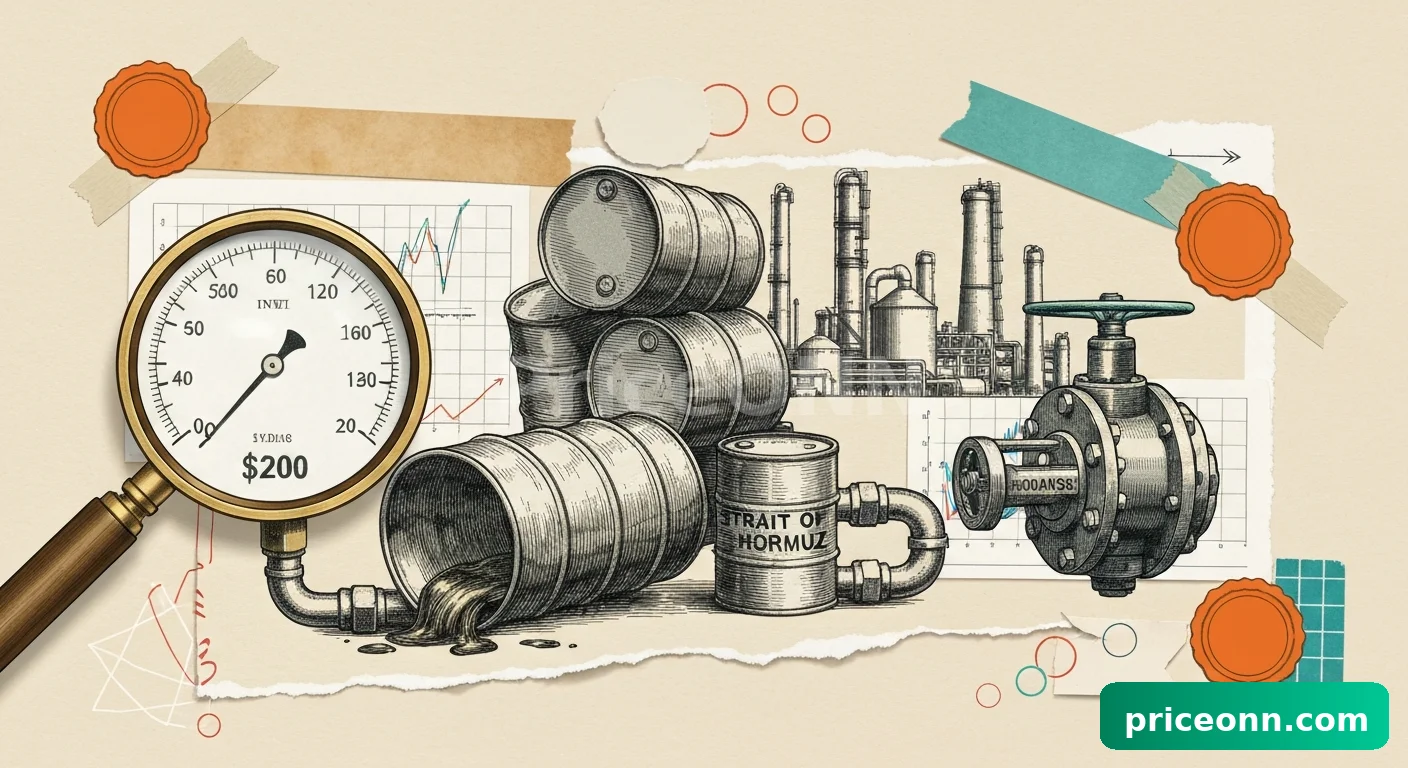
Crude oil prices have dramatically surpassed the $100 per barrel mark, a stark indicator of the escalating global energy crisis fueled by the ongoing blockade of the Strait of Hormuz. This critical waterway, through which over a third of the world's crude oil trade passed in 2025, has been under a de facto closure for three weeks, representing the most substantial disruption to global oil commerce in recorded history. The ramifications are far-reaching, exposing the deep petro-dependency of global markets and prompting urgent discussions about energy security and alternative supply routes.
Market Context
The dramatic price ascent follows Iran's vow to continue its obstruction of the Strait of Hormuz amid military actions in the Middle East. Last week, WTI Crude Oil for April delivery saw gains of 2.75%, reaching $96.07 per barrel, with further upward momentum pushing prices well over $100. This escalation has intensified the pressure on global supply chains, with reports indicating that over 10 million barrels per day have been impacted by production cuts stemming from storage constraints. While February saw a temporary lull, underlying price trends were already on an upward trajectory, with the current events acting as a significant accelerant. The situation has also led to substantial increases in domestic fuel costs, with U.S. diesel prices exceeding $5 per gallon and gasoline averaging $3.68 per gallon.
Analysis & Drivers
The primary driver for the current oil price surge is the sustained closure of the Strait of Hormuz. This chokepoint normally accommodates approximately 20% of the world's daily oil and gas shipments. Iran's military actions and subsequent blockade have severely hampered this flow, overwhelming limited bypass capacities such as Saudi Arabia's East-West pipeline (5 million bpd) and the UAE's Habshan-Fujairah conduit (1.5 million bpd). Even these alternative routes are facing threats, with Iran launching repeated strikes on the Fujairah export terminal, forcing ADNOC to suspend loadings. Efforts to secure the Strait, including calls for NATO intervention, have been met with significant apathy from key allies, highlighting a complex geopolitical landscape where economic interests and risk assessments diverge. This lack of a unified international response leaves global energy markets vulnerable to further volatility.
Trader Implications
Traders should closely monitor geopolitical developments in the Middle East, as any further escalation or de-escalation will have an immediate impact on oil prices. Key levels to watch include the recent highs above $100 per barrel, with significant resistance potentially forming. Support levels could be tested if diplomatic efforts show progress or if alternative supply routes prove more resilient than anticipated. The reluctance of major powers to engage militarily suggests that market sentiment will continue to be driven by supply disruption fears. Businesses, particularly those with energy-intensive operations and short-term contracts, face significant risk. For instance, UK pubs renewing contracts in April could face 'devastating' cost spikes, potentially adding £169 million per year to the sector's expenses, according to industry warnings. However, companies with robust energy hedging strategies, like some larger hospitality operators with fixed contracts extending to 2029, are significantly insulated from these immediate price shocks.
Outlook
The outlook for crude oil remains highly uncertain, contingent on the duration and intensity of the Strait of Hormuz blockade and the broader geopolitical conflict. While the current situation points towards continued price strength, the increased cost competitiveness and widespread adoption of renewable energy sources like solar photovoltaics and batteries may offer a long-term buffer against extreme oil price volatility. Analysts suggest that the soaring price of oil could further catalyze the global green energy transition. However, in the immediate term, the market is likely to remain sensitive to supply-side disruptions, with the potential for prices to reach even higher, albeit perhaps temporarily, levels if the crisis deepens.
Frequently Asked Questions
What is the current price of crude oil?
Crude oil prices have surged past $100 per barrel due to the ongoing blockade of the Strait of Hormuz. Specific benchmarks like WTI Crude Oil have seen significant gains in recent trading sessions.
How much oil passes through the Strait of Hormuz?
The Strait of Hormuz is a critical chokepoint through which over one-third of the world's crude oil trade passed in 2025. It normally accommodates approximately 20% of the world's daily oil and gas shipments.
What are the implications of the oil price surge for businesses?
Businesses with energy-intensive operations and short-term contracts face significant risk of increased costs, with some UK pubs potentially facing an additional £169 million per year. Companies with long-term energy hedging are better protected.
Track markets in real-time
Empower your investment decisions with AI-powered analysis, technical indicators and real-time price data.
Join Our Telegram Channel
Get breaking market news, AI analysis and trading signals delivered instantly to your Telegram.
Join Channel