Will Iran Conflict Keep Oil Prices Elevated Amidst EU-US Divergence?
Crude oil prices are facing upward pressure as geopolitical instability intensifies in the Persian Gulf, particularly concerning Iran. This situation has led to a notable split between European and United States strategies for securing vital shipping lanes, potentially contributing to a prolonged period of elevated energy costs.
Market Context
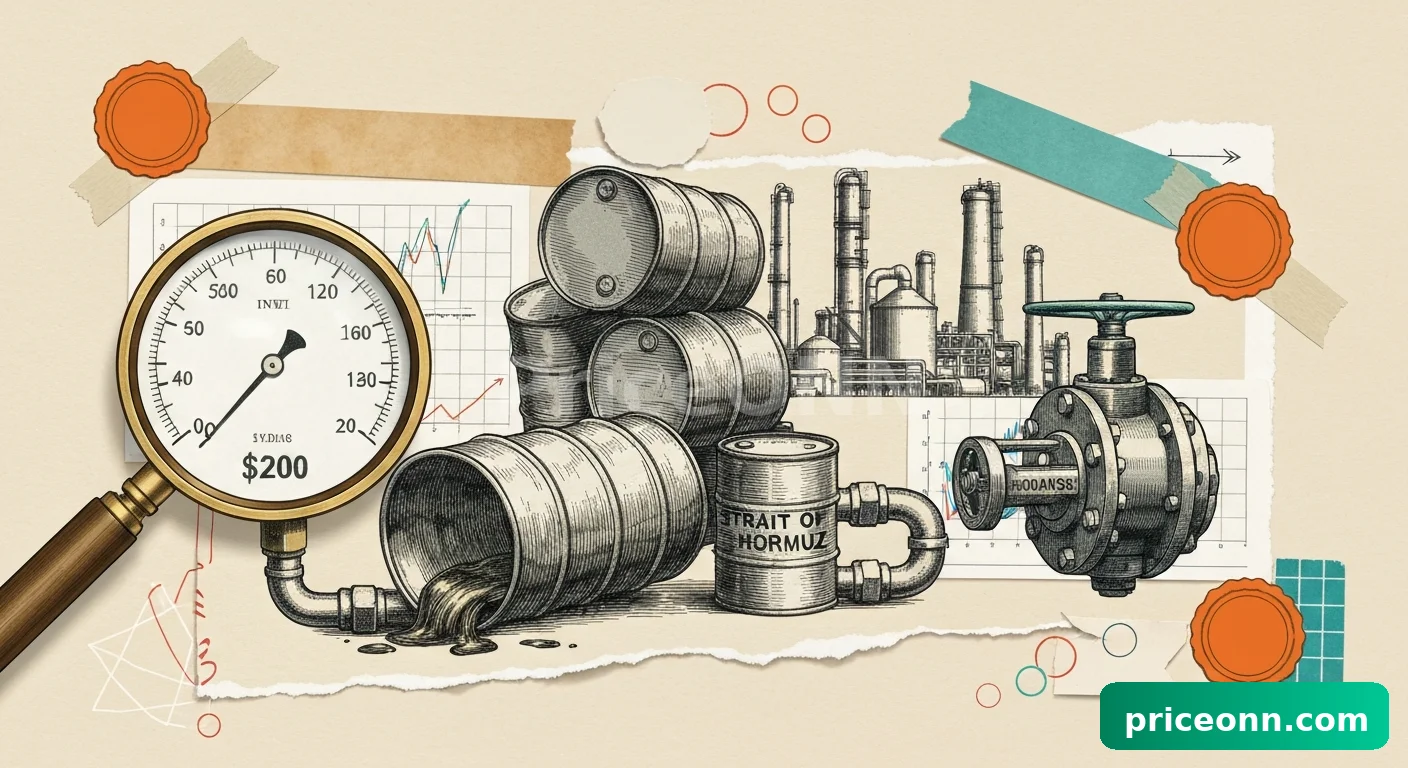
European Union foreign ministers have rejected a direct request from U.S. President Donald Trump to contribute militarily to securing the Strait of Hormuz. Instead, European nations are prioritizing the reinforcement of their own regional military bases. This divergence in approach comes amidst heightened tensions and growing fears about the stability of global energy supplies. The EU's existing Operation Aspides, focused on Red Sea security, has seen its mandate proposed for extension, but a broader involvement in the Strait of Hormuz is proving contentious.
German Defence Minister Boris Pistorius articulated a sentiment shared by many in Europe, questioning the efficacy of a limited European naval presence in the Strait compared to the U.S. Navy's capabilities. "What does … Trump expect a handful or two handfuls of European frigates to do in the Strait of Hormuz that the powerful US Navy cannot do?" he stated, highlighting a clear difference in strategic priorities and risk assessment.
Analysis & Drivers
The primary driver for the current market sentiment is the escalating geopolitical risk in the Persian Gulf. Disruptions or the perceived threat of disruption to oil flows through the Strait of Hormuz, a critical chokepoint for a significant portion of global oil trade, inherently supports higher prices. The fragmented response from key global powers, with the EU opting for a more cautious, self-focused security approach while the US seeks broader coalition support, creates uncertainty and potentially leaves the region more vulnerable to supply shocks.
Furthermore, market analysts at Standard Chartered have revised their forecasts, predicting that oil prices will remain higher for an extended period than previously anticipated. This outlook is directly linked to the ongoing geopolitical instability and its potential to constrain supply. Beyond immediate price impacts, there are growing concerns about the broader financial implications. The disruption of the petrocapital cycle-the flow of investment capital from oil-producing nations into global financial markets-is becoming a significant worry. This cycle, vital for global liquidity, is under threat, potentially leading to a global credit crunch as capital becomes scarcer.
Trader Implications
Traders should monitor the ongoing diplomatic efforts and any potential de-escalation or escalation in the Persian Gulf region closely. Key price levels to watch for crude oil benchmarks like Brent and West Texas Intermediate (WTI) will be critical. Resistance levels around $90-$95 per barrel for Brent crude and $85-$90 per barrel for WTI are likely to be tested if supply fears persist. Conversely, any signs of diplomatic progress or a de-escalation of rhetoric could trigger profit-taking and a retreat in prices.
The divergence in geopolitical strategy between the US and EU presents a complex trading environment. While the US may continue to push for military solutions, European reluctance could lead to a less coordinated, and potentially less effective, security posture in the Strait of Hormuz. This could embolden actors seeking to disrupt shipping, thereby keeping a floor under oil prices. Traders should also be aware of the broader financial contagion risk, as a tightening credit environment could eventually dampen global demand for energy.
Outlook
The immediate outlook for oil prices remains heavily dependent on the geopolitical situation in the Middle East. With key global powers exhibiting differing approaches to regional security, the risk premium on oil is likely to persist. The potential for supply disruptions, coupled with the looming threat of a credit crunch, suggests that crude oil could trade within a higher range for the foreseeable future, with significant volatility expected around geopolitical developments.
Frequently Asked Questions
What is the current geopolitical concern impacting oil prices?
Escalating tensions involving Iran in the Persian Gulf are the primary concern. A disagreement between the EU and US on how to secure the vital Strait of Hormuz, a key oil transit route, is creating uncertainty and supporting higher oil prices, with Brent crude potentially facing resistance near $95 per barrel.
Why are analysts predicting 'higher for longer' oil prices?
Analysts cite persistent geopolitical instability in the Middle East and the potential for supply disruptions as key reasons. Standard Chartered, for instance, forecasts sustained higher prices due to these factors, alongside concerns about the disruption of global capital flows from oil producers.
What are the broader financial risks associated with this energy crisis?
Beyond immediate price hikes, there is a significant risk of a global credit crunch. The disruption of petrocapital, the flow of investment from oil-exporting nations, could severely constrict liquidity in financial markets, impacting credit availability worldwide.
Track markets in real-time
Empower your investment decisions with AI-powered analysis, technical indicators and real-time price data.
Join Our Telegram Channel
Get breaking market news, AI analysis and trading signals delivered instantly to your Telegram.
Join Channel