
Is the US Dollar Set for Further Declines as Iran Tensions Ease?
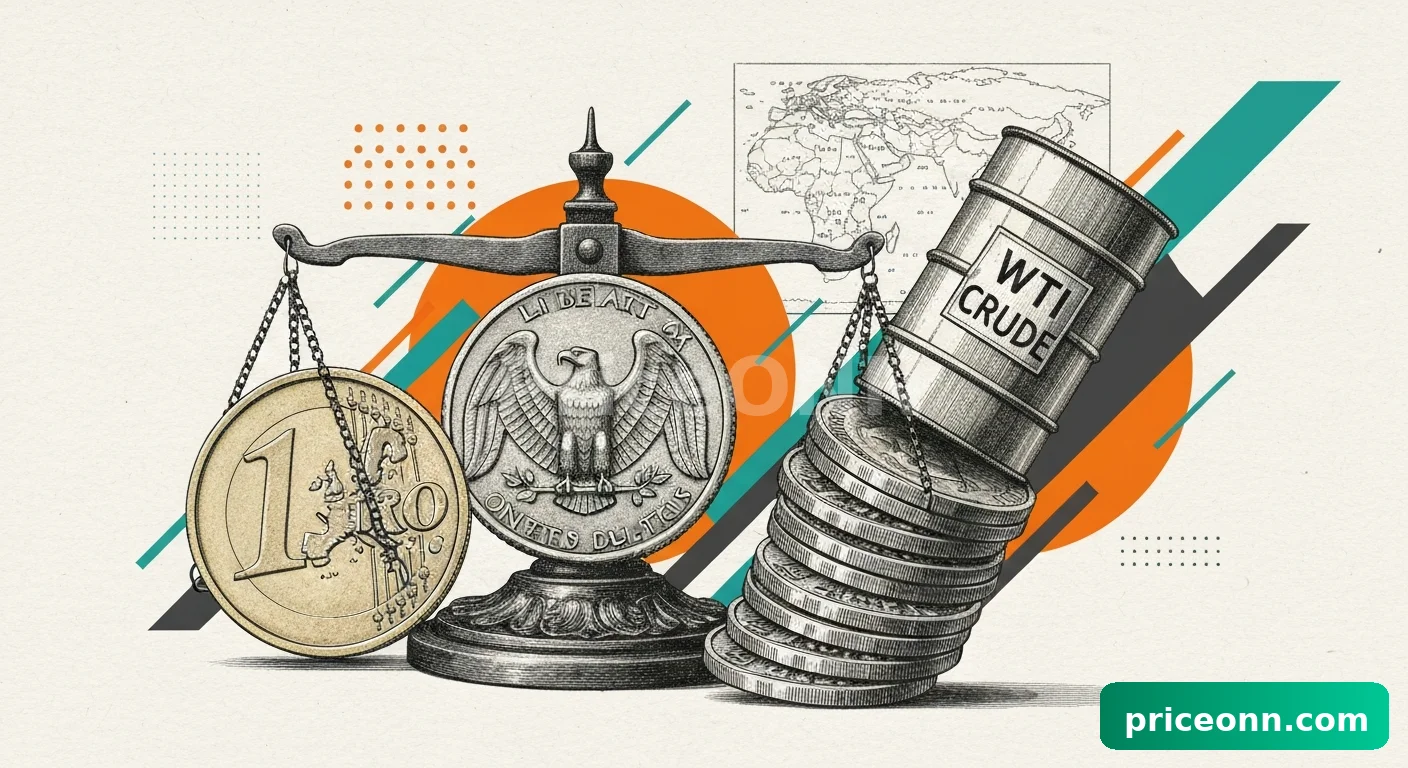
The US Dollar Index (DXY) experienced a significant downturn, breaking below the key 100.00 level to trade near 99.10. This move was primarily fueled by a surge in global market risk appetite, which effectively offset the support normally provided by steady U.S. Treasury yields and a cautious outlook on Federal Reserve monetary policy. The shift suggests that geopolitical de-escalation signals, particularly concerning Iran, are currently the dominant narrative in financial markets.
Market Context: Risk-On Sentiment Dominates
Monday saw a dramatic shift in market sentiment, with investors moving away from safe-haven assets and embracing riskier propositions. The US Dollar Index, a barometer of the dollar's strength against a basket of major currencies, fell approximately 0.5% on the day. Early trading had seen a brief rally, pushing the DXY to an intraday high of around 100.15, a typical reaction to heightened geopolitical uncertainty. However, as news emerged suggesting a potential cooling of tensions in the Middle East, this safe-haven demand evaporated rapidly, triggering a sharp reversal and a sell-off in dollar positions.
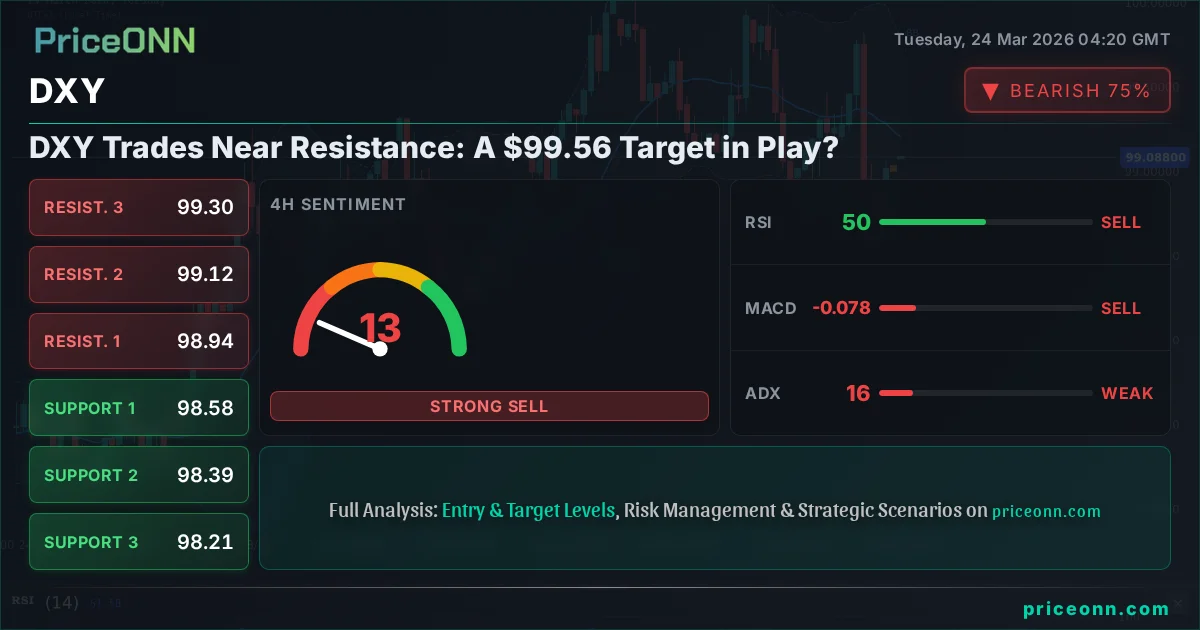
This intraday volatility underscores the market's acute sensitivity to geopolitical developments. The rapid unwinding of dollar positions indicates that investors are quick to reassess risk when perceived threats diminish. The dollar, which has long benefited from its status as a global reserve currency and a safe store of value, is now facing headwinds as global uncertainty recedes.
Analysis & Drivers: De-escalation and Dollar's Role
The primary catalyst for the dollar's decline appears to be signals indicating a potential de-escalation of tensions involving Iran. Reports of softening rhetoric from key political figures suggest a preference for diplomatic solutions over military confrontation. This reduction in geopolitical uncertainty tends to boost global economic confidence, leading investors to seek higher returns in riskier assets and abandon the relative safety of the dollar.
The US Dollar's historical dominance, accounting for over 88% of foreign exchange transactions with an average daily turnover of $6.6 trillion, makes it highly susceptible to shifts in global risk sentiment. While the Federal Reserve's monetary policy remains a crucial long-term driver, short-term price action is heavily influenced by geopolitical events that impact global stability and risk appetite. The dollar's value, no longer tied to gold since the dismantling of the Bretton Woods system in 1971, is now predominantly shaped by the Fed's actions and the broader economic and geopolitical landscape.
Concurrently, oil prices, particularly West Texas Intermediate (WTI) Crude, also faced downward pressure. A reduction in geopolitical tensions in the Middle East typically leads to expectations of increased oil supply and decreased demand due to potential economic stabilization, both factors contributing to lower crude prices. WTI, a benchmark sourced primarily in the United States and refined easily, is particularly sensitive to these shifts.
Trader Implications: Watching Key Levels and Sentiment
Traders should closely monitor the 100.00 level on the US Dollar Index (DXY) as a critical psychological and technical support/resistance zone. A sustained break below this level, as seen today, could signal further downside potential.
- Key Support/Resistance: Watch for the DXY to potentially test lower support levels around 98.50 if risk appetite continues to grow. Resistance is now expected to form around the 100.00-100.15 range.
- Geopolitical Triggers: Any renewed escalation of tensions in the Middle East could quickly reverse this trend, driving the dollar back towards safe-haven demand. Conversely, further de-escalation news would likely reinforce the current bearish sentiment.
- Fed Watch: While geopolitical factors are dominating, traders should not discount the Federal Reserve's policy stance. Any hawkish signals from Fed officials could provide a floor for the dollar, even amidst a risk-on environment.
The implications for forex traders are significant. A weaker dollar generally supports emerging market currencies and commodities. Major currency pairs like EUR/USD and GBP/USD could see upward momentum if the dollar continues to weaken. Conversely, pairs involving safe-haven currencies like the Japanese Yen might see less benefit unless global risk aversion returns sharply.
Outlook
The immediate outlook for the US Dollar appears cautious, with the potential for further declines if geopolitical de-escalation continues and risk appetite remains elevated. However, the dollar's fundamental strength, underpinned by its reserve currency status and the Federal Reserve's monetary policy, means it is unlikely to experience a collapse without a significant shift in these core drivers. Upcoming economic data releases from the U.S. and commentary from Fed officials will be crucial in determining the dollar's next significant move. For now, the market appears to favor a 'risk-on' environment, which places the dollar under pressure.
Frequently Asked Questions
What is the current trading level for the US Dollar Index (DXY)?
The US Dollar Index (DXY) has fallen below the 100 mark and is currently trading around 99.10, down approximately 0.5% for the day.
What was the primary driver behind the dollar's sharp decline?
The primary driver was a surge in market risk appetite, fueled by signals suggesting a potential de-escalation of tensions involving Iran. This reduced geopolitical uncertainty led investors to move away from the safe-haven dollar.
What key levels should traders watch for the DXY?
Traders should watch the 100.00 level as a key psychological and technical barrier. A sustained break below this could lead to further declines towards 98.50, while 100.00-100.15 is expected to act as resistance.
Track markets in real-time
Empower your investment decisions with AI-powered analysis, technical indicators and real-time price data.
Join Our Telegram Channel
Get breaking market news, AI analysis and trading signals delivered instantly to your Telegram.
Join Channel



PriceONN