
Is the USD Poised to Strengthen as Middle East Tensions Escalate?
The US Dollar is showing renewed strength in early Asian trading, as escalating geopolitical tensions in the Middle East prompt a significant shift towards safe-haven assets. This risk-off sentiment has put pressure on currencies such as the New Zealand Dollar (NZD) and the British Pound (GBP), pushing them lower against the greenback.
Market Context
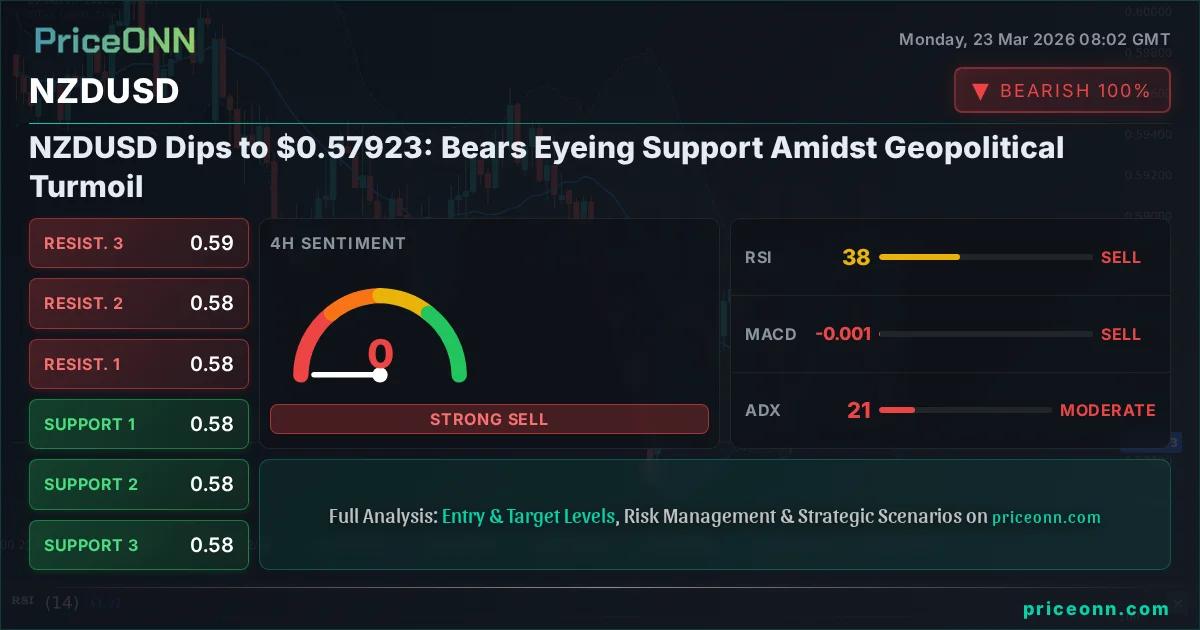
The NZD/USD pair has dipped below the 0.5850 level, trading near 0.5830, as investors shed riskier assets. Similarly, the GBP/USD pair, often referred to as 'Cable', is facing selling pressure around the 1.3320 mark. These moves are largely driven by external factors, particularly the heightened instability in the Middle East, which is bolstering demand for the USD as a safe haven. Reports of a potential ground operation targeting Iran's Kharg Island, a crucial oil export hub, further amplify concerns about global supply disruptions and economic uncertainty, reinforcing the dollar's appeal.
Analysis & Drivers
The current market dynamic is a classic example of risk aversion driving currency flows. When geopolitical risks rise, investors typically move capital away from economies perceived as more vulnerable or sensitive to global shocks and towards perceived safe havens. The US Dollar, due to its status as the world's primary reserve currency and the depth of US financial markets, often benefits disproportionately during such periods. This phenomenon is further amplified by the potential for significant disruptions to global oil supplies stemming from the Middle East, which can lead to increased inflation expectations and a general dampening of global economic activity. For currencies like the NZD and GBP, which are considered more sensitive to global growth prospects and risk sentiment, this environment presents a clear headwind. The Reserve Bank of New Zealand (RBNZ) and the Bank of England (BoE) are key domestic drivers for their respective currencies, influencing them through monetary policy and interest rate decisions. However, in the face of a major geopolitical shock, these domestic factors can become secondary to the overwhelming force of global risk sentiment.
Trader Implications
Traders should closely monitor developments in the Middle East, as any further escalation or de-escalation will likely have a direct impact on currency markets. For the USD, continued geopolitical uncertainty could see it extend its gains against risk-sensitive currencies. Key levels to watch for USD strength include potential resistance breaks on major USD pairs. Conversely, a reduction in Middle East tensions could lead to a reversal of this safe-haven demand, allowing currencies like the NZD and GBP to potentially recover. Traders should also keep an eye on economic data releases from New Zealand and the UK, as well as any forward guidance from the RBNZ and BoE, which could offer support or further pressure these currencies depending on their implications for interest rate differentials and economic outlooks. The 0.5800 level for NZD/USD and 1.3300 for GBP/USD represent immediate psychological support levels that, if broken decisively, could signal further downside.
Outlook
The immediate outlook for the US Dollar appears cautiously optimistic, contingent on the continued presence of geopolitical risks in the Middle East. Should tensions persist or intensify, the dollar is likely to remain well-supported. However, a significant de-escalation of conflict could trigger a swift unwinding of long dollar positions. Market participants will be keenly awaiting further news from the region, alongside key economic indicators that could influence central bank policy, to gauge the next direction for major currency pairs.
Frequently Asked Questions
What is causing the US Dollar to strengthen currently?
The US Dollar is strengthening due to escalating geopolitical tensions in the Middle East, which are driving a global flight to safety. This increases demand for the USD as a perceived safe-haven asset, pushing its value higher against risk-sensitive currencies.
What are the key support levels for GBP/USD amid this risk-off sentiment?
Amid the current risk-off sentiment, the key psychological support level for GBP/USD is 1.3300. A decisive break below this level could signal further downward pressure on the pair.
How might a de-escalation in the Middle East affect the NZD/USD?
A de-escalation of tensions in the Middle East could lead to a reversal of safe-haven demand for the USD, potentially allowing the NZD/USD to recover. The pair might target resistance levels above 0.5850 if risk appetite returns to markets.
Track markets in real-time
Empower your investment decisions with AI-powered analysis, technical indicators and real-time price data.
Join Our Telegram Channel
Get breaking market news, AI analysis and trading signals delivered instantly to your Telegram.
Join Channel


PriceONN