
Why Did Australia's Fuel Imports Surge to 90% Amidst Global Supply Chain Woes?
Australia, a nation historically synonymous with abundant natural resources, is currently confronting a severe energy paradox. Despite being a significant crude oil producer, extracting approximately 320,000 barrels per day, the country has become critically dependent on refined fuel imports, with projections indicating this figure could reach nearly 90% of its total demand.
Market Context: A Perfect Storm of Dependence and Disruption
The nation's total daily fuel demand hovers around 1.1 million barrels. By 2025, it was anticipated that Australia would need to import close to 850,000 barrels per day to meet this demand. This overwhelming reliance on external sources for refined products has been exposed as a major vulnerability, amplified by recent geopolitical events and deliberate export restrictions from key Asian suppliers. The situation has escalated into a crisis, highlighting the fragility of Australia's downstream energy security.
Analysis & Drivers: Asian Supply Chains Under Pressure
Several factors have converged to precipitate this energy crunch. Disruptions along vital shipping routes, including the Strait of Hormuz, have complicated global logistics. More critically, major regional energy hubs, such as South Korea, China, and Thailand, have implemented significant curbs on refined product shipments to Australia. South Korea, a crucial supplier, contributes roughly 25% of Australia's total imports, approximately 220,000 barrels per day. A substantial portion of this, around 120,000 barrels per day, is diesel, a fuel vital for Australia's transportation and industrial sectors, which is now facing an acute deficit.
Furthermore, Australia's strategic fuel reserves have been alarmingly low. Even before the current supply shocks, reserves stood at a mere 37 days of supply, falling significantly short of the 90-day benchmark recommended by the International Energy Agency (IEA). This limited buffer leaves the nation highly susceptible to prolonged supply interruptions.
In parallel, Canada is exploring new export avenues, with a proposed 1 million barrel per day pipeline aimed at Asian markets. This initiative seeks to break Canada's heavy dependence on the U.S. market, which currently absorbs 95% to 97% of its oil shipments. Asian and Middle Eastern capital, including sovereign wealth funds, are reportedly showing interest in taking 15% to 30% minority stakes in this project, which plans to transport oil sands crude to the northwest coast of British Columbia, with Prince Rupert favored as the terminal site. However, this project faces significant political and environmental hurdles, including an existing oil tanker moratorium.
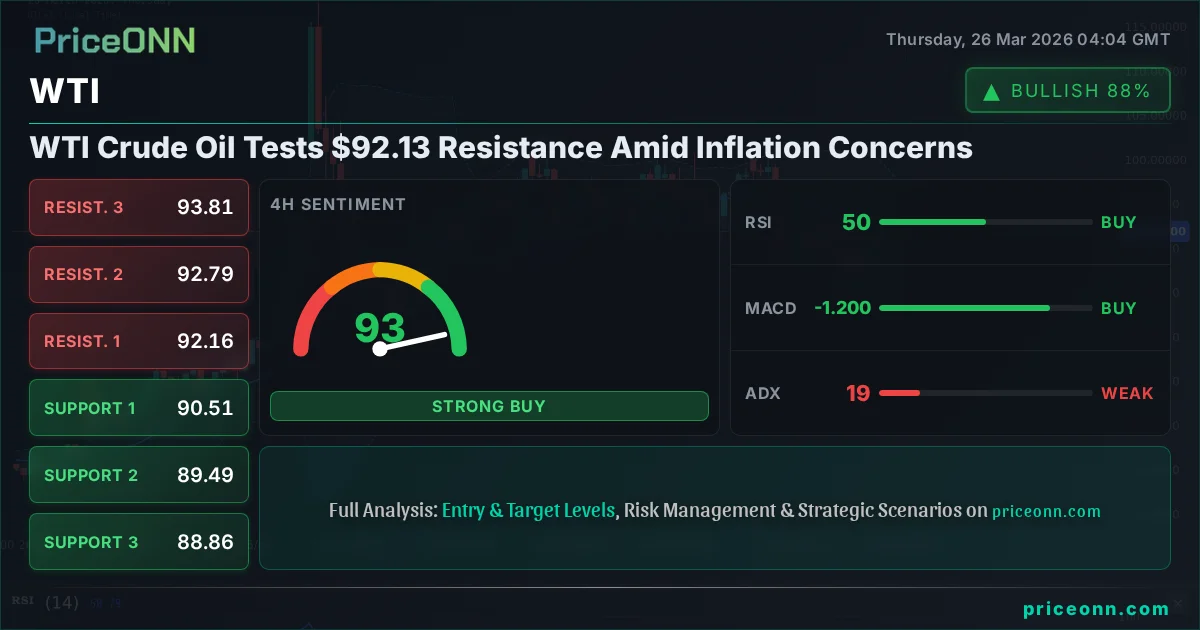
Meanwhile, crude oil prices experienced a notable decline on Wednesday. This slump was attributed to reports of a U.S. peace proposal to Iran aimed at ending the gulf war, which eased concerns over oil transit through the Strait of Hormuz. West Texas Intermediate (WTI) Crude Oil futures for May delivery fell by 2.40%, settling at $90.13 per barrel. This demonstrates the market's sensitivity to geopolitical risks impacting energy supply routes.
Trader Implications: Navigating Volatility and Shifting Trade Flows
Traders should monitor the ongoing developments in Australian fuel import dynamics closely. The acute deficit in diesel supply could lead to price spikes and increased demand for alternative fuel sources or imports from less traditional suppliers. Watch for potential price volatility in refined product markets, particularly diesel and jet fuel, in the Asia-Pacific region.
The Canadian pipeline project, if it progresses, could significantly alter global crude oil trade flows, potentially impacting prices for Canadian heavy crude and increasing competition in Asian markets. Traders should also keep a close eye on geopolitical developments concerning the Strait of Hormuz, as any renewed tensions could quickly reverse the recent downward trend in crude oil prices.
Key levels to watch include Australian diesel prices, regional refining margins, and the progress of the Canadian pipeline project. Any indications of a resolution to the gulf conflict could provide further downward pressure on crude oil futures, while persistent supply chain issues in the Asia-Pacific could support higher refined product prices.
Outlook
Australia's energy security challenges are likely to persist in the short to medium term, necessitating strategic adjustments to its import dependencies and potentially accelerating investments in domestic refining capacity or alternative energy solutions. The global energy landscape continues to be shaped by a complex interplay of geopolitical stability, supply chain resilience, and evolving trade partnerships, with both crude oil and refined products remaining highly sensitive to these dynamics.
Frequently Asked Questions
What percentage of Australia's fuel demand is met by imports?
By 2025, projections indicated that Australia would import close to 90% of its total fuel demand, which hovers around 1.1 million barrels per day, highlighting a critical reliance on external sources for refined products.
Which refined product is facing the most acute supply deficit in Australia?
Diesel is facing the most acute supply deficit, with approximately 120,000 barrels per day of the country's diesel imports coming from South Korea alone. Disruptions to these supplies are severely impacting Australia's transport and industrial sectors.
How could the proposed Canadian pipeline impact global oil markets?
The proposed 1 million barrel per day pipeline from Canada to Asia could significantly alter global crude oil trade flows, potentially increasing competition in Asian markets and impacting the price of Canadian heavy crude, while also reducing Canada's reliance on the U.S. market.
Track markets in real-time
Empower your investment decisions with AI-powered analysis, technical indicators and real-time price data.
Join Our Telegram Channel
Get breaking market news, AI analysis and trading signals delivered instantly to your Telegram.
Join Channel


PriceONN