
Why Did Gold, Silver, and Copper Prices Tumble This Week?
Gold futures have experienced a sharp decline, shedding approximately $1,100 or over 20% from its record high set in late January. This downturn culminated in its worst weekly performance in decades, with prices falling to near $4,492 per ounce, marking a 3.5% loss for the day and an 11% slide over the week.
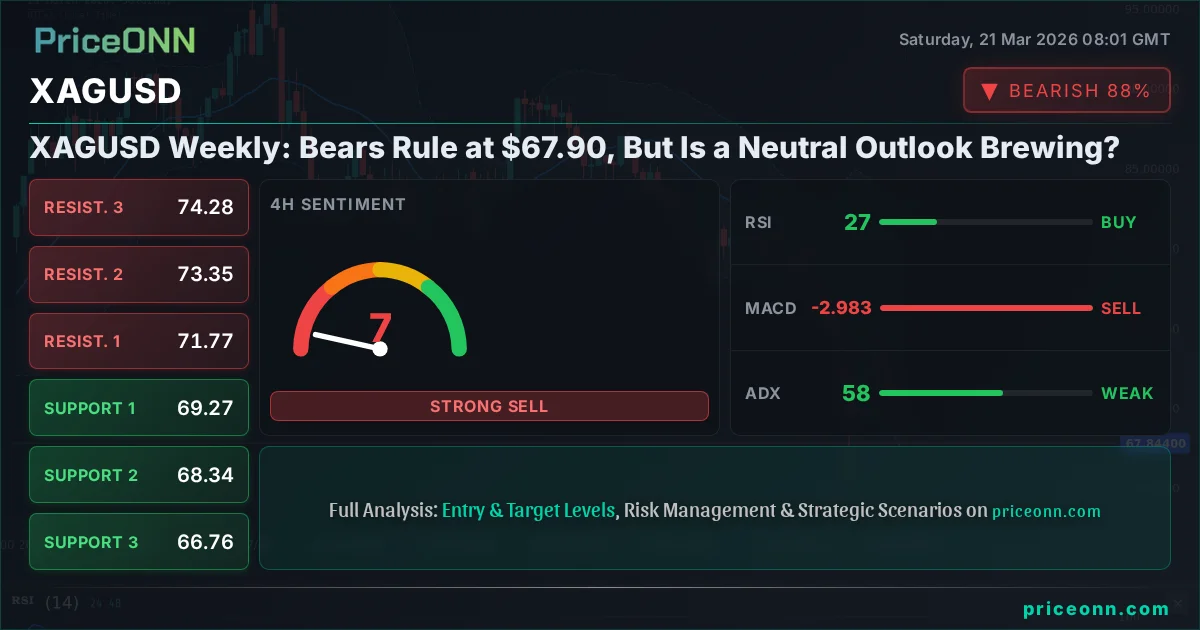
The broader commodity complex is under pressure, pushing copper into a technical bear market and sending silver down approximately 44% from its peak. Copper futures closed the session 4.0% lower at $5.30 per pound ($11,690 per tonne), capping a 7.4% weekly loss. Silver, known for its volatility, saw an even steeper drop, trading at $67.81, a 6.9% decrease from Friday's session start, and is down 40% from its recent high.
Market Context
The dramatic price action in precious metals and industrial commodities is having a profound impact on the mining sector. Major mining companies have collectively seen billions of dollars in market capitalization evaporate, with some of the world's largest players experiencing stock value declines approaching 30% since the recent geopolitical conflict began. This broad-based sell-off suggests a significant shift in market sentiment and a potential deleveraging across commodity-linked assets.
Stocks of companies heavily invested in gold and silver have been particularly hard hit. For instance, a leading gold producer, Newmont, has seen its stock trade down by 26.3% from pre-conflict levels. Barrick Mining has experienced a similar downturn, with its stock value decreasing by 26.8% over the same period. This indicates that the market is repricing mining equities not just on current commodity prices but also on future expectations, which appear to be turning bearish.
Analysis & Drivers
The synchronized decline across gold, silver, and copper points to a confluence of macroeconomic pressures and shifting risk sentiment. While the specific geopolitical catalyst is ongoing, market data suggests that a broader risk-off environment is driving investors away from commodities and towards safer assets. This is often exacerbated by tightening liquidity conditions and concerns about global economic growth, which can reduce demand for industrial metals like copper.
Furthermore, the sharp decline in gold, typically seen as a safe-haven asset, is particularly noteworthy. Analysts suggest this could indicate that the market is pricing in a rapid resolution to geopolitical tensions or, more concerningly, that a significant global economic slowdown is anticipated, which could broadly depress all asset classes. The U.S. dollar's performance and the trajectory of interest rate expectations from major central banks will be critical in determining the next leg for these commodities.
Trader Implications
Traders are facing a challenging environment characterized by high volatility and significant downside risk across the commodity complex. Key levels to watch for gold include support around the $4,400 mark, with resistance potentially forming near the $4,600 level. For silver, the $65 per ounce level is a critical support, while a break below could open the door to further declines towards $60. Copper traders should monitor the $5.20 per pound level, as a sustained breach could signal a deeper bear market.
The sharp decline in mining stocks presents both risks and opportunities. Investors might consider hedging their exposure to mining equities or looking for companies with strong balance sheets and diversified operations that can weather the storm. Conversely, short-term traders might find opportunities in the increased volatility, but strict risk management is paramount. The current market suggests a bearish bias, and any rallies should be viewed with caution until a clear trend reversal is established.
Outlook
The immediate outlook for gold, silver, and copper remains uncertain, heavily dependent on the evolution of geopolitical events and macroeconomic indicators. Should tensions escalate or economic data deteriorate further, the downward pressure on commodities could intensify. Conversely, any signs of de-escalation or a pivot in central bank policy towards easing could spark a rebound. For now, traders should brace for continued volatility and focus on risk management, paying close attention to key support and resistance levels, as well as any shifts in global liquidity and investor sentiment.
Frequently Asked Questions
What caused the recent sharp drop in gold prices?
Gold prices suffered their worst week in decades, falling over 11% from recent highs to near $4,492 per ounce. This was driven by a broad commodity sell-off, likely influenced by shifting geopolitical sentiment and a potential move towards risk-off assets, despite gold's typical safe-haven status.
How much have silver and copper prices fallen from their peaks?
Silver has seen a significant decline of approximately 44% from its recent peak, trading around $67.81. Copper has entered bear market territory, falling nearly 20% from its all-time high, with prices now around $5.30 per pound.
What are the key price levels to watch for traders in gold and copper?
Traders should monitor support for gold near $4,400 per ounce. For copper, a critical level to watch is $5.20 per pound; a sustained break below this could signal further downside pressure in the industrial metal.
Track markets in real-time
Empower your investment decisions with AI-powered analysis, technical indicators and real-time price data.
Join Our Telegram Channel
Get breaking market news, AI analysis and trading signals delivered instantly to your Telegram.
Join Channel
PriceONN