
Why Did Oil Prices Plunge Over 5% Today?

Oil prices experienced a significant downturn in early Asian trading, with both West Texas Intermediate (WTI) and Brent crude benchmarks plummeting by over 5%. This sharp correction followed news suggesting a potential de-escalation of tensions in the Middle East, coupled with an unexpected increase in U.S. crude inventories.
Market Context
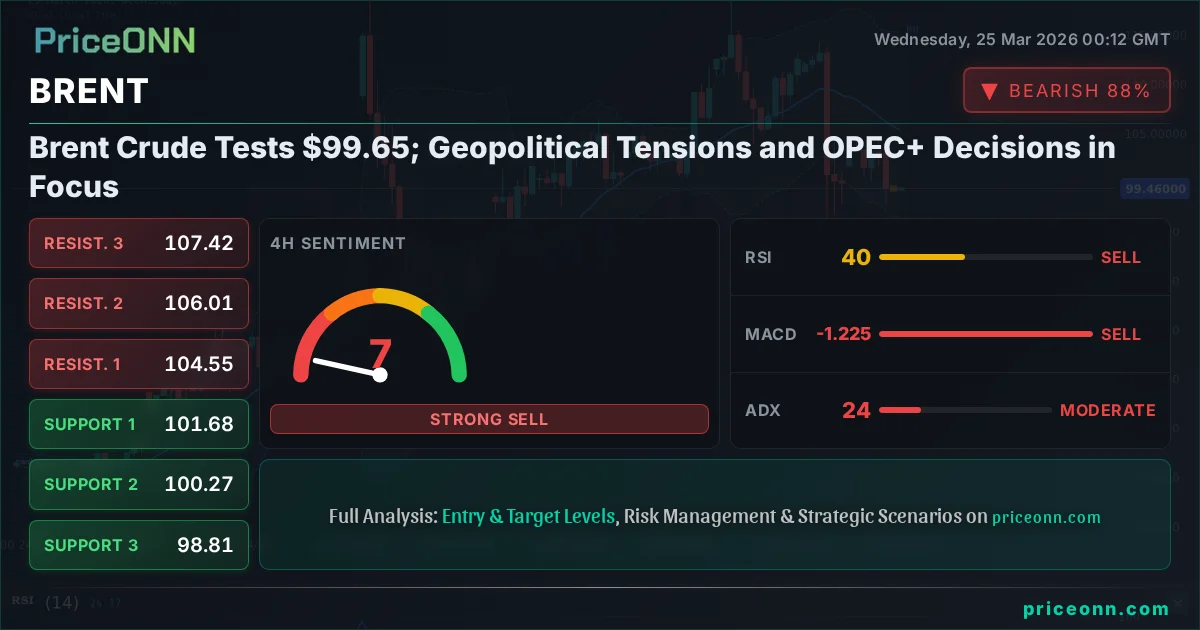
As of the latest reports, WTI crude was trading at $87.51 per barrel, marking a 5.24% decrease. Meanwhile, Brent crude futures fell below the significant $100 psychological level, settling at $98.03 per barrel, a 6.08% drop. This selloff occurred after a period of extreme volatility, during which prices had initially surged on geopolitical concerns before experiencing this rapid decline. The market is now reacting to signals that diplomatic efforts may be gaining traction.
Analysis & Drivers
The primary catalyst for the sharp price drop appears to be renewed optimism surrounding a potential ceasefire in the Middle East. Reports indicate that the U.S. has presented a peace framework to Iran, fostering hopes for a temporary cessation of hostilities. Further supporting this sentiment, Iran has communicated with the International Maritime Organization, suggesting that non-hostile vessels can navigate the Strait of Hormuz under coordination with Iranian authorities. Public statements from U.S. leadership have also hinted at progress in negotiations, with Iran reportedly “talking sense.”
Adding to the downward pressure, particularly on WTI, industry data revealed an unexpected build in crude oil and gasoline inventories for the week ending March 20. The American Petroleum Institute (API) reported this inventory increase, suggesting softer demand or increased supply within the U.S. market.
Despite the current price decline, underlying geopolitical risks remain elevated. The Pentagon is reportedly preparing to deploy military assets to the Middle East, and regional tensions persist, with Israeli officials considering escalations against Hezbollah. These factors continue to underpin a degree of supply risk, even as immediate sentiment shifts towards de-escalation.
Trader Implications
Traders should closely monitor diplomatic developments in the Middle East, as any breakdown in negotiations could quickly reignite upward price pressure. Key levels to watch include the $95-$97 range for Brent as a potential support zone, and $85-$87 for WTI. A sustained move below these levels could signal further downside, while a resurgence of conflict fears could see prices rapidly re-test recent highs.
The unexpected inventory build reported by the API suggests that traders should also pay close attention to upcoming official U.S. Energy Information Administration (EIA) data, which could confirm or contradict this trend. A larger-than-expected build would likely add further bearish pressure, while a draw could provide some support for prices.
Outlook
The immediate outlook for oil prices remains highly sensitive to geopolitical news from the Middle East. While current market sentiment favors a de-escalation, the situation is fragile. Should diplomatic efforts falter, or if regional tensions escalate, crude prices could swiftly rebound. Conversely, a confirmed ceasefire would likely lead to further price consolidation or a continued downward trend, provided U.S. inventory levels remain robust. Traders should remain cautious and prepared for significant volatility.
Frequently Asked Questions
What caused the sudden drop in oil prices today?
Oil prices dropped sharply due to optimism surrounding potential ceasefire talks in the Middle East and an unexpected build in U.S. crude inventories. Brent crude fell below $100 to $98.03, and WTI dropped to $87.51.
Are the geopolitical risks in the Middle East over?
No, the geopolitical risks remain significant despite current optimism. Reports of potential military deployments and regional threats indicate that the situation is still volatile, and a sustained de-escalation is not yet guaranteed.
What are the key support levels to watch for oil prices?
Traders should monitor $95-$97 for Brent crude as a potential support zone. For WTI, the $85-$87 range is a key area to watch. A break below these levels could indicate further declines.
Track markets in real-time
Empower your investment decisions with AI-powered analysis, technical indicators and real-time price data.
Join Our Telegram Channel
Get breaking market news, AI analysis and trading signals delivered instantly to your Telegram.
Join Channel



PriceONN