
Why Did WTI Crude Oil Rebound Above $90 After Monday's Steep Sell-Off?
West Texas Intermediate (WTI) crude oil prices experienced a dramatic rebound on Tuesday, recovering approximately 3% to trade above the $90.00 per barrel mark. This recovery came on the heels of a severe 11% sell-off witnessed on Monday, a sharp reversal that saw prices fall from a brief flirtation with the $100 psychological level down towards the $85 area.
Market Context: A Diplomatic Pivot and Lingering Tensions
The volatile price action appears to have been directly influenced by statements from the US President. Initial reports suggested a postponement of planned strikes on Iranian energy infrastructure, a development that was interpreted as a de-escalation of geopolitical tensions. This news initially provided a bearish catalyst, pushing WTI prices lower.
However, the narrative quickly became complex. Iran's representatives reportedly denied any active negotiations for de-escalation, while regional reports indicated continued military actions. This conflicting information created a high degree of uncertainty in the market. Analysts suggest that the US President's comments may have been a deliberate, albeit unconventional, attempt to exert downward pressure on oil prices through verbal intervention. The immediate impact on the XTI/USD trading chart was undeniable, with prices falling below previous weekly levels following the pronouncements.
Analysis & Drivers: Geopolitics Trumping Fundamentals
The recent price swings highlight the dominant role of geopolitical factors over traditional supply and demand fundamentals in the short term. While factors such as global growth, OPEC+ production decisions, and inventory reports (from the API and EIA) are always underlying drivers for WTI, unexpected geopolitical events can create significant volatility.
The market's reaction to the US President's statements underscores how sensitive oil prices are to perceived shifts in the geopolitical landscape, particularly concerning the Middle East. The rapid fall from above $100 to the mid-$80s and the subsequent recovery above $90 demonstrate this sensitivity. A technical review from March 16th had identified significant selling pressure around the $100 barrier and a support cluster following the price's exit from a descending channel, which played a role in slowing the initial sharp decline. The market is now navigating within a wide ascending channel, with its lower boundary acting as a crucial support level.
Trader Implications: Watching Key Levels and Conflicting Signals
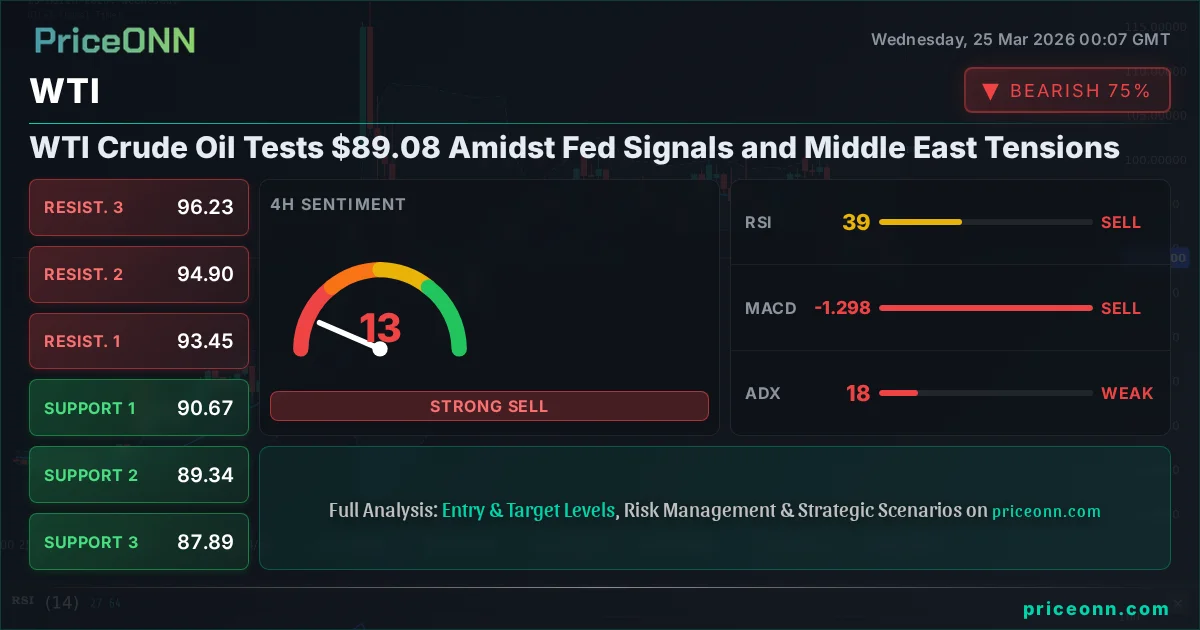
Traders should remain vigilant as conflicting signals continue to emerge from the geopolitical front. The rebound above $90.00 suggests that the market may be re-evaluating the immediate de-escalation narrative. Key levels to watch include the $90-$92 zone as immediate support, with significant resistance expected around the $95-$100 range.
The market's ability to sustain prices above $90 will depend on the clarity of the geopolitical situation and any further official statements. Traders should also monitor upcoming inventory data from the API and EIA, as these will provide a more fundamental view of supply and demand dynamics. Given the recent volatility, a cautious approach is warranted. A decisive break above $100 could signal a renewed bullish trend, while a fall back below $85 would indicate a continuation of the bearish sentiment driven by geopolitical de-escalation fears.
Outlook: Navigating Uncertainty
The immediate outlook for WTI crude oil remains highly uncertain, heavily influenced by the evolving geopolitical narrative and the veracity of de-escalation efforts. While the rebound above $90 offers some respite to buyers, the underlying tensions in the Middle East persist. Traders will be looking for concrete signs of diplomatic progress or a clear escalation to guide their positions. The market's reaction to the next round of official statements and any further developments in regional conflicts will be critical in determining the direction of WTI prices in the coming days.
Frequently Asked Questions
What caused the sharp drop in WTI crude oil prices on Monday?
WTI crude oil prices plummeted nearly 11% on Monday, falling towards the $85 per barrel level. This decline was primarily triggered by statements from the US President indicating a postponement of planned strikes on Iranian energy infrastructure, which was interpreted as a de-escalation of geopolitical tensions.
Why did WTI crude oil rebound above $90 on Tuesday?
The rebound above $90.00 on Tuesday was driven by a reassessment of the geopolitical situation and lingering doubts about de-escalation. Conflicting reports from Iran and continued regional tensions likely prompted traders to cover short positions and re-enter the market, pushing prices back up by approximately 3%.
What are the key levels to watch for WTI crude oil traders?
Traders should monitor the $90-$92 zone as immediate support. Significant resistance is expected around the $95-$100 range. A sustained move above $100 could signal further upside, while a break below the $85 level might indicate a continuation of the bearish trend.
Track markets in real-time
Empower your investment decisions with AI-powered analysis, technical indicators and real-time price data.
Join Our Telegram Channel
Get breaking market news, AI analysis and trading signals delivered instantly to your Telegram.
Join Channel



PriceONN