
Why Did Oil Prices Surge Past $100 Amid Iran Tensions?
Crude oil prices have surged dramatically, with benchmarks breaking the $100 per barrel threshold, driven by escalating geopolitical confrontations in the Middle East. The heightened tensions, particularly concerning Iran's assertive stance on maritime passage, have ignited fears of significant disruptions to global energy supplies, fundamentally altering market sentiment and prompting a reevaluation of energy consumption strategies.
Market Context: Strait of Hormuz Under Threat
Benchmark crude oil futures experienced a sharp upward trajectory, with West Texas Intermediate (WTI) for May delivery climbing by 5.63% to $99.80 per barrel, nearing the critical $100 mark before reports indicated prices had indeed surpassed it. This rapid ascent is directly attributed to the increasing risk of supply chain interruptions, especially through the Strait of Hormuz, a vital chokepoint for global oil transit. The Islamic Revolutionary Guards Corps (IRGC) has declared control over the strait, reportedly turning away vessels and issuing stern warnings against challenging their authority, particularly for ships linked to the United States or Israel. This aggressive posture has amplified fears of halted export flows from oil-producing nations in the region, leading to a palpable supply crunch.
Analysis & Drivers: Geopolitics Fueling Price Hikes
The primary driver behind the oil price surge is the precarious geopolitical situation in the Middle East. The IRGC's declaration of control over the Strait of Hormuz, coupled with reports of turning away vessels, represents a significant escalation in the ongoing regional conflict. This has overshadowed diplomatic efforts and instilled a deep-seated fear of supply disruptions. Market data indicates that millions of barrels of oil production could be curtailed or halted due to these developments, impacting not only Asian markets but also posing a significant threat to European supply chains. The aggressive rhetoric from Iranian forces, warning civilians to stay clear of U.S. military presence, further heightens the risk premium embedded in oil prices. This volatile environment has led analysts to note that the potential closure of this critical waterway could fundamentally alter the trajectory of global energy markets and consumer choices.
Trader Implications: Navigating Volatility
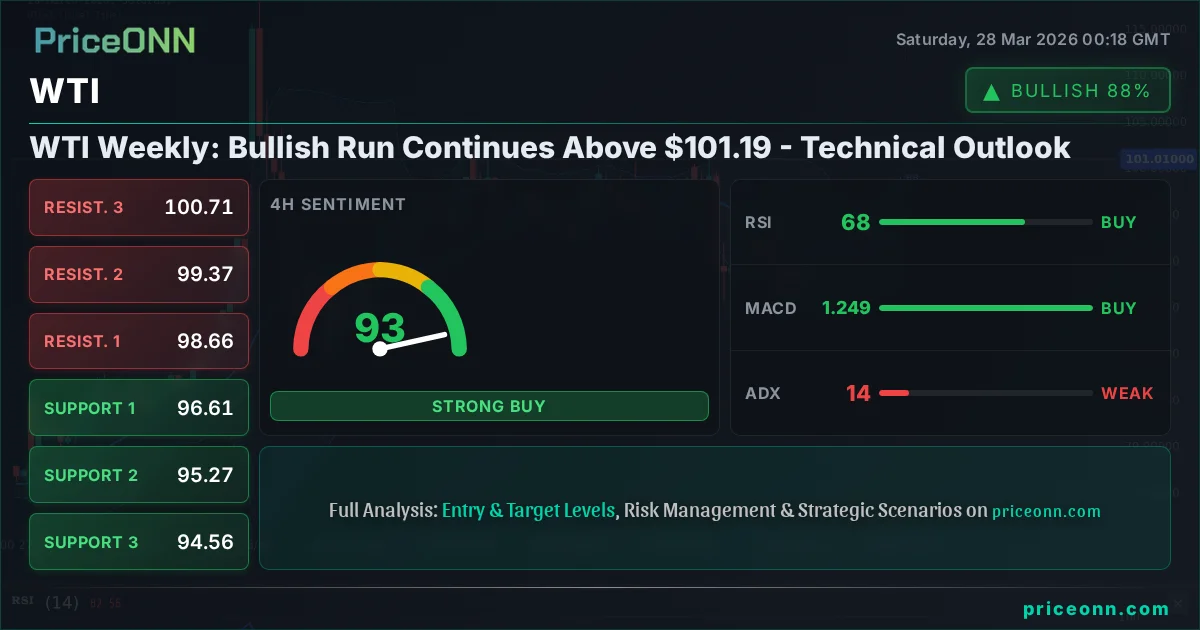
Traders are now faced with a highly volatile energy market where geopolitical risk is the dominant factor. The immediate implication is a strong upward bias for crude oil prices as long as supply disruption fears persist. Key levels to watch include the immediate resistance around the $100-$105 per barrel range. Support can be found around the $95 per barrel mark, though a sustained breach of this level seems unlikely in the current climate. Investors should monitor news flow from the Middle East closely, as any further escalation or de-escalation will have swift and significant impacts on price. The increased cost of oil is also accelerating the economic viability of alternative energy sources. Market data shows that electric vehicles (EVs) are becoming increasingly attractive, especially in price-sensitive markets. The surge in oil prices, which has seen a near 50% climb in some instances, makes EVs a more compelling proposition, potentially benefiting automakers with strong EV portfolios, particularly those in China.
Outlook: Sustained High Prices and EV Acceleration
The outlook for crude oil remains bullish in the short to medium term, contingent on the de-escalation or intensification of the Middle East conflict. As long as the Strait of Hormuz remains a point of contention and supply disruptions are feared, oil prices are likely to remain elevated, potentially testing higher resistance levels. This sustained period of higher energy costs is expected to further accelerate the global transition towards electric vehicles. Industry reports indicate a significant increase in countries where EVs constitute over 10% of new car sales, a trend that is likely to be amplified by the current oil price shock, reinforcing China's position as a dominant force in the automotive market.
Frequently Asked Questions
What is the current price of WTI crude oil?
West Texas Intermediate (WTI) crude for May delivery saw a significant jump, trading up by 5.63% to $99.80 per barrel, with broader market reports indicating prices have surpassed the $100 per barrel mark amid escalating tensions.
How does the Iran conflict impact oil supply?
The conflict heightens fears of disruption to vital shipping lanes like the Strait of Hormuz. The IRGC's assertion of control and reported actions against vessels could halt or significantly reduce export flows from the region, creating a supply crunch.
What are the implications for electric vehicle adoption?
The surge in oil prices, driven by geopolitical events, makes electric vehicles a more economically attractive option. This is expected to accelerate the global transition to EVs, reinforcing China's leading position in the automotive market.
Track markets in real-time
Empower your investment decisions with AI-powered analysis, technical indicators and real-time price data.
Join Our Telegram Channel
Get breaking market news, AI analysis and trading signals delivered instantly to your Telegram.
Join Channel
PriceONN