Why Did Oil Prices Tumble as Trump Seeks Iran Diplomacy?
West Texas Intermediate (WTI) crude oil experienced a notable retreat on Tuesday, shedding gains from its previous four-day rally. The benchmark contract was last seen trading around $101.60 per barrel for May delivery, marking a significant drop from recent highs. This price action suggests a notable shift in market sentiment, driven by evolving geopolitical developments.
Market Context
The sudden plunge in oil prices follows reports indicating a potential shift in U.S. foreign policy regarding Iran. After a period of escalating tensions that had significantly impacted supply chain fears, market participants are now reacting to signals that U.S. President Donald Trump may be prioritizing diplomatic channels over further military action. The Strait of Hormuz, a critical chokepoint for global oil exports, has remained closed since the conflict began on February 28th, leading to stranded tankers, transit disruptions, and increased storage difficulties. Several Arab nations have already halted or drastically scaled down oil production in response, contributing to the earlier price surge.
Analysis & Drivers
The primary driver behind Tuesday's price correction appears to be the growing speculation that President Trump is willing to end the U.S. military offensive against Iran and instead pursue diplomatic efforts to reopen the Strait of Hormuz. Reports cite U.S. administration officials suggesting a readiness to allow European and Gulf allies to take the lead in diplomatic negotiations if direct talks with Iran falter. This potential de-escalation has significantly eased the immediate supply disruption fears that had previously propelled oil prices upward. The previous narrative of impending conflict and intensified sanctions had led to significant price volatility, with war threats directly contributing to higher crude prices.
However, the underlying situation remains tense. Prior to this diplomatic overture, President Trump had issued stern warnings, stating that failure by Iran to lift the blockade of the Strait of Hormuz would result in the decimation of Iranian power and energy infrastructure, including its oil refineries. The recent deployment of additional U.S. troops to the Middle East had further heightened these concerns.
Trader Implications
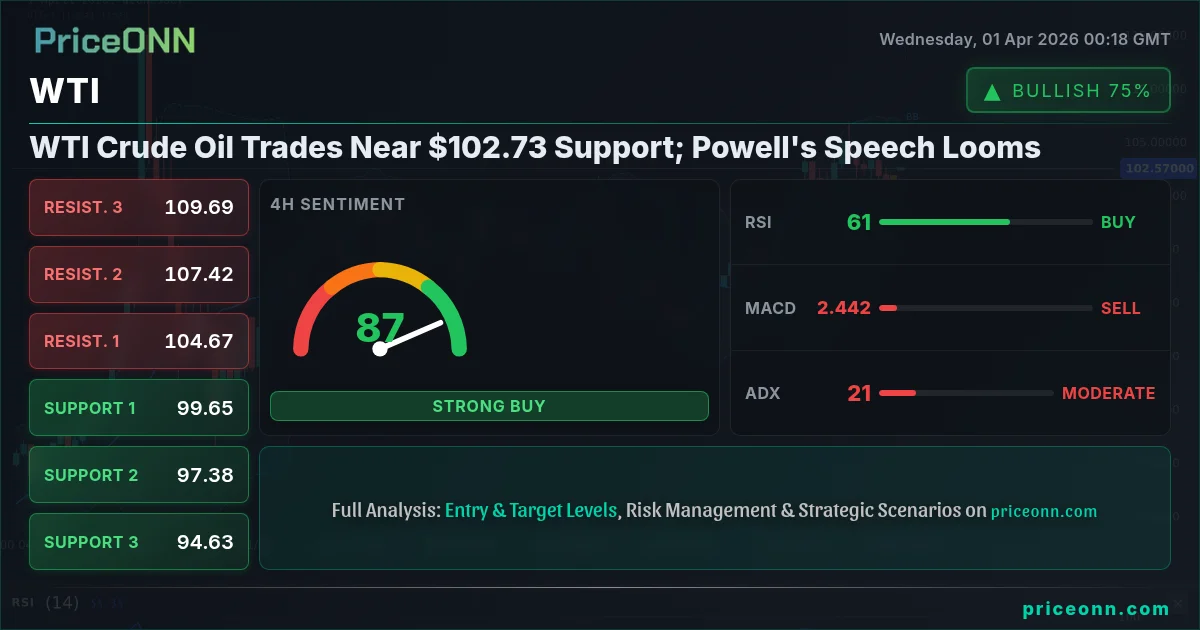
Traders should closely monitor any further official statements from the White House or the Iranian government regarding diplomatic progress. Key levels to watch for WTI include the recent high around $105-$106, which could act as resistance, and the $100 psychological level, which now becomes a crucial support. A sustained move below $100 could signal further downside potential, especially if diplomatic breakthroughs materialize. Conversely, any resurgence in conflict rhetoric or confirmed supply disruptions would likely reignite bullish sentiment.
The market is now grappling with a dual narrative: the potential for de-escalation versus the lingering risk of renewed conflict. This uncertainty creates an environment ripe for volatility. Investors and traders should consider hedging strategies or maintaining a cautious approach until clearer signals emerge. The recent inflationary concerns, driven partly by high energy prices, have also prompted major central banks to reconsider rate-cut plans, adding another layer of complexity to the broader economic outlook.
Outlook
The immediate future of oil prices hinges on the success of diplomatic efforts between the U.S. and Iran. If negotiations lead to a tangible reopening of the Strait of Hormuz and a broader de-escalation, crude prices could see further downward pressure, potentially retesting levels closer to $95 or lower. However, any breakdown in talks or perceived Iranian non-compliance could swiftly reverse this trend, pushing prices back towards the $105 mark and beyond. Traders will be keenly awaiting further developments from the Middle East and official pronouncements from global leaders in the coming days.
Frequently Asked Questions
What caused the recent drop in WTI crude oil prices?
WTI crude oil prices fell sharply to around $101.60 per barrel due to reports suggesting U.S. President Donald Trump is pursuing diplomatic solutions to de-escalate tensions with Iran, easing fears of prolonged supply disruptions from the Strait of Hormuz.
What is the significance of the Strait of Hormuz closure?
The Strait of Hormuz is a critical chokepoint for global oil exports. Its closure since February 28th has led to stranded tankers, transit issues, and production cuts by some Arab nations, directly contributing to earlier oil price surges and inflationary concerns.
What are the key price levels to watch for WTI crude oil?
Traders should monitor the recent high around $105-$106 as potential resistance. The $100 level is a critical support; a sustained break below it could indicate further downside, while a rebound above $105 would suggest a return of bullish momentum.
Track markets in real-time
Empower your investment decisions with AI-powered analysis, technical indicators and real-time price data.
Join Our Telegram Channel
Get breaking market news, AI analysis and trading signals delivered instantly to your Telegram.
Join Channel