Is the Strait of Hormuz Becoming an Impassable Chokepoint for Global Energy?
The critical Strait of Hormuz, a vital artery for global energy supplies, is facing unprecedented disruption, with 28 ships carrying crude oil, LPG, and LNG to India currently stranded in its vicinity. This escalating situation, confirmed by Indian government officials, includes 18 Indian-flagged vessels and 10 foreign-flagged carriers, underscoring a significant threat to energy security for major importing nations.
Market Context
The impasse at this crucial chokepoint is a direct consequence of rising geopolitical tensions in the Middle East. According to data from India's Ministry of Ports, Shipping and Waterways, the stranded fleet comprises four foreign-flagged crude oil tankers, three LPG carriers, and three LNG carriers, alongside 18 Indian-flagged vessels, including four crude oil tankers and three LPG carriers. While Indian authorities have stated that all 485 seafarers on board are safe, the blockage is creating a palpable strain on energy markets. In the United States, this disruption contributed to a temporary surge in the national average gasoline price, which briefly crossed the $4 per gallon mark on Monday before settling around $3.950 per gallon according to GasBuddy and $3.990 per gallon by AAA. Analysts warn that upward pressure on fuel prices is likely to persist as long as these supply constraints remain.
Analysis & Drivers
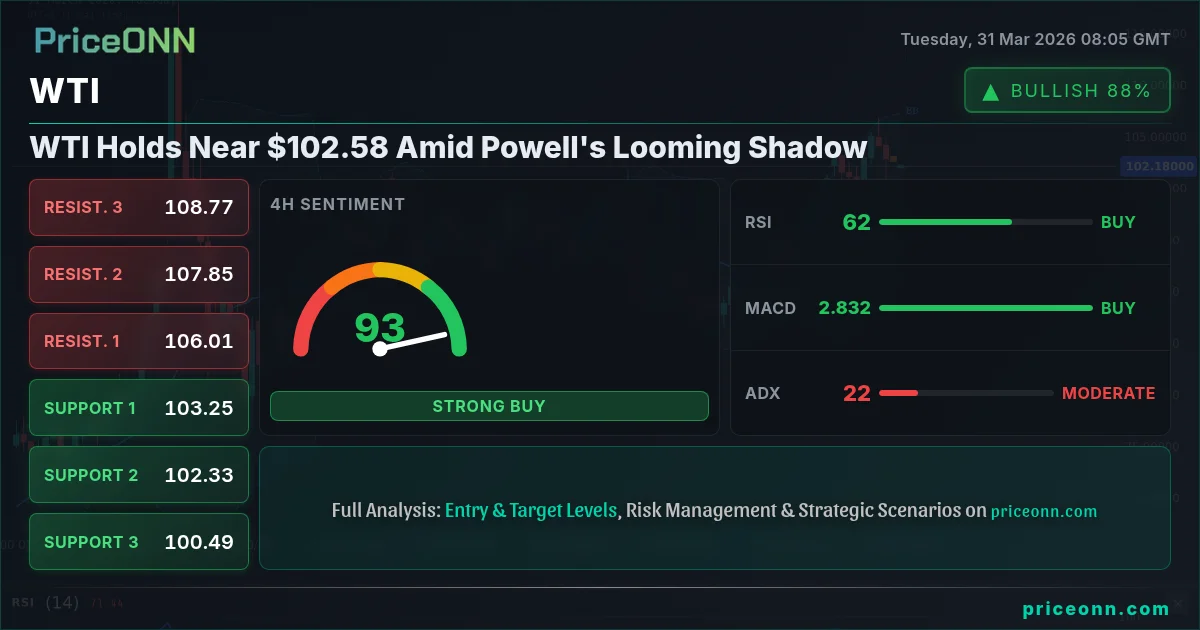
The primary driver behind the current energy supply chain snarl is the heightened conflict in the Middle East. A recent incident saw an Iranian drone reportedly attack a Kuwaiti oil tanker, the Al Salmi, anchored at Dubai port, causing a fire that has since been brought under control. This very large crude carrier, with a capacity of 2 million barrels, was fully laden at the time of the attack. The incident occurred despite recent statements from U.S. President Trump suggesting a desire for de-escalation, followed by threats to Iranian infrastructure. The fluctuating U.S. strategy, oscillating between diplomatic overtures and aggressive rhetoric, adds a layer of unpredictability to an already volatile situation. The effective closure of the Strait of Hormuz is curtailing the flow of millions of barrels of crude oil daily, pushing benchmarks like West Texas Intermediate (WTI) into three-digit territory, with prices trading near $102.73 per barrel, while Brent crude futures hovered around $112.94 per barrel.
Trader Implications
Traders should closely monitor developments in the Strait of Hormuz and broader Middle East tensions. The sustained disruption poses a significant risk to oil and refined product prices. Key levels to watch include the $4 per gallon mark for U.S. gasoline and the psychological $100 and $110 levels for WTI and Brent crude, respectively. Any further escalation or prolonged blockage could see these prices climb significantly higher. The increased cost of gasoline, with Americans having already spent an estimated nearly $8 billion more over the past month, also poses growing risks to the broader economy, potentially reaccelerating inflation through elevated diesel prices. Traders should consider strategies that account for continued price volatility and potential supply-driven rallies.
Outlook
The outlook for energy markets remains heavily contingent on the geopolitical situation in the Middle East. Should tensions de-escalate and passage through the Strait of Hormuz be restored, prices could see some moderation. However, as long as the threat of disruption looms and vessels remain stranded, upward pressure on oil and gasoline prices is likely to persist. The effective closure of this vital chokepoint could lead to sustained multi-year highs in fuel prices, with forecasts suggesting gasoline could remain above $4 per gallon and diesel climbing closer to $6 per gallon if the situation does not improve.
Frequently Asked Questions
What is the immediate impact of the Strait of Hormuz disruption on oil prices?
The disruption has led to a temporary surge in U.S. gasoline prices, briefly exceeding $4 per gallon. Benchmark crude prices like WTI are trading near $102.73 per barrel, reflecting concerns over supply constraints. Persistent blockage could push these levels higher.
How many ships are currently stranded and what are they carrying?
A total of 28 ships are stranded near the Strait of Hormuz. These vessels are carrying essential energy commodities including crude oil, liquefied petroleum gas (LPG), and liquefied natural gas (LNG) destined for India.
What is the outlook for gasoline prices if the Strait of Hormuz remains disrupted?
Analysts predict that if the situation in the Middle East does not change and global oil supplies remain constrained, U.S. gasoline prices are likely to persist above $4 per gallon. Diesel prices could climb closer to $6 per gallon.
Track markets in real-time
Empower your investment decisions with AI-powered analysis, technical indicators and real-time price data.
Join Our Telegram Channel
Get breaking market news, AI analysis and trading signals delivered instantly to your Telegram.
Join Channel