
Why Did US Gas Prices Spike Nearly $1.00 in a Month?
Gasoline prices have experienced a dramatic surge, with the national average climbing by nearly $1.00 per gallon over the past month. This rapid escalation, including an overnight increase of about 50 cents per gallon, marks one of the fastest price hikes seen in decades.
Market Context
The recent sharp rise in gasoline costs is largely attributed to escalating geopolitical tensions, specifically hostilities involving Iran. While the United States holds the position of the world's largest oil producer, domestic energy independence does not fully insulate consumers from global market dynamics. The price of gasoline at the pump reflects a complex interplay of global supply and demand, trader sentiment, and the cost of crude oil, which is priced on international exchanges.
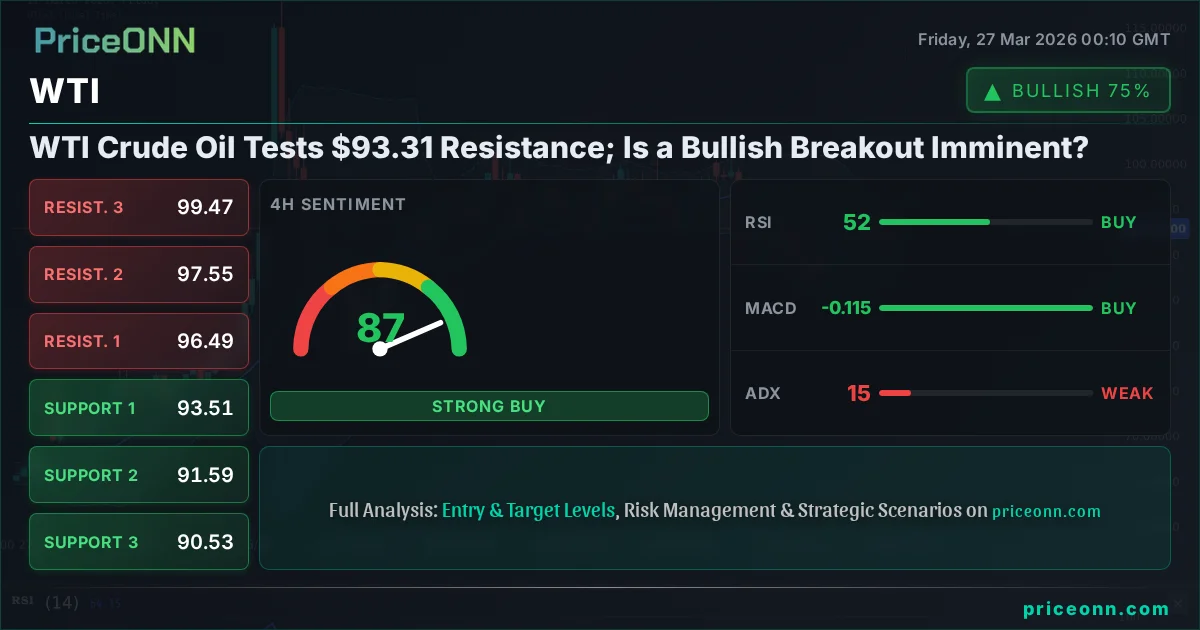
Industry data indicates that the national average gasoline price has climbed by approximately $1.00 per gallon in the last 30 days. This surge is not a reflection of immediate domestic supply issues but rather the market's pricing-in of future supply risks. Even though the gasoline currently in consumers' tanks was refined from crude oil purchased weeks prior at lower prices, the retail price adjustment is swift due to the global nature of oil pricing.
Analysis & Drivers
A key driver behind these price fluctuations is the global pricing mechanism for crude oil. Despite being the largest producer, the U.S. sells its oil into a unified global market where prices are determined by international traders. This means that any significant disruption to global supply routes or production can immediately impact prices worldwide, including those in the U.S. refiners must compete in this global market to secure crude oil supplies, forcing them to match international price benchmarks.
The Strait of Hormuz, through which approximately 20% of the world's oil flows, is a critical chokepoint. Increased risk or actual disruption in this region, as suggested by recent events, leads traders to immediately price in potential supply shortages. This global risk premium is then passed down through the supply chain, affecting crude oil prices and subsequently, the cost of refined products like gasoline. The notion of energy independence for the U.S. means being deeply integrated into this global system rather than isolated from it.
Trader Implications
For traders, the current environment underscores the importance of monitoring geopolitical developments, particularly those affecting major oil-producing regions and transit routes. The rapid price movements suggest a heightened sensitivity to supply-side risks. Key levels to watch will be the sustained price of West Texas Intermediate (WTI) and Brent crude oil, as well as the national average gasoline price trends.
Traders should anticipate continued volatility as long as geopolitical uncertainty persists. A sustained increase in crude oil prices above $85 per barrel for WTI could signal further upward pressure on gasoline. Conversely, de-escalation of tensions or resolution of supply concerns could lead to a rapid price retracement. Risk management strategies should account for the potential for sharp, sudden price swings driven by news events rather than fundamental shifts in domestic supply or demand.
The outlook suggests that consumers should prepare for elevated fuel costs in the short to medium term. The market's reaction to geopolitical events highlights the fragility of global energy supplies and the interconnectedness of oil markets. Traders looking to capitalize on this volatility might consider strategies that benefit from sharp price increases, while also being prepared for potential reversals if geopolitical risks subside.
Frequently Asked Questions
Why have US gas prices risen so quickly recently?
US national average gas prices have surged by nearly $1.00 per gallon in the past month, with an overnight jump of about 50 cents. This rapid increase is primarily driven by geopolitical events impacting global oil supply, causing traders to price in future risk premiums.
Does US oil production insulate it from global price spikes?
No, despite being the world's largest oil producer, the US is deeply integrated into the global market. US oil is priced internationally, and refiners must match global benchmarks, meaning domestic prices are still susceptible to global supply disruptions and geopolitical risks like those affecting the Strait of Hormuz.
What should traders watch for in the coming weeks?
Traders should closely monitor geopolitical developments impacting oil supply routes and production. Sustained crude oil prices above $85 per barrel for WTI could indicate further upward pressure on gasoline. Conversely, de-escalation of tensions may lead to price retracements, emphasizing the need for robust risk management.
Track markets in real-time
Empower your investment decisions with AI-powered analysis, technical indicators and real-time price data.
Join Our Telegram Channel
Get breaking market news, AI analysis and trading signals delivered instantly to your Telegram.
Join Channel
PriceONN