
Why Did WTI Crude Plummet 5.6% Amid U.S.-Iran De-escalation Hopes?

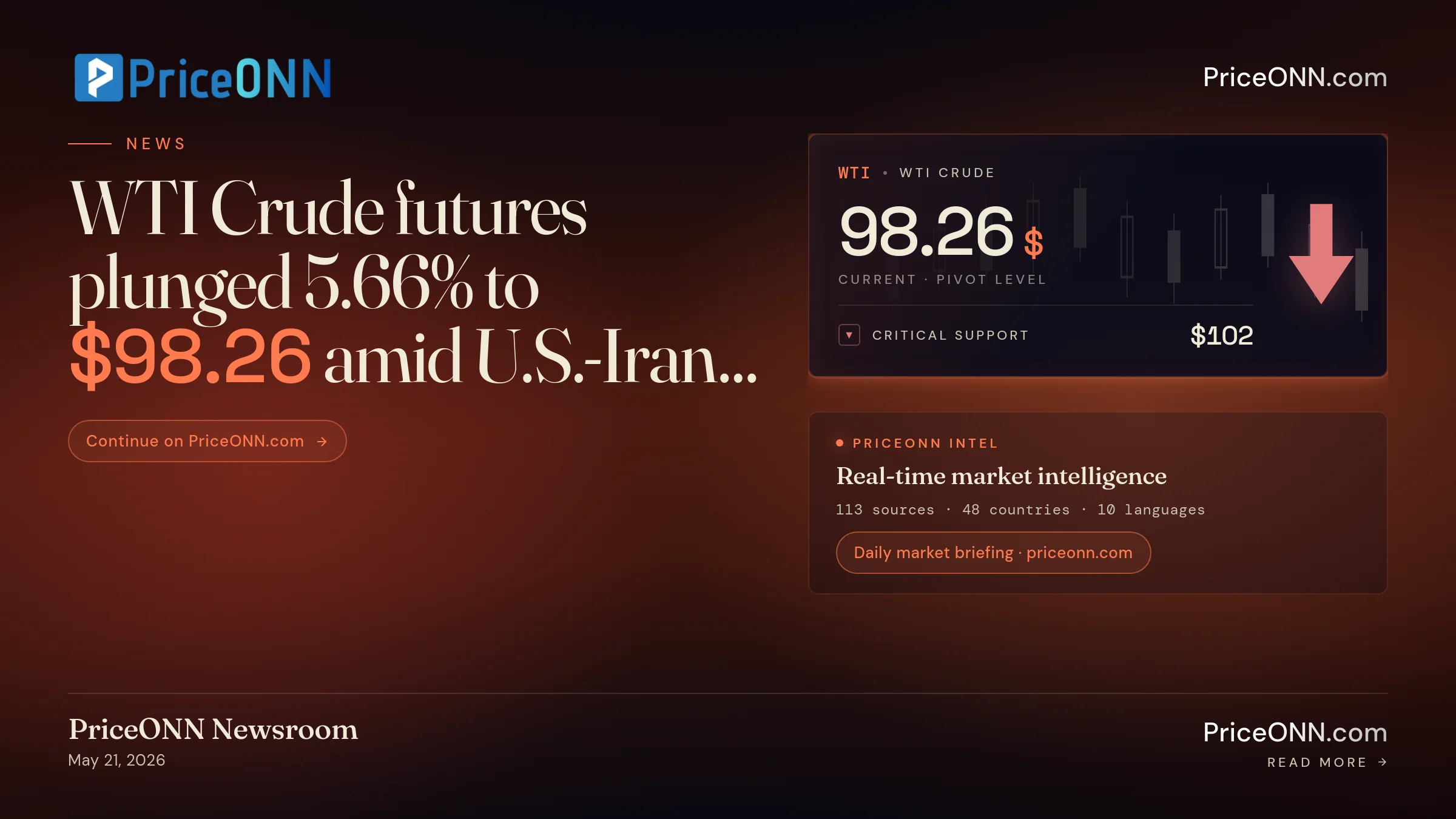
WTI Crude futures experienced a dramatic downturn, shedding 5.66% to settle at $98.26 per barrel for July delivery. This significant price drop was primarily fueled by mounting optimism surrounding diplomatic progress in de-escalating the protracted U.S.-Iran conflict, a development that has overshadowed a surprisingly large decrease in U.S. crude oil inventories.
Market Context
The energy market was jolted by two significant, yet opposing, pieces of data this week. On one hand, the U.S. Energy Information Administration (EIA) reported a substantial 12.2 million barrel decline in crude oil inventories for the week ending June 28th. This figure far exceeded market expectations, which had anticipated a modest 0.2 million barrel decrease, and contrasts sharply with the previous week's 3.6 million barrel build. At 448.5 million barrels, U.S. crude stockpiles are now approximately 4% below the five-year average for this period, indicating a tightening supply situation that would typically support higher prices.
However, this bullish inventory data was completely eclipsed by developments on the geopolitical front. Hopes for a resolution to the 82-day U.S.-Iran dispute, which has led to the closure of the critical Strait of Hormuz, sent crude prices into a freefall. The potential reopening of this vital shipping lane, crucial for both oil transit and global fertilizer supplies, has dramatically shifted market sentiment away from supply concerns and towards a potential easing of geopolitical tensions.
Analysis & Drivers
The primary driver behind the sharp decline in crude prices appears to be the momentum building towards a U.S.-Iran settlement. Reports indicate that Iran, via Pakistan, has conveyed a 14-point proposal aimed at ending the hostilities. This development prompted U.S. President Donald Trump to cancel a planned large-scale military strike, although he maintained that forces remain on high alert for swift retaliation if diplomatic efforts falter. This shift from military confrontation to a diplomatic window, however narrow, has significantly reduced immediate supply risk premiums that had been supporting oil prices.
The conflict's impact on the Strait of Hormuz has been a significant factor, raising concerns about global food security due to disruptions in fertilizer shipments. The U.N. Food and Agriculture Organization had warned of a potential global food price crisis if the situation persisted. The prospect of the Strait reopening alleviates these immediate food security fears, further contributing to the bearish sentiment in the oil market.
While the EIA report highlighted a significant draw in crude inventories, other petroleum product stockpiles also saw reductions. Gasoline inventories fell by 2.2 million barrels, and distillate fuels, including heating oil and diesel, decreased by 1.5 million barrels. Although distillate supplies are now about 10% below the five-year average, the overwhelming focus remains on the geopolitical de-escalation rather than the inventory picture.
Trader Implications
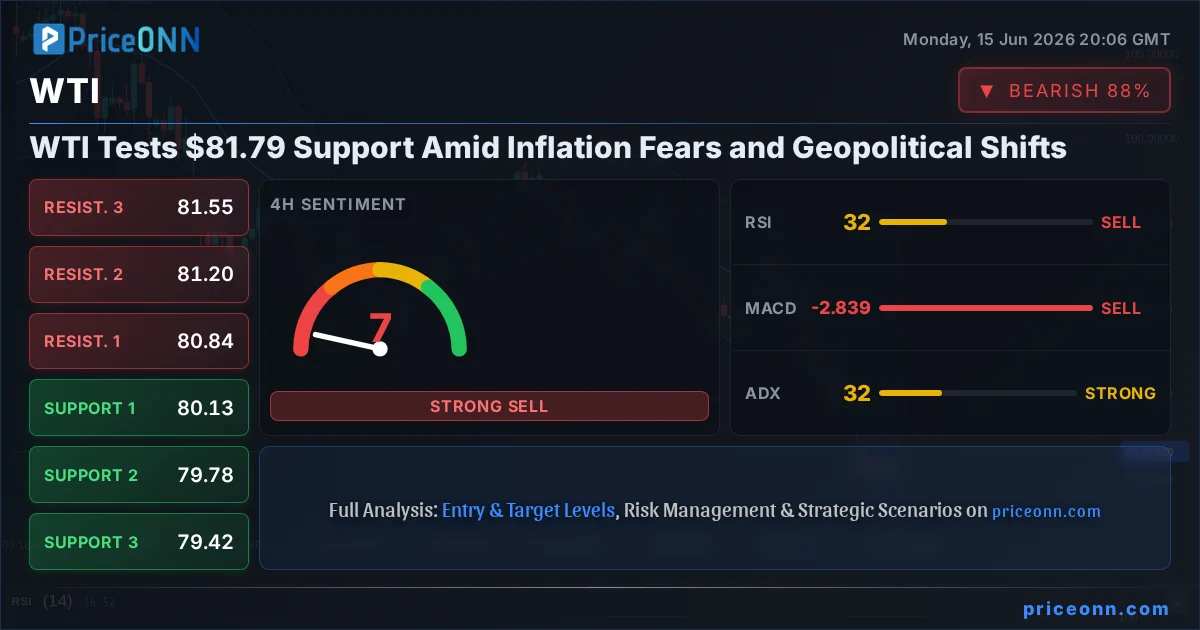
Traders should closely monitor the progress of U.S.-Iran negotiations. A confirmed de-escalation or peace agreement would likely keep downward pressure on crude oil prices, potentially pushing WTI towards the $95-$97 range in the short term. Conversely, any breakdown in talks or renewed escalations could see prices rebound sharply, with the $100-$102 level acting as an initial resistance target.
The unexpected inventory drawdown, while currently overshadowed, could become a more significant factor if diplomatic progress stalls. A sustained draw could eventually reassert upward pressure on prices, especially if demand remains robust. Key levels to watch include the $95 support and the $100 resistance for WTI Crude. Traders should also be aware of the potential for increased volatility as the situation remains fluid.
Outlook
The immediate outlook for crude oil prices hinges precariously on the success of diplomatic efforts between the U.S. and Iran. If a comprehensive resolution is achieved, prices could continue to drift lower as supply concerns recede. However, the market remains sensitive to any shifts in rhetoric or action from either side. Upcoming economic data releases and any further updates on inventory levels will also play a role in shaping market sentiment, but the geopolitical narrative currently dominates. Traders should maintain a cautious approach, prepared for potential price swings as the diplomatic endgame unfolds.
Frequently Asked Questions
What was the main reason for the sharp drop in WTI Crude prices?
The primary driver was the increasing momentum in diplomatic efforts to resolve the U.S.-Iran conflict. Hopes for a de-escalation and potential reopening of the Strait of Hormuz led to a significant sell-off, overshadowing inventory data. WTI Crude futures fell 5.66% to $98.26.
How did U.S. crude oil inventories perform?
U.S. crude oil inventories experienced a much larger than expected drawdown, falling by 12.2 million barrels in the week ending June 28th. This leaves stockpiles about 4% below the five-year average, indicating tighter supply conditions.
What are the key price levels to watch for WTI Crude?
Traders should watch the $95 support level, which could see increased buying interest if prices continue to fall. Conversely, the $100-$102 area represents a key resistance zone that could cap any potential rebound if diplomatic tensions re-emerge.
Track markets in real-time
Empower your investment decisions with AI-powered analysis, technical indicators and real-time price data.
Join Our Telegram Channel
Get breaking market news, AI analysis and trading signals delivered instantly to your Telegram.
Join Channel PriceONN News
(RTTNews) - Crude oil prices have plummeted on Friday, extending yesterday's sharp losses after U.S. President Donald Trump claimed that a U.S.-Iran interim peace agreement will be signed over this weekend and affirmed soon after that the Strait of Hormuz will reopen. The message
PriceONN News
Oil prices plunged in early Monday trading in Asia after the U.S. and Iran announced a deal to reopen the Strait of Hormuz more than 100 days after its closure. At the time of writing, Brent crude had dropped 3.95% to trade at $83.88 per barrel, while WTI had fallen 4.62% to $80.96 per barrel. Oil prices, which peaked in mid-May, have been slowly but surely trending downward in recent weeks on rumors of a deal, even after multiple escalatory strikes. On Sunday night, President Trump declared...
PriceONN News
Oil prices slid to a two-month low as conflicting signals from Washington and Tehran fueled uncertainty over a potential U.S.-Iran deal, keeping traders on edge throughout a volatile week. Friday, June 12, 2026 In a particularly volatile trading week, the allocation of roles between Iran and the United States seemed to have switched constantly. If an impending deal was announced by US President Trump, Tehran would deny it, and reversely if the Iranian leadership broke the media silence with...
PriceONN News
The U.S.-Iran agreement to reopen the Strait of Hormuz could prompt China to return to buying more crude after months of multi-year-low purchases, which could reignite inflationary pressures despite the expected ease of oil flows from the Middle East. Late on Sunday, the U.S. and Iran announced a deal to reopen the Strait of Hormuz more than 100 days after its closure. This re-opening could happen as soon as an agreement is signed on Friday. News of the deal sent oil prices tumbling early on...
PriceONN News
The U.S.-Iran deal and the potentially imminent reopening of the Strait of Hormuz do not mean that oil and gas trade will quickly return to its previous levels. The announcement of the deal is just the first step, and it could take months for oil and gas shipments in the region to return to pre-war levels. Middle Eastern producers have been forced to shut in more than 10 million barrels per day of oil production since the Strait of Hormuz was closed three and a half months ago. Producers will...
PriceONN News
A liquefied natural gas tanker has headed for the Strait of Hormuz, following an announcement by President Trump that he had struck a deal with Iran for the reopening of the chokepoint. Itan confirmed the preliminary agreement. The agreement is scheduled to be signed on Friday, with details yet to be revealed. There will also be a 60-day ceasefire period until negotiations are completed on all conditions of the end of the war. Iran has demanded and received commitment for an end to the war in...
PriceONN News
U.S. Energy Secretary Chris Wright just gave the market a number that helps explain why Brent crude isn't trading at $150 per barrel. Speaking at a Bloomberg Energy event in Houston on Friday, Wright said the U.S. military is now helping move roughly 7 million barrels per day (bpd) of oil out of the Persian Gulf. According to Wright, that's about half of the oil that remains stranded following the disruption of tanker traffic through the Strait of Hormuz during the ongoing U.S.-Israeli conflict...
PriceONN News
Nigeria’s crude oil output jumped to a 15-month high in May as Africa’s top producer continues to ramp up production, data from the Nigerian Upstream Petroleum Regulatory Commission (NUPRC) showed. Nigeria pumped 1.53 million barrels per day (bpd) of crude last month, the highest level since January 2025, as the African country now produces at its ceiling per the OPEC+ group’s agreements, after years of failing to do so due to sabotage, oil theft, and oil spills. Nigeria actually produced...
PriceONN News
The on-and-off U.S. sanctions on Russian oil and the flipping U.S. position regarding India’s oil purchases from Russia highlight the double standards of the Western nations, Indian Foreign Minister S Jaishankar said on Friday. India turned en masse to Russian oil in 2022, when the U.S. and the EU imposed sanctions on Moscow due to the invasion of Ukraine. Four years later, India is a major buyer of Russia’s crude and Russia is India’s single-largest oil supplier. “At that time, the US...
PriceONN News
An LNG carrier successfully passed through the Strait of Hormuz early on Monday, the first tanker carrying energy products to clear the chokepoint since the U.S. and Iran announced a deal to reopen the Strait later this week. The U.S. and Iran late on Sunday announced a deal to reopen the Strait of Hormuz more than 100 days after its closure. This re-opening could happen as soon as an agreement is signed on Friday. News of the deal sent oil prices tumbling early on Monday, with Brent Crude...
PriceONN News
The Australian Fair Work Commission has denied Inpex a request to stop a strike at the Ichthys facility that would affect production and exports at the 9.2-million-ton facility. According to a Reuters report, the operator of Ichthys had applied to the labor regulator for a suspension of the industrial action amid persistent failure to reach an agreement with trade unions. The WTC, however, sided with the strikers, rejecting the Japanese company’s argument that suspension of normal operations at...
PriceONN News
The UK has finally put a date on the sanctions loophole it said it would close a while ago. The British government said Friday that imports of diesel and jet fuel refined from Russian crude in third countries will be banned no later than January 1, 2027, closing one of the remaining routes by which Russian oil products can still find their way into the UK market. The move builds on sanctions announced in May that prohibit the import of refined oil made from Russian crude, even if that refining...