
Will the Dollar Strengthen as Geopolitical Tensions Keep Fed Rates High?


The US Dollar is facing a pivotal moment as escalating geopolitical tensions and persistent inflationary pressures are pushing the Federal Reserve towards maintaining higher interest rates for an extended period. This shift in monetary policy expectations, driven by events like the conflict in the Middle East and crude oil prices surging past $100 per barrel, could provide significant tailwinds for the greenback against its major currency counterparts in the coming months.
Market Context: Inflationary Headwinds and Rate Uncertainty
As the first quarter of 2026 concludes, the global economic landscape is marked by a renewed surge in inflationary concerns. The conflict in the Middle East has directly impacted energy markets, sending Brent crude prices to over $100 a barrel. This spike in oil prices is a critical driver of headline inflation, threatening to derail earlier hopes for a swift pivot to monetary easing by the Federal Reserve.
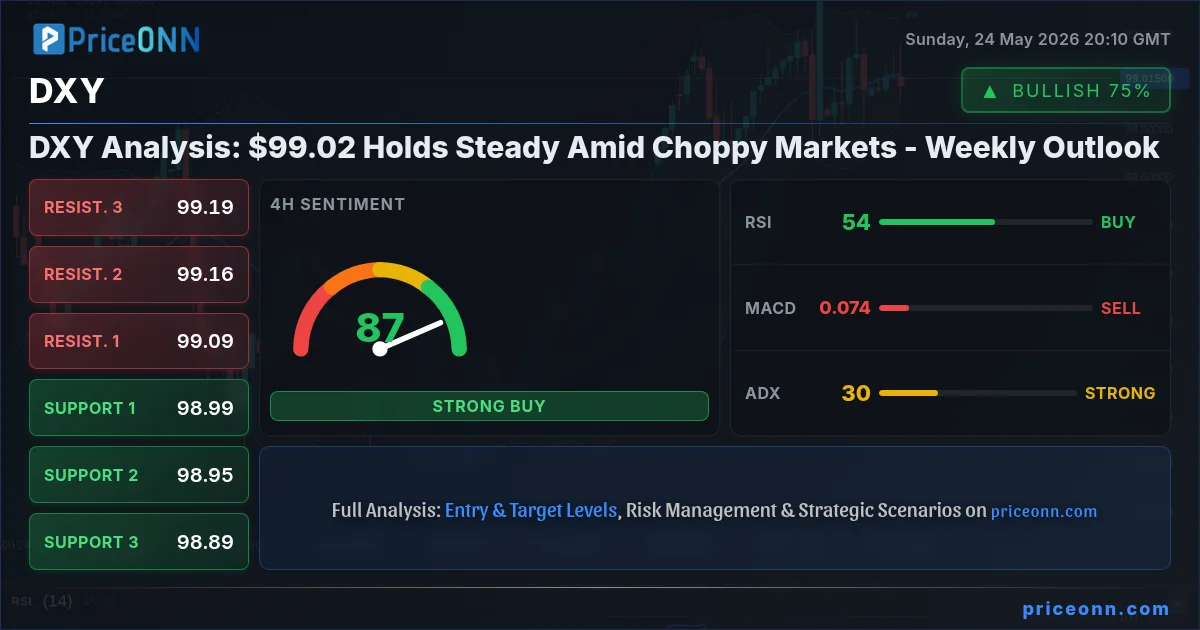
Market data indicates that the prevailing sentiment among analysts is now leaning towards a “higher-for-longer” interest rate scenario. This is a significant departure from expectations earlier in the year, where multiple rate cuts were anticipated. The Fed is now caught in a delicate balancing act, needing to address inflation without unduly stifling economic growth. The lingering effects of trade policies enacted in 2025 are also continuing to put pressure on equity valuations, adding another layer of complexity to the economic outlook.
Analysis & Drivers: Geopolitics and the Fed's Dilemma
The primary catalyst for the potential strengthening of the US Dollar is the Federal Reserve's response to the current inflationary environment. The surge in energy prices is a direct threat to the Fed's inflation targets. While the United States benefits from a more robust energy position than in past decades due to its status as a net exporter, industry reports indicate that the inflationary spillover effects are unavoidable. This suggests that the Fed will be compelled to keep interest rates elevated to combat price pressures.
A “higher-for-longer” rate environment typically supports a currency, as it increases the attractiveness of holding assets denominated in that currency due to higher yields. This contrasts with the narrative of rapid rate cuts that dominated market discussions previously. Furthermore, the ongoing geopolitical instability creates a safe-haven demand for the US Dollar, which often appreciates during periods of global uncertainty. While the tech sector is experiencing what some term “AI exhaustion,” a substantial structural investment of $700 billion in AI capital expenditure for 2026 is providing some underlying support for the US economy, though its immediate impact on the currency may be limited.
Trader Implications: Watching Key Levels and Risk Factors
Traders should closely monitor the Federal Reserve's communications for any signals regarding the future path of interest rates. Any indication of a prolonged period of high rates will likely translate into Dollar strength. Key currency pairs to watch include EUR/USD, GBP/USD, and USD/JPY. A strengthening dollar would typically see these pairs move lower, higher, and higher, respectively.
Critical support levels for the Dollar Index (DXY) will be important to track. A sustained move above recent highs could signal further upside. Conversely, any signs of the Fed signaling a pivot away from its hawkish stance, perhaps due to a faster-than-expected cooling of inflation or a significant economic downturn, could lead to Dollar weakness.
- Key Support for DXY: Watch the 103.50 level. A break below this could indicate waning Dollar strength.
- Key Resistance for DXY: The 105.00 mark is a significant psychological level to overcome.
- Risk Factor: Unexpected de-escalation of geopolitical tensions could reduce safe-haven demand for the dollar.
Outlook
The outlook for the US Dollar appears cautiously optimistic in the short to medium term, primarily driven by the Fed's likely adherence to a restrictive monetary policy stance amidst persistent inflation. Geopolitical uncertainties and elevated oil prices are reinforcing this narrative. As long as these factors persist, the greenback is poised to maintain its strength, potentially testing key resistance levels against other major currencies.
Frequently Asked Questions
What is the main reason for the potential US Dollar strengthening?
The primary driver is the Federal Reserve's expected 'higher-for-longer' interest rate policy, necessitated by renewed inflationary pressures stemming from oil prices above $100 per barrel and geopolitical instability.
Which currency pairs are most affected by a strengthening US Dollar?
Pairs like EUR/USD and GBP/USD are expected to decline, while USD/JPY is likely to appreciate. Traders should monitor these pairs for potential trading opportunities as the dollar gains traction.
What key levels should traders watch for the US Dollar Index (DXY)?
Traders should observe the 103.50 support level. A sustained hold above this could signal continued strength, while a break below might indicate a reversal. Resistance is noted around the 105.00 mark.
Track markets in real-time
Empower your investment decisions with AI-powered analysis, technical indicators and real-time price data.
Join Our Telegram Channel
Get breaking market news, AI analysis and trading signals delivered instantly to your Telegram.
Join Channel PriceONN News
The USD/JPY pair is flirting with the 160 level as stalled US-Iran negotiations and hawkish Federal Reserve rhetoric fuel inflation concerns. Traders are closely watching upcoming US Non-Farm Payrolls and Eurozone CPI data.
PriceONN News
The US Dollar experienced a notable dip as a renewed ceasefire between the US and Iran spurred a rally in global equities, particularly in tech stocks. However, persistent core PCE inflation at 3.3% YoY continues to fuel 'higher for longer' rate expectations.
PriceONN News
The EUR/USD faces headwinds as core US PCE inflation unexpectedly rose to 3.3% year-over-year, reinforcing a 'higher for longer' interest rate narrative. Meanwhile, a US-Iran ceasefire extension boosted global risk appetite, potentially drawing capital away from safe-haven currencies.
PriceONN News
USDJPY has returned to the area of previous interventions. The ECB is moving towards a rate hike in June. The US dollar retreated on Friday amid new record highs for stock indices and rumours of amendments to the US-Iran agreement. However, tit-for-tat exchanges between the adversaries pushed the dollar index back into the support zone […] The post Yen Braces for a New Storm appeared first on ActionForex.
PriceONN News
Markets are pricing in a potential de-escalation in the US-Iran conflict, leading to a significant drop in crude oil prices and a weakening US Dollar as diplomatic efforts appear to be gaining traction.
PriceONN News
USD/CAD faces pressure as Canada's economy shows signs of stalling, with Q1 GDP contracting 0.1% and domestic demand weakening. This comes as trade negotiations and geopolitical shifts add layers of uncertainty.
PriceONN News
USD/JPY is testing the critical 160 level as stalled US-Iran negotiations and hawkish Federal Reserve rhetoric fuel inflation concerns and a potential for further rate hikes. Traders are closely watching upcoming US Non-Farm Payrolls and Eurozone CPI data for direction.
PriceONN News
EUR/USD stalled below 1.1660 as the US Dollar defied expectations, refusing to weaken despite reports of a US-Iran ceasefire extension. Market participants remain cautious, awaiting concrete confirmation and assessing lingering inflationary pressures.
PriceONN News
EUR/USD closed at 1.1640, showing resilience amid mixed signals. Easing US-Iran tensions initially pressured the dollar, but persistent inflation concerns and political ratification hurdles are keeping the greenback surprisingly steady.
PriceONN News
EUR/USD stabilized around 1.1640 as reports of a US-Iran ceasefire extension and potential Strait of Hormuz reopening eased inflation fears. However, the US Dollar's resilience suggests lingering caution among forex traders.
PriceONN News
The US Dollar experienced a notable decline last week as markets priced in a potential diplomatic resolution to the US-Iran conflict, leading to a drop in oil prices and Treasury yields. This shift in sentiment suggests a move away from stagflation fears towards a more stable economic outlook.
PriceONN News
AUD/USD’s late break of 0.7183 resistance suggests that pullback from 0.7277 has already completed at 0.7076, after defending 55 D EMA. Initial bias is back on the upside this week for retesting 0.7277 high first. Firm break there will resume larger up trend. For now, risk will stay on the upside as long as 0.7076 […] The post AUD/USD Weekly Report appeared first on ActionForex.