
Aramco Deepens Asia Oil Discount Ahead of Possible Hormuz Deal
 PriceONN Editorial Desk
Multi-source verification
PriceONN Editorial Desk
Multi-source verification
Asia Faces Cheaper Saudi Crude as Shipping Routes Emerge
In a significant shift for global energy markets, Saudi Arabia has once again dialed down the price of its primary crude oil offering to Asian buyers. This latest adjustment, a reduction of $0.50 per barrel for September deliveries of Arab Light, places the official selling price at a $2 discount against the regional benchmark. This strategic pricing maneuver arrives as Tehran reports substantial progress on an agreement with Muscat to create a dedicated shipping lane that bypasses or eases passage through the critical Strait of Hormuz.
The market is reacting to the prospect of increased oil flow from the Persian Gulf. Benchmark Brent crude has seen a sharp decline, shedding approximately 20% in value over the past fortnight to hover around the $80 per barrel mark. Traders are factoring in the potential for a greater volume of Middle Eastern barrels to become available, driven by diplomatic efforts to secure vital shipping arteries.
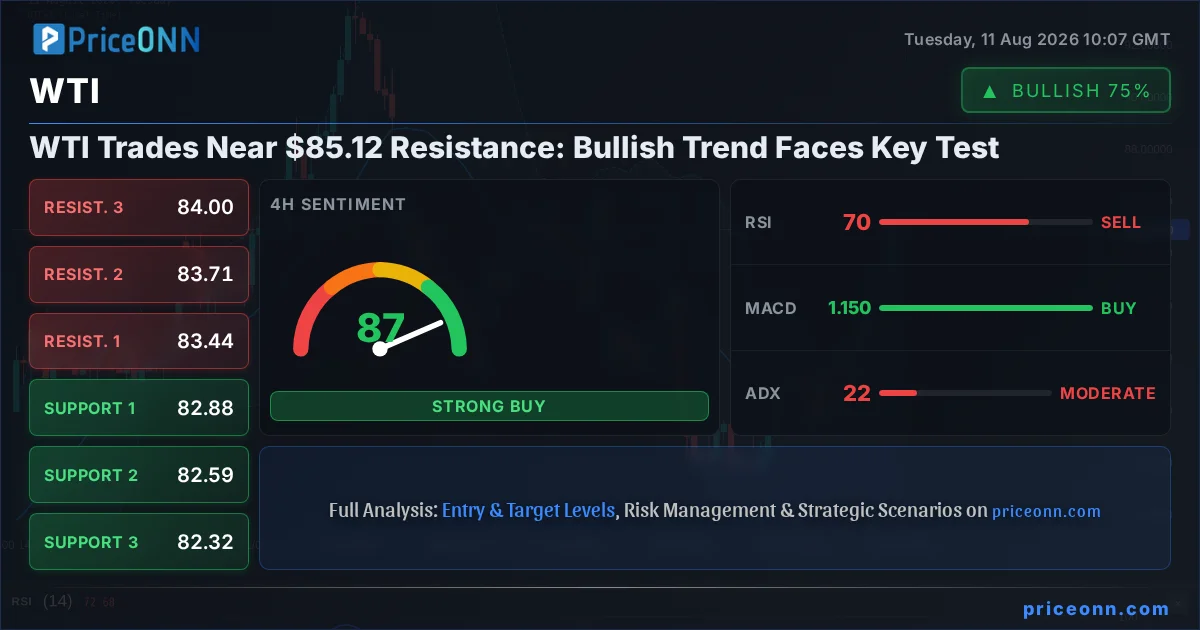
Navigating Supply Constraints and Red Sea Risks
Despite the growing optimism surrounding potential transit agreements, the practical realities of Saudi oil exports remain constrained. The nation's chief executive, Amin Nasser, indicated that shipments are currently maintained near 5 million barrels per day, representing roughly 70% of their typical capacity. This reduced output is partly a consequence of ongoing security concerns.
Historically, Saudi Arabia has leveraged its Gulf Coast terminal at Ras Tanura for the bulk of its exports. However, disruptions and threats along the Bab el-Mandeb strait, a crucial chokepoint for the Red Sea route, have rendered this pathway increasingly unattractive. Consequently, the Kingdom has increasingly relied on its Yanbu terminal on the Red Sea. To compensate for these logistical challenges and maintain export levels, Aramco has even explored rerouting crude through Egypt's SUMED pipeline, with loading operations at Sidi Kerir on the Mediterranean coast.
Asian refiners, facing protracted shipping routes and elevated freight costs, had already been pressing Saudi Arabia for pricing concessions. While Aramco did increase prices for certain Medium and Heavy crude grades destined for Asia, these adjustments appear somewhat theoretical given the current shipping limitations originating from the Persian Gulf. Concurrently, the producer has implemented price cuts across all grades bound for the United States, Northwest Europe, and the Mediterranean, reflecting broader market dynamics and differing regional demand.
Reading Between the Lines
The strategic pricing adjustments by Saudi Aramco are a clear signal of their intent to maintain market share in Asia, even amidst logistical hurdles. The simultaneous diplomatic overtures regarding the Strait of Hormuz suggest a coordinated effort to stabilize and potentially increase oil flows. This situation presents a complex interplay between geopolitical developments and fundamental market economics. The market is now weighing the likelihood of a functional Hormuz deal against the persistent risks of regional instability and the actual capacity for increased export volumes.
The recent price cuts for Asian buyers, coupled with the broader decline in Brent, indicate that market sentiment is leaning towards increased supply availability. However, the actual impact on oil prices will hinge on the successful implementation of any new shipping agreements and the continued security of transit routes, both in the Persian Gulf and the Red Sea. Traders are closely watching for any concrete steps that confirm enhanced shipping capacity, which could accelerate the downward pressure on oil prices.
The reliance on alternative routes like the SUMED pipeline highlights the premium placed on reliable delivery. For Asian refiners, the cost efficiency of Saudi crude is paramount, and any improvement in transit times or reduction in shipping expenses will be critical factors in their purchasing decisions. This dynamic underscores the delicate balance between pricing strategy and logistical feasibility that Saudi Aramco must manage.
The Kingdom's efforts to maintain export volumes near 5 million barrels per day, despite significant challenges, demonstrate its commitment to its role as a major global supplier. The market's anticipation of potential breakthroughs in shipping route security is a key driver of current price action, but the underlying vulnerabilities remain a significant factor.
Track markets in real-time
Empower your investment decisions with AI-powered analysis, technical indicators and real-time price data.
Join Our Telegram Channel
Get breaking market news, AI analysis and trading signals delivered instantly to your Telegram.
Join Channel PriceONN News
Indian state-controlled oil refiners continue to search the market for spot crude supply as term deliveries are constrained by the ongoing crisis in the Middle East and its key oil chokepoint, the Strait of Hormuz. Mangalore Refinery and Petrochemicals Limited (MRPL) and Hindustan Petroleum Corporation Limited (HPCL) are looking to buy a combined 6 million barrels of crude oil via spot tenders, Reuters reported on Wednesday, citing tender documents it has seen. HPCL is seeking up to 4 million...
PriceONN News
The IEA has slashed its 2026 global oil supply forecast, with output now expected to plunge 4.3 million barrels per day this year as the failure to reopen the Strait of Hormuz pushes the market deeper into deficit. The latest forecast is considerably worse than the 3.7-million-bpd decline the agency projected just last month and would leave global supply at 102.02 million bpd, its lowest forecast for 2026 yet. Supply is now expected to fall 1.27 million bpd short of demand for the year,...
PriceONN News
(RTTNews) - Crude oil prices have surged on Tuesday, extending the gains from the two previous sessions as the U.S.-Iran stalemate over new demands for compensation for war-related damages continued, diminishing the expectations of an early reopening of the Strait of Hormuz.
PriceONN News
Crude oil inventories in the United States saw a massive increase of 17.4 million barrels during the week ending August 7, according to new data from the U.S. Energy Information Administration (EIA) released on Wednesday. The increase brings commercial stockpiles to 424.4 million barrels, according to government data, which are now just 2% below the five-year average for this time of year. The EIA’s data release follows API’s figures that were released a day earlier, which reported that crude...
PriceONN News
Brent Crude oil prices rose above $89 per barrel in early trade in Europe on Wednesday as Iran and the United States offered contrasting claims about who controls the Strait of Hormuz. Brent Crude prices were up by 0.64% at $89.60 in the morning in Europe, and WTI Crude was rising by 0.94% at $83.90, amid persistent supply concerns and risks despite claims from the U.S. that traffic at Hormuz had normalized. Iran, for its part, said on Tuesday that the Strait of Hormuz will remain closed unless...
PriceONN News
Oil flows from the Middle East have normalized, with Sunday traffic alone above pre-conflict averages, U.S. Secretary of Energy Chris Wright said on Tuesday in a claim that appears not to be backed by ship-tracking data. On Tuesday, Secretary Wright posted on X that “Thanks to the coordinated efforts of the U.S. military and our gulf allies, the seven-day average for oil leaving the Strait of Hormuz is currently up to almost 9 million barrels per day.” He went on to add that “When combined with...
PriceONN News
The American Petroleum Institute (API) estimated that crude oil inventories in the United States rose by 9.072 million barrels in the week ending August 7, compared to analyst expectations for a 500,000-barrel draw. In the week prior, U.S. crude oil inventories rose by 2.69 million barrels. The larger-than-expected build was driven in part by higher crude imports relative to exports during the week. Commercial crude oil inventories excluding the SPR have lost just over 49 million barrels over...
PriceONN News
Five months after the U.S. and Israel opened a war with Iran, global fuel markets still haven't settled down, and the latest IEA data prove it. The IEA's monthly end-use price tracker, updated Aug. 7 and covering prices through July, shows the average per-liter cost of automotive diesel across the countries it tracks sitting near $1.94 in U.S. dollar terms. That's roughly 14% above where it stood in February, before the war started, and it's actually higher than June, even as crude oil kept...
PriceONN News
Hormuz tensions are flaring again as Iranian exports collapse, pushing Brent toward $87 and raising the risk of another run toward $100. China’s Crude Drawdown Puts Iranian Barrels Back in Demand - Shrinking crude inventories in China might spur a buying spree over the upcoming weeks, particularly for Russian and Iranian crude, buoyed by a record-high July stock draw in Shandong. - Chinese teapots are expected to boost their purchases of Iranian oil in the upcoming days as stockpiles in the...
PriceONN News
The national oil company of the United Arab Emirates has issued its eighth spot tender since June, trade sources told Reuters on Tuesday, as the Gulf producer that has just left OPEC pushes to sell increased crude volumes to international markets. Abu Dhabi National Oil Company (ADNOC) is offering in the latest spot tender cargoes of the Upper Zakum, Umm Lulu, and Das crude grades for loading in October and November’ sources. These crudes are produced within the Persian...
PriceONN News
OPEC’s total oil production jumped by 1.17 million barrels per day in July from June as many Gulf producers restored some output that was shut in for three months due to the closed Strait of Hormuz. Output at the 11-member OPEC rose to 19.85 million bpd in July, extending the monthly increases for the second consecutive month, according to a based on ship-tracking data and information provided by sources at OPEC, oil companies, and consultants. In May, when major Gulf producers...
PriceONN News
Libya’s National Oil Corporation may declare force majeure on exports from the Zawya oil terminal as a result of drone attacks on the facility. The Zawya terminal has a daily capacity of 120,000 barrels, sourced from the country’s largest oil field, Sharara, which can produce up to 300,000 barrels daily, Reuters noted in a report on the possibility of a force majeure declaration. According to reports, a drone strike had destroyed a storage tank and another drone had targeted an oil blending...