Asia Hikes Coal Use as Middle East War Chokes Gas Supply
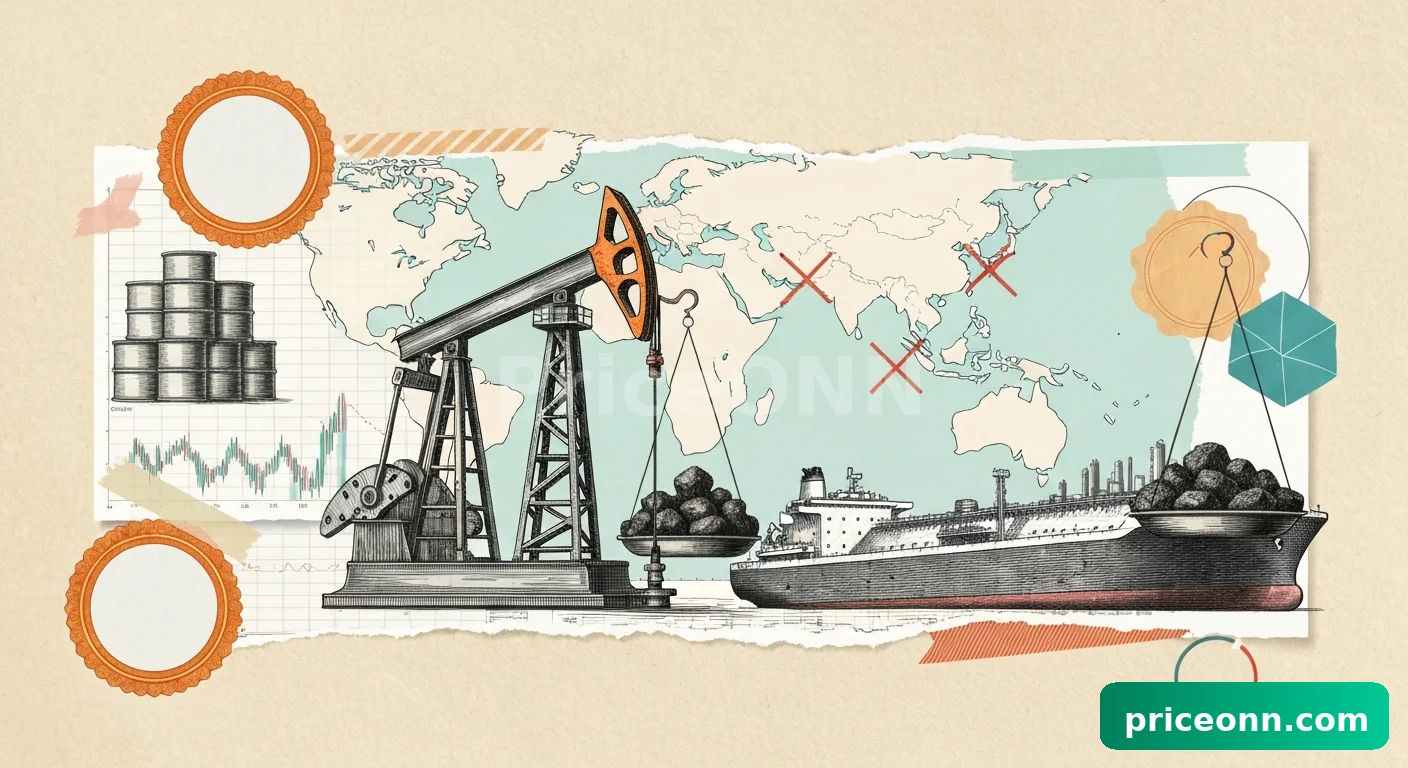
Asia's Energy Lifeline Under Strain
Asia's reliance on coal has come under intense scrutiny for years, with many nations facing criticism for a perceived slow pace in transitioning away from the fossil fuel. However, recent geopolitical events in the Middle East have dramatically vindicated their strategic approach to energy diversification and security. A sudden escalation of conflict has effectively severed approximately 20% of worldwide liquefied natural gas (LNG) shipments. This disruption occurred after Qatar, a critical long-term LNG supplier to the Asian continent, halted production and exports from its facilities.
In response, major economies including China, India, South Korea, and Japan, alongside the broader Southeast and South Asian regions, are now leaning on the substantial coal reserves they diligently built over recent years. This strategic move underscores their long-held assertion that securing a stable energy supply and diversifying sources takes precedence over immediate, headline emission targets. The payoff is evident as spot LNG prices in Asia have skyrocketed by a staggering 70%, reaching levels not seen in three years and pushing affordability to its limit for many Asia Pacific nations.
While coal cannot entirely compensate for the lost gas volumes, it provides a crucial buffer, enabling Asia to navigate what is arguably the most significant energy supply disruption in history. The immediate impact was felt when Qatar announced the cessation of LNG production at Ras Laffan, the world's largest liquefaction complex. Force majeure notices were issued to clients, and crucially, tanker traffic through the Strait of Hormuz became severely restricted, if not entirely impassable.
With the Strait of Hormuz effectively closed to vital shipping, the shockwave to Asian LNG supply was instantaneous. This region receives a substantial 85% of Qatar's total LNG exports, making the disruption particularly acute. The situation has intensified competition for available LNG cargoes, with Asia now actively drawing flexible-destination shipments away from Europe.
However, the elevated price point is a significant deterrent. Many Asian countries are now only purchasing LNG out of absolute necessity to avert critical shortages. Laura Page, an LNG and natural gas insight manager at Kpler, highlighted the vulnerability of South Asia last week. She noted, "South Asia is the most exposed region to any Strait of Hormuz disruption, with Qatar and the UAE supplying around 53% of India’s LNG imports in 2025, 72% of Bangladesh’s, and 99% of Pakistan’s." Page further cautioned that sustained disruption would likely lead to demand destruction rather than increased purchasing. "Pakistan and Bangladesh are unlikely to purchase spot LNG at current prices while India becomes increasingly price sensitive," she stated.
The immediate solution for many Asian nations involves reducing gas consumption and switching back to thermal coal for power generation. Although coal prices have also seen an uptick since the Middle East conflict began, the increase has been a more modest 14% compared to the dramatic 70% surge in spot LNG prices. For major LNG importers like China and Japan, their direct exposure to Qatari LNG is relatively contained, representing only about 6% and 5% of their respective gas supply mixes, according to Ken Lee, an LNG analyst at Vortexa.
Navigating the Supply Shock
The economies of South Asia are considerably more reliant on Qatari LNG, with the emirate accounting for 45% to 99% of their LNG imports and approximately 20% of their total gas supply. Yet, these nations are highly sensitive to price fluctuations. Vortexa suggests that unless facing an immediate crisis, they are likely to withdraw from the spot market altogether. Meanwhile, South Korea, Taiwan, and Singapore find themselves most vulnerable to the soaring spot LNG prices. If Qatari supply remains offline, their dependence on the spot market could escalate significantly, especially as natural gas constitutes at least a quarter of the power generation mix in these three countries.
The capacity for power generation to switch from gas to coal varies significantly across the continent. China and India, both significant coal consumers, possess a substantial substitution buffer. This capability can mitigate their exposure to oil and gas price volatility to a degree, according to Deepali Bhargava, Regional Head of Research, Asia Pacific at ING. Analysts at Wood Mackenzie anticipate that both Northeast and South Asia will experience gas demand destruction if Qatari flows do not resume promptly. "Despite efforts to source additional cargoes, alternative supply sources cannot fully replace Qatari volumes. As a result, demand destruction is likely, particularly through higher coal utilisation in power generation and reduced industrial consumption," WoodMac's experts stated.
The consultancy projects that Northeast Asia's LNG demand could shrink by 4 to 5 million tons through the third quarter of 2026 if the supply disruptions persist for two months. This is a significant revision from Wood Mackenzie's previous forecast of 2.2% growth in Northeast Asian LNG demand for 2026, a growth trajectory now likely halted by the supply shock. Miaoru Huang, research director for Asia Pacific gas and LNG at Wood Mackenzie, elaborated, "Higher spot prices will drive greater coal utilisation in the power sector and may hold back industrial gas consumption in some markets." For South Asia, Wood Mackenzie estimates that LNG demand could be 2 to 3 million tons lower through Q3 2026 compared to earlier projections. India may face curtailments in industrial gas usage, while Pakistan is implementing a combination of demand reduction, fuel switching, and renewable energy expansion. Bangladesh, already struggling with the untenable surge in LNG spot prices impacting its energy import bill, is reportedly rationing its gas supply.
Market Ripple Effects
This dramatic supply shock in the LNG market, triggered by geopolitical tensions, presents a complex scenario for global energy markets and associated financial instruments. The immediate consequence is a clear surge in demand for alternative energy sources, primarily coal, which has seen its prices rise, albeit less dramatically than LNG. This situation directly impacts the economics of power generation in Asia, forcing a renewed reliance on coal infrastructure.
For traders and investors, the key takeaways revolve around increased volatility in energy commodities. The price differential between LNG and coal has widened significantly, creating opportunities in coal futures and related equities, while potentially pressuring LNG infrastructure and investment in the short term. Furthermore, the heightened competition for available LNG cargoes could spill over into other markets, potentially influencing natural gas prices in Europe and North America, though the latter is less directly exposed to Qatari supply.
The geopolitical risk premium embedded in energy prices is palpable. This event underscores the fragility of global energy supply chains and the critical need for diversification, a theme that could benefit renewable energy sectors in the long run, although immediate relief comes from fossil fuels. Investors should monitor the duration of the Strait of Hormuz disruption and Qatar's return to the LNG market. Key currency pairs to watch include USD/CAD, given Canada's role as an LNG exporter, and potentially Asian currencies like the INR and CNY, as energy import costs impact their trade balances. The broader impact on inflation expectations globally also warrants attention, particularly concerning the cost of goods heavily reliant on energy inputs.
Track markets in real-time
Empower your investment decisions with AI-powered analysis, technical indicators and real-time price data.
Join Our Telegram Channel
Get breaking market news, AI analysis and trading signals delivered instantly to your Telegram.
Join Channel