
Brent Surges Past $114 as Middle East Conflict Widens Oil Price Chasm

Brent crude prices surged past $114 per barrel on Thursday, marking a nearly 7% increase, as geopolitical tensions in the Middle East intensified. This dramatic rally occurred while U.S. West Texas Intermediate (WTI) saw only a modest 0.2% gain, settling around $96. The widening gap between these two key benchmarks has pushed the Brent-WTI spread to approximately $18 per barrel, a level not observed since the mid-2010s, underscoring a significant fracturing in global and U.S. crude markets.
Market Context
The stark divergence in oil prices is a direct consequence of escalating attacks on vital energy infrastructure in the Middle East. Early Thursday trading saw Brent prices vaulting by nearly 7% to surpass the $114 per barrel mark, driven by fears of supply disruptions. In contrast, WTI experienced a more modest uptick of just 0.2%, settling around $96 a barrel. This has stretched the spread between the two benchmarks to approximately $18 per barrel, a significant chasm reminiscent of the oil market turmoil experienced in the mid-2010s. The stress on seaborne crude markets is intensifying due to recent strikes targeting critical energy assets. While Brent's pricing is intrinsically linked to supply routes passing through the sensitive Strait of Hormuz, WTI's valuation remains more closely tethered to the comparatively stable production landscape within the United States.
Analysis & Drivers
The primary catalyst for this dramatic price action is the escalating conflict and retaliatory strikes in the Middle East. Reports indicate that Iran attacked Qatar’s Ras Laffan gas infrastructure, a critical hub for global liquefied natural gas, following earlier strikes on Iran’s South Pars gas field. Furthermore, the Samref refinery in Saudi Arabia’s Red Sea port city of Yanbu, a joint venture between Saudi Aramco and ExxonMobil with a capacity of 400,000 barrels per day, was also targeted by an aerial attack, though initial reports suggested minimal operational impact. These events have significantly heightened geopolitical risk premiums. Physical crude markets are reflecting this stress even more acutely, with Middle Eastern grades like Oman commanding premiums near $153 per barrel and Dubai crude fetching around $136 per barrel, far exceeding paper market valuations. India’s composite crude import basket, for instance, leaped to $146.09 per barrel on March 17, illustrating the downstream impact on import-dependent economies.
Adding to the complexity, the U.S. Federal Reserve maintained its policy rate unchanged at 3.5-3.75% following its recent meeting. Fed Chair Jerome Powell adopted an 'agnostic' stance regarding the persistence and duration of the current geopolitical events and their potential impact on economic activity and inflation. While the Fed's median projections indicated slight upward revisions for economic growth and PCE inflation for the coming years, Powell emphasized that these forecasts have diminished relevance in the current volatile environment. Despite Powell’s cautious assessment, market participants reacted to the sharply higher energy prices, leading to a bear flattening of the yield curve. The Fed's forward guidance remains muted, with a close eye on inflation expectations as the oil price shock unfolds.
Trader Implications
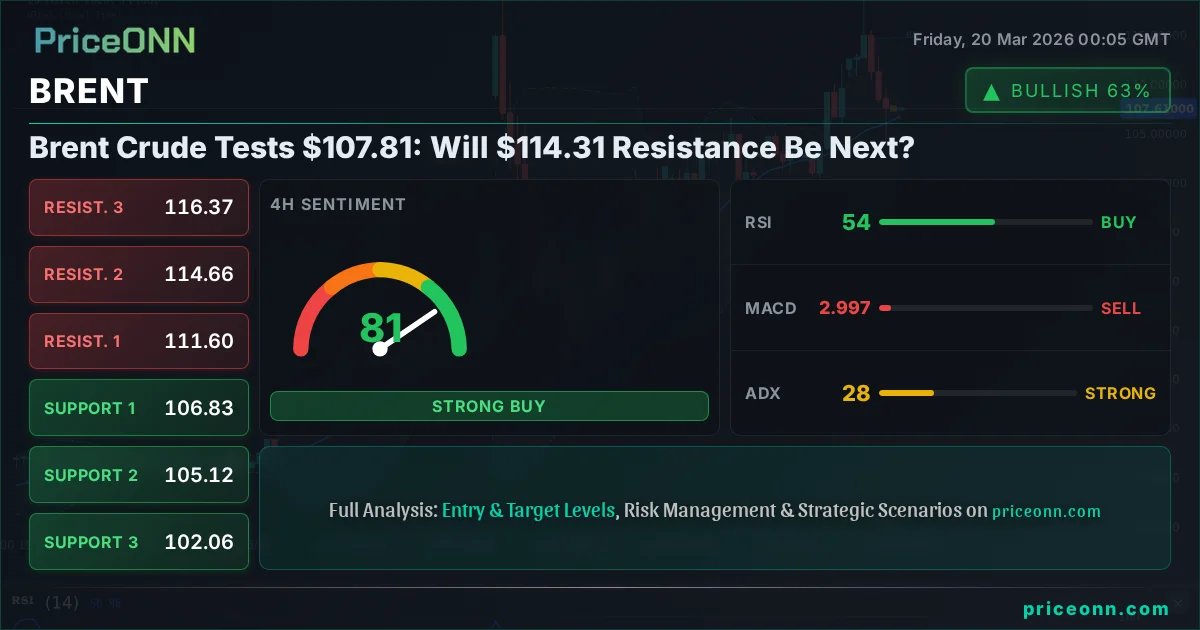
Traders should closely monitor the geopolitical developments in the Middle East, as any further escalation or disruption to major shipping lanes like the Strait of Hormuz could send oil prices soaring higher. Key levels to watch for Brent crude include immediate resistance at the $114.50 mark, with potential to test $115-$116 if supply fears persist. Support for Brent is currently seen around $112.00, with a break below this level potentially indicating a temporary easing of tensions. For WTI, resistance lies near the $97.00 level, and support is around $95.00. The widening Brent-WTI spread presents arbitrage opportunities but also signals significant global supply tightness, particularly for seaborne crudes.
The Federal Reserve's unchanged interest rate and Powell's cautious commentary suggest that monetary policy will remain data-dependent, with inflation data, heavily influenced by energy prices, taking center stage. Traders should anticipate increased volatility in energy markets and potentially broader financial markets as the geopolitical situation evolves. A sustained period of elevated oil prices could reignite inflation concerns, potentially altering the Fed's rate cut trajectory later in the year.
Key Factors to Watch:
- Further attacks on Middle East energy infrastructure.
- Developments in the Strait of Hormuz maritime traffic.
- Official statements from OPEC+ regarding potential supply adjustments.
- U.S. inflation data and subsequent Fed commentary.
Outlook
The outlook for oil prices remains highly sensitive to geopolitical developments. While the Fed is attempting to maintain a neutral stance, persistent supply disruptions stemming from the Middle East conflict are likely to keep upward pressure on crude prices. Traders should brace for continued volatility and potential price spikes, especially if diplomatic efforts fail to de-escalate the situation. The widening Brent-WTI spread is likely to persist as long as seaborne crude markets face direct threats, while U.S. domestic production remains relatively insulated. The coming weeks will be critical in determining whether these tensions lead to a sustained, higher price environment for oil or if de-escalation efforts can bring stability back to the markets.
Frequently Asked Questions
What is driving the significant price difference between Brent and WTI crude oil?
The widening spread between Brent and WTI, reaching approximately $18 per barrel, is primarily driven by escalating geopolitical tensions and direct attacks on energy infrastructure in the Middle East. These disruptions primarily affect seaborne crude, impacting Brent's price more directly than WTI, which is more tied to U.S. domestic supply.
How are traders reacting to the current oil market volatility?
Traders are responding with increased caution and heightened sensitivity to geopolitical news. They are closely watching key price levels, with Brent facing resistance near $114.50 and support at $112.00. The widening spread itself presents potential arbitrage opportunities but also signals significant global supply risks that could lead to further price spikes.
What is the Federal Reserve's stance on the impact of high oil prices?
Fed Chair Jerome Powell has adopted an 'agnostic' view, stating the central bank will closely monitor the impact of the current developments on inflation expectations. While the Fed raised its inflation forecast slightly to 2.7% for 2026, Powell stressed that these views have less relevance in the current environment, suggesting a data-dependent approach to future monetary policy.
Track markets in real-time
Empower your investment decisions with AI-powered analysis, technical indicators and real-time price data.
Join Our Telegram Channel
Get breaking market news, AI analysis and trading signals delivered instantly to your Telegram.
Join Channel



PriceONN