
Why Did Brent Crude Surge Past $114 While WTI Lagged Amid Middle East Tensions?

Brent crude prices experienced a significant surge, climbing nearly 7% to trade above $114 per barrel in early Thursday trading. This sharp ascent contrasts with a more subdued performance from its U.S. counterpart, West Texas Intermediate (WTI), which managed only a 0.2% gain, settling around $96 per barrel. The divergence has dramatically widened the spread between the two benchmarks to approximately $18 per barrel, a level not witnessed in over a decade, signaling heightened geopolitical risk in global energy markets.
Market Context: A Tale of Two Benchmarks
The dramatic widening of the Brent-WTI spread, reaching an 11-year high, is directly attributable to escalating threats and actual attacks on critical energy infrastructure in the Middle East. Seaborne crude markets, particularly those supplying Europe and Asia, are bearing the brunt of these disruptions. For instance, the Samref refinery in Saudi Arabia's Red Sea port city of Yanbu reportedly sustained an aerial attack early Thursday, though initial assessments suggest minimal operational impact. This facility, a joint venture between Saudi Aramco and ExxonMobil, processes approximately 400,000 barrels per day and is vital for producing gasoline, jet fuel, and diesel.
The pricing of Brent crude is intrinsically linked to supply routes that pass through sensitive chokepoints like the Strait of Hormuz, making it more vulnerable to geopolitical events in the region. WTI, on the other hand, is more closely tied to the relatively more insulated U.S. production landscape and its domestic distribution network, famously centered around Cushing, Oklahoma. This structural difference, amplified by current geopolitical tensions, has led to a significant decoupling of their price trajectories.
Analysis & Drivers: Geopolitical Premiums and Supply Fears
The primary driver behind the widening spread is the palpable fear of supply disruptions emanating from the Middle East. Recent strikes targeting vital energy facilities, including reports of attacks on Iran's South Pars gas field and the Samref refinery, have injected a substantial geopolitical risk premium into global oil prices. Market data shows that physical crude grades from the Middle East are commanding significant premiums. Oman crude is trading near $153 per barrel, and Dubai crude is fetching around $136 per barrel, far exceeding their paper market counterparts and highlighting the scarcity and demand for non-disrupted supplies.
This situation is creating a bifurcated market. While global benchmarks like Brent reflect the acute supply concerns and are trading at elevated levels, WTI's price action is more influenced by domestic U.S. factors and a less direct exposure to the immediate regional conflict. The strength of the U.S. dollar also plays a role; a stronger dollar typically puts downward pressure on dollar-denominated commodities like oil. However, the overwhelming impact of supply fears in the Middle East is currently overshadowing currency movements.
Furthermore, the strategic decisions by OPEC+ regarding production levels and the release of inventory data from the American Petroleum Institute (API) and the Energy Information Administration (EIA) are typically closely watched. However, in the current climate, immediate supply security concerns stemming from geopolitical events are taking precedence over these more routine market indicators.
Trader Implications: Navigating the Divergence
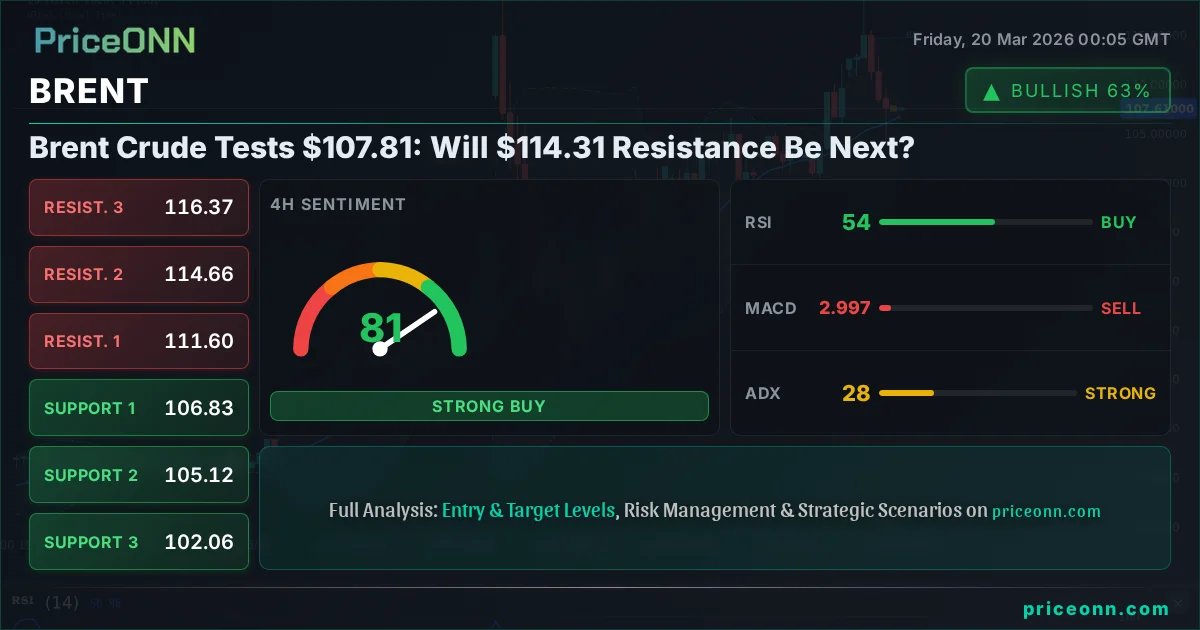
Traders are faced with a complex environment characterized by distinct price drivers for global versus U.S. crude benchmarks. The significant spread between Brent and WTI presents opportunities and risks. Key levels to watch for Brent include immediate resistance around the $115-$116 mark, with potential upside towards $120 if tensions escalate further. Support for Brent could be found near $110.
For WTI, while currently lagging, any significant escalation in the Middle East or a shift in U.S. inventory data could trigger a more substantial upward move. Key support for WTI remains around the $94-$95 area, with resistance at $98-$100. Traders should closely monitor headlines regarding the security of energy infrastructure in the Persian Gulf and Red Sea. Any further confirmed attacks or credible threats could send Brent prices significantly higher, while a de-escalation or reassurances from leaders, as seen from recent U.S. and Israeli efforts, might lead to some profit-taking and a narrowing of the spread, albeit likely capped by underlying supply concerns.
The current market dynamic suggests that a long Brent/short WTI strategy, or simply focusing on Brent's upward momentum driven by geopolitical fears, could be favored. However, the widening spread also increases the cost for import-dependent nations, potentially dampening global demand in the medium term, which could eventually cap oil price gains.
Outlook
The outlook for oil prices remains heavily dependent on the geopolitical situation in the Middle East. While diplomatic efforts may seek to calm market nerves, the recent attacks on energy infrastructure have fundamentally altered the risk perception. Brent crude is likely to remain sensitive to supply-side disruptions, potentially testing higher levels if tensions persist or worsen. WTI may continue to trade at a discount unless U.S. specific supply or demand factors change dramatically, or if the geopolitical premium on global crudes becomes so severe that it eventually impacts U.S. export economics. Traders should remain vigilant for further developments in the region and closely watch the price action around the key levels identified, as the market navigates this period of heightened uncertainty.
Frequently Asked Questions
What is driving the significant price difference between Brent and WTI crude oil?
The widening gap, reaching an 11-year high of approximately $18 per barrel, is primarily driven by escalating geopolitical tensions and attacks on energy infrastructure in the Middle East, which disproportionately affect Brent's seaborne supply routes compared to the more domestically focused WTI.
What are the immediate price levels traders should watch for Brent and WTI?
For Brent crude, key resistance is seen near $115-$116, with potential for a move towards $120. Support is near $110. WTI faces resistance around $98-$100 and support near $94-$95. The spread itself is a key indicator to monitor.
What is the outlook for oil prices given the current Middle East situation?
The outlook remains volatile and heavily tied to geopolitical developments. Brent is expected to remain sensitive to supply disruptions, with potential for further upside if tensions escalate. WTI's performance will depend on regional stability and U.S. domestic factors, though significant Middle East shocks could eventually lift WTI prices too.
Track markets in real-time
Empower your investment decisions with AI-powered analysis, technical indicators and real-time price data.
Join Our Telegram Channel
Get breaking market news, AI analysis and trading signals delivered instantly to your Telegram.
Join Channel



PriceONN