
GBP/USD Eyes 1.35 as Oil Price Dip Boosts Sterling


GBP/USD has seen a boost, climbing to around 1.3450 on Wednesday. The move is largely attributed to a dip in oil prices, which has eased some concerns about inflation in the UK. However, geopolitical risks and domestic political uncertainty continue to cast a shadow over the pound.
Market Context
The pound's recent strength comes as global markets react to evolving dynamics in the Middle East. The initial spike in oil prices, triggered by escalating tensions, had raised fears of increased inflationary pressures, particularly for energy-import-dependent economies like the UK. The subsequent retreat in oil prices, partly driven by speculation of de-escalation, has provided some relief and a corresponding lift to the pound. Despite this, the situation remains fluid, and market participants are keenly observing developments involving the US, Israel, and Iran. The potential for disruption to global trade routes, particularly through the Strait of Hormuz, continues to be a significant concern.
The Pound Sterling, with a history dating back to 886 AD, remains a key player in the global currency market. As the fourth most traded currency, it accounts for approximately 12% of all foreign exchange transactions, translating to an average daily turnover of around $630 billion. Key GBP trading pairs include GBP/USD (Cable), GBP/JPY (Dragon), and EUR/GBP. The Bank of England's monetary policy decisions play a crucial role in influencing the pound's value. The BoE's primary objective is to maintain price stability, targeting an inflation rate of around 2%.
Analysis & Drivers
Several factors are driving the current dynamics in the GBP/USD pair. The decline in oil prices is a significant catalyst, reducing inflationary pressures on the UK economy. The UK is particularly vulnerable to fluctuations in energy prices due to its reliance on imports. Lower oil prices translate to lower costs for businesses and consumers, which supports economic growth. However, this positive impact is being tempered by concerns about the broader economic outlook and political uncertainty within the UK.
Investors are also closely watching the Bank of England's monetary policy stance. With inflation still above the target level, the BoE faces a delicate balancing act between controlling inflation and supporting economic growth. Market expectations are shifting towards a possible interest rate cut in the second quarter, reflecting concerns about the UK's economic prospects. Weak economic data and political uncertainty are contributing to these expectations, placing downward pressure on the pound.
Furthermore, upcoming local elections in two months add another layer of uncertainty. The results of these elections could influence the political landscape and potentially impact investor sentiment towards the UK.
Trader Implications
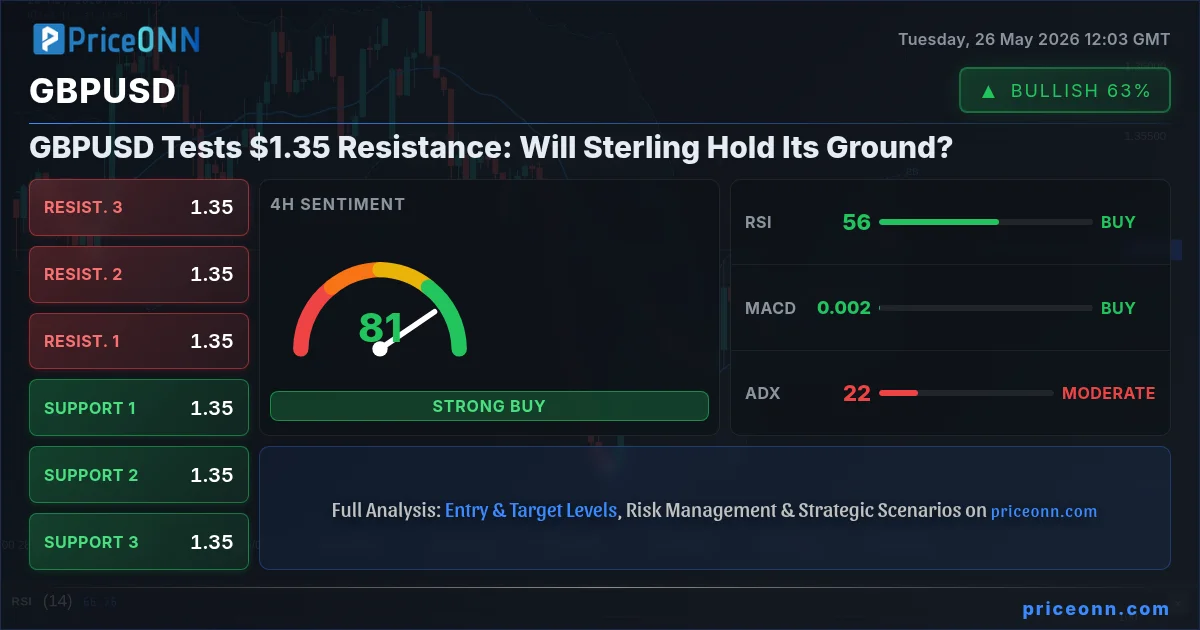
For traders, the GBP/USD pair presents a mixed bag of opportunities and risks. The recent rebound in the pound suggests potential for further upside, but caution is warranted given the prevailing uncertainties. Key levels to watch include the 1.3515 resistance level. A break above this level could signal a continuation of the upward trend, while failure to do so could lead to a pullback towards the 1.3382 support level. A breach of this support could open the door for further declines towards 1.3133.
Technical indicators offer some insights into the pair's potential direction. On the H4 chart, the MACD indicator's signal line is above the zero level and pointing upwards, suggesting bullish momentum. However, the market is currently consolidating within a wide range around the 1.3382 level, indicating uncertainty. On the H1 chart, a downside breakout from the consolidation range around 1.3434 could trigger a wave structure extending to 1.3382, with further downside potential towards 1.3125.
Traders should also monitor developments in the oil market and the Middle East conflict closely. Any escalation of tensions could lead to a spike in oil prices and a corresponding decline in the pound. Conversely, further signs of de-escalation could provide additional support for the pound.
Here are some key factors to watch:
- Oil price movements
- Geopolitical developments in the Middle East
- Bank of England monetary policy announcements
- UK economic data releases (GDP, inflation, employment)
- Upcoming local elections
Crude oil prices remain volatile, with the ATR indicator still elevated despite pointing lower. The XTI/USD chart shows a potential downward trajectory, but sustained downside momentum is uncertain. Traders should be prepared for continued fluctuations within the orange range defined by the bearish candle formed on March 9, until significant news emerges.
Outlook
Looking ahead, the GBP/USD pair is likely to remain sensitive to developments in the Middle East, oil price fluctuations, and UK economic data. The Bank of England's monetary policy decisions will also play a crucial role in determining the pound's direction. While the recent rebound offers some hope for further gains, the prevailing uncertainties suggest a cautious approach is warranted. Traders should closely monitor key levels and be prepared to adjust their positions based on evolving market conditions.
Track markets in real-time
Empower your investment decisions with AI-powered analysis, technical indicators and real-time price data.
Join Our Telegram Channel
Get breaking market news, AI analysis and trading signals delivered instantly to your Telegram.
Join Channel PriceONN News
The US Dollar experienced a notable decline last week as markets priced in a potential diplomatic resolution to the US-Iran conflict, leading to a drop in oil prices and Treasury yields. This shift in sentiment suggests a move away from stagflation fears towards a more stable economic outlook.
PriceONN News
Canada's labor market is showing signs of stabilization, with analysts predicting a dip in the unemployment rate to 6.8% in May, driven by an expected 25,000 new jobs. This follows a period of sluggish GDP growth and rising joblessness earlier in the year.
PriceONN News
Key insights from the week that was. In Australia, GDP rose 0.3% (2.5%yr) in Q1, in line with our expectations. Our analysis suggests the data centre build-out was responsible for all of the growth in the quarter. This manifested as the largest jump in new business investment since the early 2010s mining investment boom – […] The post Cliff Notes: Downside Risks to Persist appeared first on ActionForex.
PriceONN News
USDJPY has returned to the area of previous interventions. The ECB is moving towards a rate hike in June. The US dollar retreated on Friday amid new record highs for stock indices and rumours of amendments to the US-Iran agreement. However, tit-for-tat exchanges between the adversaries pushed the dollar index back into the support zone […] The post Yen Braces for a New Storm appeared first on ActionForex.
PriceONN News
Markets are pricing in a potential de-escalation in the US-Iran conflict, leading to a significant drop in crude oil prices and a weakening US Dollar as diplomatic efforts appear to be gaining traction.
PriceONN News
Canada's economy showed signs of a slowdown in early 2026, but upcoming May jobs data is expected to reveal a modest uplift. Analysts anticipate the unemployment rate to fall to 6.8%.
PriceONN News
USD/CAD faces pressure as Canada's economy shows signs of stalling, with Q1 GDP contracting 0.1% and domestic demand weakening. This comes as trade negotiations and geopolitical shifts add layers of uncertainty.
PriceONN News
Canada's economy showed signs of life in early 2026, with analysts expecting a moderate job growth of around 25,000 positions and a potential dip in the unemployment rate to 6.8% for May.
PriceONN News
AUD/USD’s late break of 0.7183 resistance suggests that pullback from 0.7277 has already completed at 0.7076, after defending 55 D EMA. Initial bias is back on the upside this week for retesting 0.7277 high first. Firm break there will resume larger up trend. For now, risk will stay on the upside as long as 0.7076 […] The post AUD/USD Weekly Report appeared first on ActionForex.
PriceONN News
USD/CAD is showing signs of potential upward movement as Canada's economy grapples with a significant slowdown, marked by weak domestic demand and stalled investment, while trade negotiations loom large.
PriceONN News
USD/JPY is testing the critical 160 level as stalled US-Iran negotiations and hawkish Federal Reserve rhetoric fuel inflation concerns and a potential for further rate hikes. Traders are closely watching upcoming US Non-Farm Payrolls and Eurozone CPI data for direction.
PriceONN News
Canada's economy showed signs of weakness in early 2026, but upcoming May jobs data is expected to reveal a moderate uplift. Analysts anticipate job growth of around 25,000 positions and a potential dip in the unemployment rate to 6.8%.