
Gold Edges Higher as Geopolitical Jitters Outweigh Oil's Decline
Spot gold prices held steady around $4,407.07 per ounce on Tuesday, supported by ongoing geopolitical uncertainties in the Middle East, even as a prior session's sharp drop in crude oil prices tempered expectations for aggressive Federal Reserve rate hikes.
Market Context
The yellow metal has experienced a period of uneasy calm, finding a temporary plateau after a turbulent March 2026 that saw its steepest monthly decline and a breach into bear market territory. This recent stabilization comes as traders reassess the Federal Reserve's monetary policy path, influenced by fluctuating commodity prices and geopolitical developments. U.S. gold futures saw a marginal uptick, settling around $4,411.30, indicating a cautious sentiment.
Analysis & Drivers
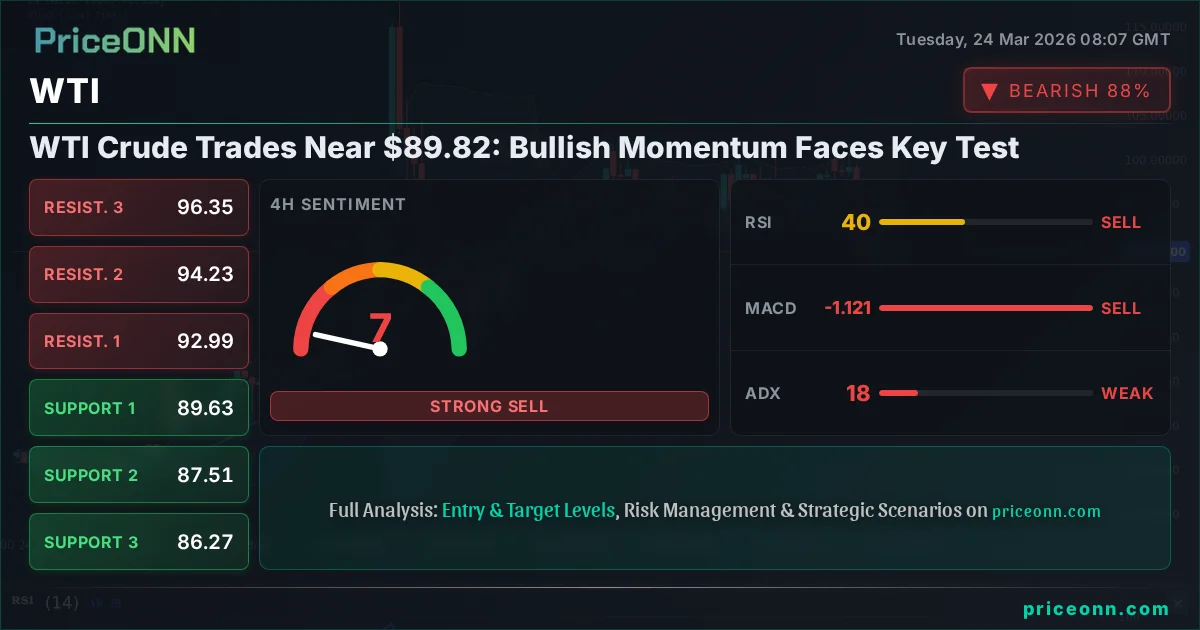
The interplay between oil price movements and central bank policy expectations is a significant driver for gold. A sharp fall in oil prices the previous session led market participants to scale back some of their more hawkish Federal Reserve bets, providing a floor for gold. However, underlying geopolitical tensions, particularly in the Middle East, continue to underpin demand for gold as a safe-haven asset. Reports of potential U.S.-Iran discussions have been met with skepticism and official denials, despite indirect signals suggesting Iran's potential openness to dialogue under specific conditions. The White House has characterized such reports as speculative, emphasizing the sensitivity of diplomatic discussions. Meanwhile, Israeli Prime Minister Benjamin Netanyahu's commitment to continuing strikes against Iran and Lebanon adds another layer of regional instability, keeping safe-haven demand for gold elevated.
Historically, gold has served as a reliable store of value and a hedge against inflation and currency depreciation. Its inverse correlation with the U.S. Dollar and risk assets means that periods of dollar strength and stock market rallies tend to weigh on gold prices, while dollar weakness and market sell-offs favor the precious metal. Central banks, as major gold holders, have increased their reserves significantly, particularly from emerging economies, seeking to diversify and bolster the perceived strength of their economies and currencies during turbulent times. In 2022, central banks added approximately 1,136 tonnes of gold, the highest yearly purchase on record.
Trader Implications
Traders should closely monitor the evolving geopolitical situation in the Middle East, as any escalation or de-escalation will directly impact safe-haven demand for gold. Key price levels to watch include the recent highs around $4,450 as a potential short-term target if tensions flare, and the $4,300 mark as a critical support level if geopolitical risks subside significantly and the U.S. Dollar strengthens further. The Federal Reserve's upcoming policy statements and economic data releases will also be crucial, as they will shape interest rate expectations and, consequently, gold's trajectory. A sustained weakening of the U.S. Dollar would likely provide further upward momentum for gold, while a strong dollar could cap gains.
Outlook
Looking ahead, gold prices are expected to remain sensitive to geopolitical developments and central bank signaling. While the recent oil price decline may have temporarily eased pressure from aggressive Fed rate hike expectations, the ongoing regional instability provides a solid foundation for gold's safe-haven appeal. Traders should remain vigilant for shifts in diplomatic narratives and economic data that could influence both currency markets and monetary policy outlooks, potentially driving gold towards key resistance or support levels.
Frequently Asked Questions
What is the current price trend for gold?
Gold prices are currently hovering around $4,407 per ounce, showing a degree of stabilization after a volatile period. The trend is influenced by a balance between safe-haven demand driven by geopolitical tensions and tempered expectations for aggressive Federal Reserve rate hikes.
How are Middle East tensions affecting gold?
Persistent geopolitical instability in the Middle East fuels demand for gold as a safe-haven asset. Despite some diplomatic signals, ongoing regional conflicts and uncertainties, including Israeli strikes and U.S.-Iran relations, keep investors seeking refuge in gold.
What are the key levels to watch for gold traders?
Traders should monitor the $4,450 level as potential resistance and $4,300 as a significant support. These levels are critical as they reflect the market's reaction to geopolitical risks, U.S. Dollar movements, and Federal Reserve policy expectations.
Track markets in real-time
Empower your investment decisions with AI-powered analysis, technical indicators and real-time price data.
Join Our Telegram Channel
Get breaking market news, AI analysis and trading signals delivered instantly to your Telegram.
Join Channel

PriceONN