
Gold Stabilizes Above $4,400 Amid Shifting Geopolitical and Monetary Sands
Gold prices experienced a moment of stabilization on Tuesday, halting a significant nine-day losing streak and holding the critical $4,400 per ounce level. This pause in bullion's steep decline comes as market participants navigate a complex interplay of shifting geopolitical tensions in the Middle East and evolving expectations for U.S. monetary policy.
Market Context: A Volatile March for Bullion
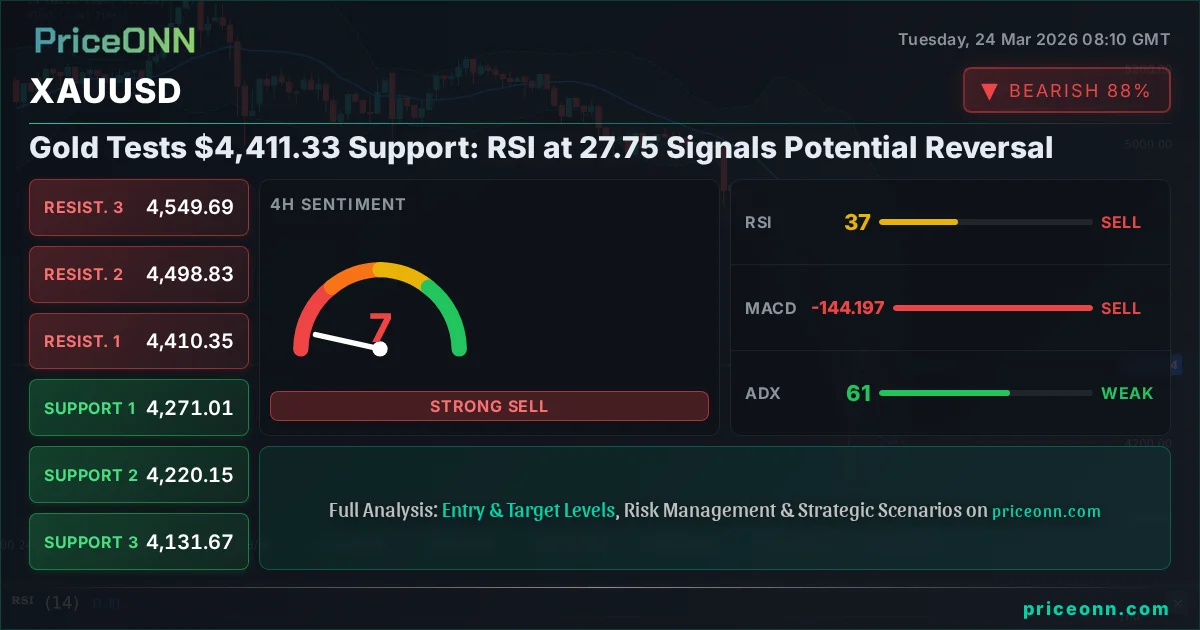
The yellow metal had been on a relentless downward trajectory, suffering its steepest monthly decline in March. This downturn saw gold breach bear market territory, largely driven by a strengthening U.S. dollar and diminishing hopes for imminent Federal Reserve rate cuts. Spot gold prices hovered around $4,407.07, while U.S. gold futures saw a marginal uptick to $4,411.30 by the session's close. This stabilization follows a period where gold dipped as much as 2.7% during Asian trading hours before recovering some ground.
Analysis & Drivers: Geopolitics and Fed Policy Collide
The recent price action in gold has been a tug-of-war between safe-haven demand and the headwinds of monetary policy tightening. While Middle East tensions, particularly concerning potential U.S.-Iran dialogues, initially supported gold, official denials and speculative reports have added to market uncertainty. Tehran's official denial of direct talks with Washington, despite indirect signals of potential dialogue under strict conditions, has kept geopolitical risks elevated but less precisely defined for immediate market impact. This ambiguity has, paradoxically, contributed to the U.S. dollar's renewed strength as investor confidence wavered. Analysts note that the dollar's resurgence was also fueled by rising U.S. Treasury yields, which increase the opportunity cost of holding non-yielding assets like gold.
Furthermore, market data indicates that a more hawkish stance from the Federal Reserve, driven by persistent inflation concerns potentially exacerbated by elevated energy prices, has been a significant drag on bullion. The narrative that higher-for-longer interest rates could be on the horizon, as suggested by some central bank officials, directly challenges gold's appeal. Beyond monetary policy, broader market distress has also contributed to gold's sell-off. Reports indicate a widespread liquidity stress, forcing investors to liquidate assets across various classes, including gold, to meet margin calls and cover losses elsewhere. Deleveraging activities among retail investors and sales by emerging market central banks have amplified selling pressure.
Trader Implications: Key Levels and Risk Factors
For traders, the immediate focus remains on the $4,400 per ounce level, which has acted as a crucial psychological and technical support. A sustained break below this mark could signal further downside, potentially targeting lower levels. Key factors to watch include:
- U.S. Inflation Data: Upcoming inflation figures will be critical in shaping Federal Reserve policy expectations and, consequently, gold's direction.
- Geopolitical Developments: Any concrete escalation or de-escalation in the Middle East, particularly involving Iran, will have a significant impact.
- Dollar Strength: Continued strength in the U.S. dollar, driven by yield differentials or safe-haven flows, will remain a headwind for gold.
- Fed Commentary: Statements from Federal Reserve officials regarding the inflation outlook and interest rate path are paramount.
The recent price action suggests that while geopolitical risks provide a floor, the prospect of higher interest rates for longer is capping significant upside potential. Traders should remain vigilant for sharp moves triggered by unexpected news flow on either the geopolitical or monetary policy fronts.
Outlook
Gold's path forward appears to be one of cautious consolidation. While geopolitical uncertainties and potential inflation spikes offer underlying support for the safe-haven asset, the restrictive stance of the Federal Reserve and a strong U.S. dollar present formidable obstacles. Traders should anticipate continued volatility, with prices likely to remain sensitive to U.S. economic data releases and any significant shifts in global risk sentiment. The coming weeks will be crucial in determining whether gold can reclaim its upward momentum or face further pressure.
Frequently Asked Questions
What is the current price of gold?
As of Tuesday's trading session, spot gold prices were holding steady around $4,407.07 per ounce, with U.S. gold futures trading near $4,411.30. The metal has managed to stay above the critical $4,400 support level.
Why has gold fallen recently?
Gold's recent decline has been attributed to a combination of factors including a strengthening U.S. dollar, expectations that the Federal Reserve might keep interest rates higher for longer, and broader market liquidity stress leading to asset liquidation.
What are the key factors to watch for gold's future price movement?
Traders should monitor upcoming U.S. inflation data, developments in Middle East geopolitical tensions, the trajectory of the U.S. dollar, and commentary from Federal Reserve officials. These elements will significantly influence market sentiment and policy expectations.
Track markets in real-time
Empower your investment decisions with AI-powered analysis, technical indicators and real-time price data.
Join Our Telegram Channel
Get breaking market news, AI analysis and trading signals delivered instantly to your Telegram.
Join Channel


PriceONN