Gold Holds Steady With Middle East Tensions In Focus

Market Snapshot: Gold's Uneasy Calm
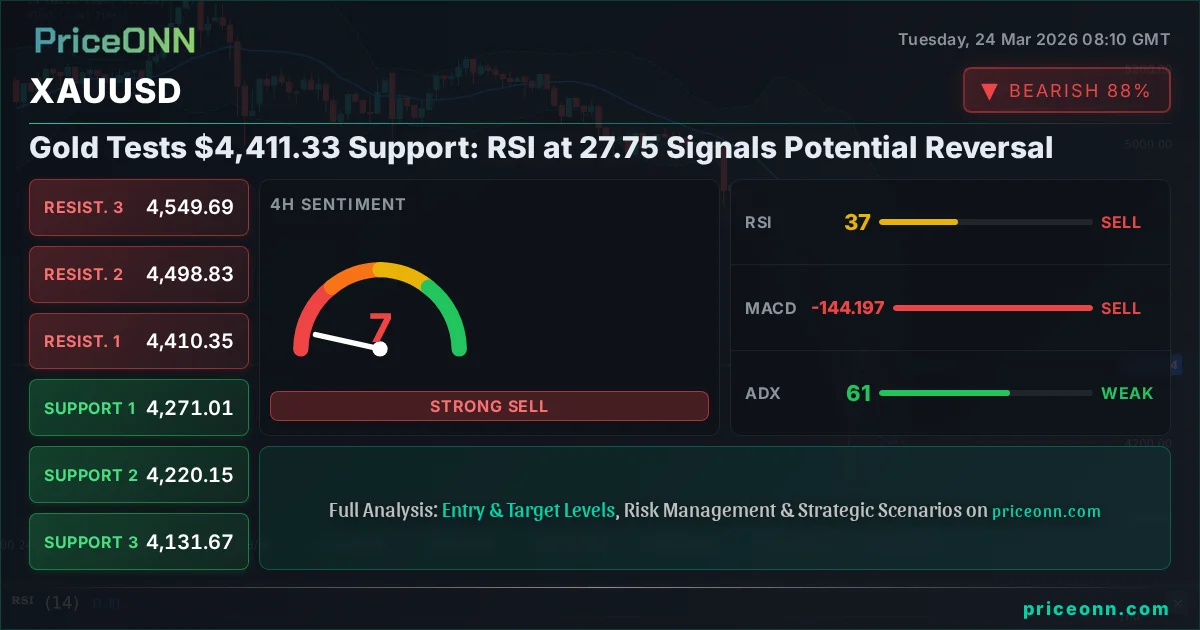
The yellow metal found a temporary plateau on Tuesday, refusing to budge significantly from recent levels. This stabilization occurred as a pronounced slide in crude oil prices the prior session prompted a notable retreat in market expectations for aggressive interest rate hikes by the Federal Reserve. Spot gold prices hovered near breakeven, trading around $4,407.07 per ounce. Meanwhile, U.S. gold futures saw a marginal uptick, settling at $4,411.30.
This period of equilibrium follows a particularly turbulent March 2026 for gold. The commodity experienced its steepest monthly decline, breaching bear market territory. This sharp downturn was largely attributed to a strengthening U.S. dollar and waning anticipation for imminent rate cuts from the central bank. The dollar's resurgence came as investor confidence wavered regarding the prospects of a swift de-escalation in the Middle East conflict.
Geopolitical Undercurrents Drive Demand
The narrative surrounding potential U.S.-Iran negotiations remained a key point of skepticism, contributing to the dollar's renewed strength. Despite U.S. President Donald Trump's announcement of a temporary five-day postponement of potential strikes on Iran's energy infrastructure, Tehran officially denied engaging in direct talks with Washington. However, indirect signals suggest Iran might be open to dialogue, albeit under stringent conditions.
Official responses from the White House characterized reports of potential U.S.-Iran discussions in Pakistan as speculative. Press Secretary Karoline Leavitt emphasized, "These are sensitive diplomatic discussions, and the U.S. will not negotiate through the press." The situation remains decidedly fluid and diplomatically charged.
Adding to the regional volatility, Israeli Prime Minister Benjamin Netanyahu stated, "We are continuing our strikes against Iran and Lebanon without pause," indicating a conversation with President Trump regarding the protection of vital national interests. State media in Iran subsequently reported that the nation had launched multiple missile volleys toward Israel earlier in the day, underscoring the persistent and escalating regional tensions.
Reading Between the Lines
The subdued price action in gold, despite significant geopolitical flare-ups, suggests a market grappling with conflicting signals. On one hand, the ongoing Middle East crisis provides a natural tailwind for safe-haven assets like gold. The missile launches reported by Iranian state media are a clear indicator of escalating conflict, which typically fuels demand for assets perceived as secure.
However, this demand is being counterbalanced by broader macroeconomic forces. The strengthening U.S. dollar, driven by renewed skepticism over swift Middle East conflict resolution and the fading hopes of imminent Fed rate cuts, acts as a significant headwind for dollar-denominated commodities like gold. When the dollar strengthens, gold becomes more expensive for holders of other currencies, potentially dampening demand.
Furthermore, the market's reduced expectation of Fed rate cuts, a consequence of the oil price slump and its implications for inflation and monetary policy, also plays a dual role. Lower expected rates are generally bullish for gold as they reduce the opportunity cost of holding non-yielding assets. Conversely, a stronger dollar, often a byproduct of tighter monetary policy expectations or global risk aversion, can negate this effect. The interplay between these geopolitical and macroeconomic factors is creating a complex trading environment, preventing a clear directional move in gold prices for now.
Market Ripple Effects
The current environment, characterized by fluctuating oil prices and heightened geopolitical risk in the Middle East, has several interconnected market implications beyond gold. The US Dollar Index (DXY) is a key beneficiary of heightened global uncertainty and a strong dollar narrative, often seeing increased demand as a safe-haven currency. Investors seeking refuge might pivot towards the dollar, potentially pressuring other currency pairs.
Energy commodities, particularly crude oil, remain highly sensitive. While a sharp fall occurred, the underlying geopolitical tensions mean supply disruptions remain a constant threat. This volatility can spill over into inflationary expectations, influencing central bank policy and consequently affecting bond yields and equity markets. Specifically, US Treasury yields could see fluctuations based on inflation outlooks and Fed policy signals. A sustained period of geopolitical instability often leads to increased volatility in global equity markets, particularly in sectors heavily reliant on energy stability or those sensitive to shifts in consumer spending power.
Track markets in real-time
Empower your investment decisions with AI-powered analysis, technical indicators and real-time price data.
Join Our Telegram Channel
Get breaking market news, AI analysis and trading signals delivered instantly to your Telegram.
Join Channel