
Gold Holds Steady As Oil Dips On US-Iran Peace Hopes
 PriceONN Editorial Desk
Multi-source verification
PriceONN Editorial Desk
Multi-source verification
Markets React to Shifting Geopolitical Winds
The precious metal gold navigated choppy waters on Monday, ultimately finding stability after an initial slide. This recovery was fueled by a cooling U.S. dollar and a broader resurgence in risk-sensitive currencies. The underlying catalyst appears to be emerging signals of a thaw in diplomatic relations between Washington and Tehran, a development that has subtly reshaped market sentiment.
Spot gold registered a modest uptick, trading marginally higher around the $4,020.14 per ounce mark. This followed two consecutive weeks of declines, a period characterized by persistent expectations of elevated interest rates in the United States. U.S. gold futures mirrored this slight advance, closing up by 0.1 percent at $4,024.12.
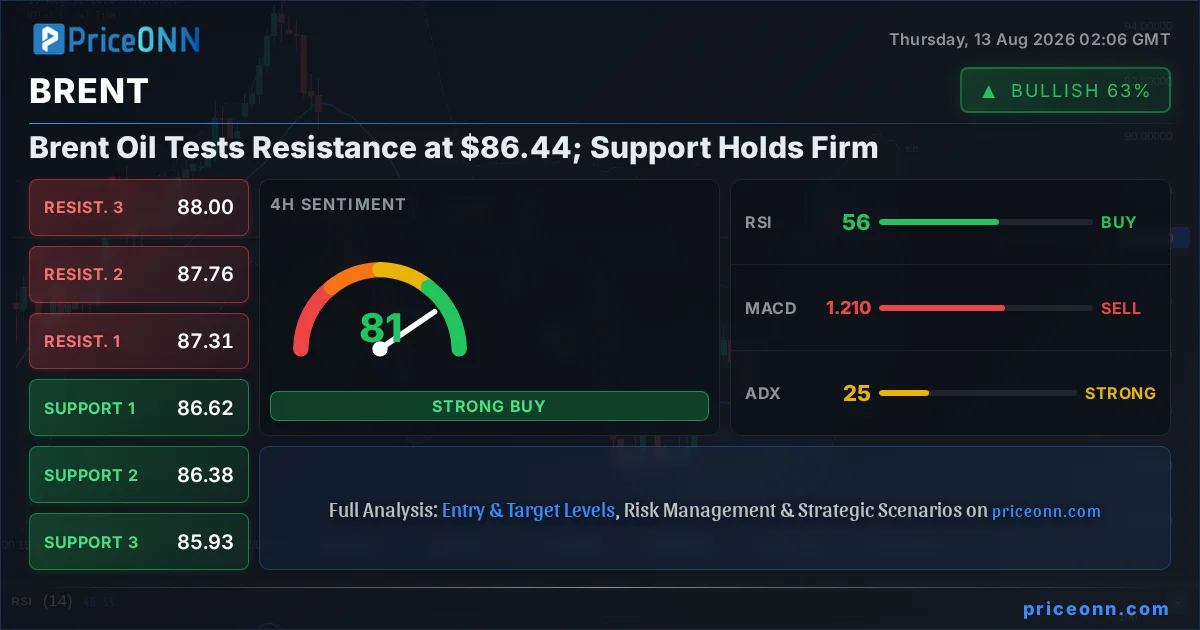
In contrast, the energy sector saw a reversal. Brent crude futures experienced a dip, settling near $88 a barrel after a session marked by considerable volatility. Earlier, prices had surged by over 2 percent, touching highs near $91 a barrel. This earlier spike was attributed to escalating tensions, with the U.S. reportedly conducting strikes against Iranian targets for the ninth consecutive day and Iran responding with actions against U.S. interests across the Middle East. Such actions had previously raised significant concerns about potential disruptions to shipping traffic through the critical Strait of Hormuz.
However, the oil market’s retreat was precipitated by a significant shift in rhetoric from Tehran. Iran’s government indicated a dual approach, vowing to pursue diplomatic channels while simultaneously maintaining a military response and asserting its commitment to securing the Strait of Hormuz. This pledge to safeguard security in the vital waterway helped to alleviate some of the immediate supply-side anxieties that had been driving prices higher.
A spokesperson for Iran’s Foreign Ministry, Esmaeil Baqaei, articulated this dual strategy during a press briefing. "We will not discuss their details at this stage. While our armed forces respond firmly and decisively to the source of American aggression, diplomacy is fully aware of its duties and spares no effort in fulfilling them", he stated, offering a glimpse into the nation’s carefully calibrated response.
Economic Signals and Rate Outlook
Looking ahead, the economic data calendar for the upcoming week presents a relatively subdued picture. Market participants will be closely monitoring preliminary Purchasing Managers' Index (PMI) surveys for both the manufacturing and services sectors. Additionally, investors will scrutinize June's leading economic indicators and new home sales data. These releases are anticipated to provide crucial insights into the prevailing economic conditions and the trajectory of interest rates, particularly in the lead-up to the Federal Reserve's next policy meeting scheduled for July 29.
Adding to the prevailing interest rate narrative, Federal Reserve Bank of Cleveland President Beth Hammack reiterated concerns about persistent inflation on Friday. Her comments align with a hawkish contingent within the central bank, suggesting that interest rates may indeed need further upward adjustments to combat rising price pressures. Current market pricing, as reflected in futures contracts, indicates approximately a 60 percent probability of a rate hike occurring as early as September, underscoring the ongoing debate about monetary policy tightening.
Market Ripple Effects
The interplay between geopolitical developments, energy prices, and monetary policy expectations creates a complex environment for traders. The easing of immediate U.S.-Iran tensions, while providing a brief respite for oil markets, could also influence broader risk appetite. A sustained de-escalation might reduce demand for safe-haven assets like gold, though its appeal often remains strong amid broader inflation concerns and the ongoing debate about U.S. interest rates.
Conversely, the oil market’s sensitivity to supply disruptions in the Strait of Hormuz remains a critical factor. Any resurgence in hostilities could rapidly push prices higher, feeding into inflation expectations and potentially complicating the Federal Reserve’s efforts to control price growth. This dynamic places currencies like the Canadian Dollar (CAD), which is closely tied to commodity prices, under scrutiny.
Furthermore, the persistent focus on U.S. interest rates means that market participants will be dissecting every economic data point for clues on the Fed’s next move. This includes closely watching the U.S. dollar index (DXY) for shifts in its strength, as a stronger dollar typically exerts downward pressure on dollar-denominated commodities like gold. Traders will be looking for confirmation of sustained economic momentum or signs of cooling that could sway the Fed’s decision-making, impacting everything from bond yields to equity market performance.
Track markets in real-time
Empower your investment decisions with AI-powered analysis, technical indicators and real-time price data.
Join Our Telegram Channel
Get breaking market news, AI analysis and trading signals delivered instantly to your Telegram.
Join Channel PriceONN News
(RTTNews) - Gold was subdued on Tuesday after two consecutive sessions of gains on receding Fed hike bets and reports suggesting that China's central bank stepped up gold purchases in July.
PriceONN News
(RTTNews) - Gold prices held steady on Monday after U.S. employers unexpectedly cut jobs in July and hiring figures for the prior two months were also revised downward, helping ease the risk of an immediate U.S. interest-rate hike.
PriceONN News
(RTTNews) - Gold climbed above $4,300 an ounce on Friday and was set for its biggest weekly gain since January on hopes of peace in the Middle East, eased inflation concerns and reduced expectations for a Federal Reserve rate hike in September.
PriceONN News
(RTTNews) - Extending the losses from Friday's session, gold prices have edged lower on Monday as traders assess the plunge in crude oil prices due to the cancellation of planned U.S. strikes on Iran against Iran's refusal to acknowledge any ongoing peace talks with the U.S. and
PriceONN News
(RTTNews) - After two consecutive days of gains, gold prices have tumbled on Friday as crude oil prices soared with no end in sight to the U.S.-Iran conflict, leading to expectations of a high interest rate regime in the U.S. in the upcoming months. In addition, traders opted to
PriceONN News
(RTTNews) - Gold prices were up more than 1 percent on Wednesday amid rising bets that the U.S. Federal Reserve will not hike interest rates anytime soon.
PriceONN News
Saxo Bank says bullion has to hold $4,360 to keep the rally alive, with headwinds building from oil, yields and the dollar into Wednesday’s inflation print.
PriceONN News
Negative payrolls reduce September rate-hike odds to 44%, metals reverse after summer's hawkish Fed.
PriceONN News
(RTTNews) - Gold prices traded higher for a fourth straight session to hit a seven-week high on Thursday, driven by softer U.S. labor market data released overnight, a weaker dollar and lower Treasury yields.
PriceONN News
(RTTNews) - Gold prices surged 2 percent to hit a one-month high on Wednesday as a sharp fall in oil prices helped ease concerns around inflation and interest rates.
PriceONN News
(RTTNews) - Gold prices were largely unchanged on Tuesday as the U.S.-Iran conflict remained at a stalemate and investors looked forward to the release of a series of U.S. labor market reports this week that might provide fresh insights into the economic and rate outlook.
PriceONN News
(RTTNews) - Gold ticked higher on Monday as the dollar dipped on Iran peace deal hopes and after joint intervention by the United States and Japan to prop up the Japanese yen.