Gold Slides As Fresh Attacks Dim Expectations Of De-escalation In Gulf
Market Rout: Gold Falters Amidst Escalating Geopolitical Storm
Gold prices experienced a significant downturn on Friday, marking the third straight session of declines. The precious metal buckled under the weight of escalating conflict in the Persian Gulf, which has stoked fresh inflationary concerns across global markets. This heightened geopolitical risk has also led to a sharp evaporation of immediate prospects for a U.S. Federal Reserve monetary easing cycle.
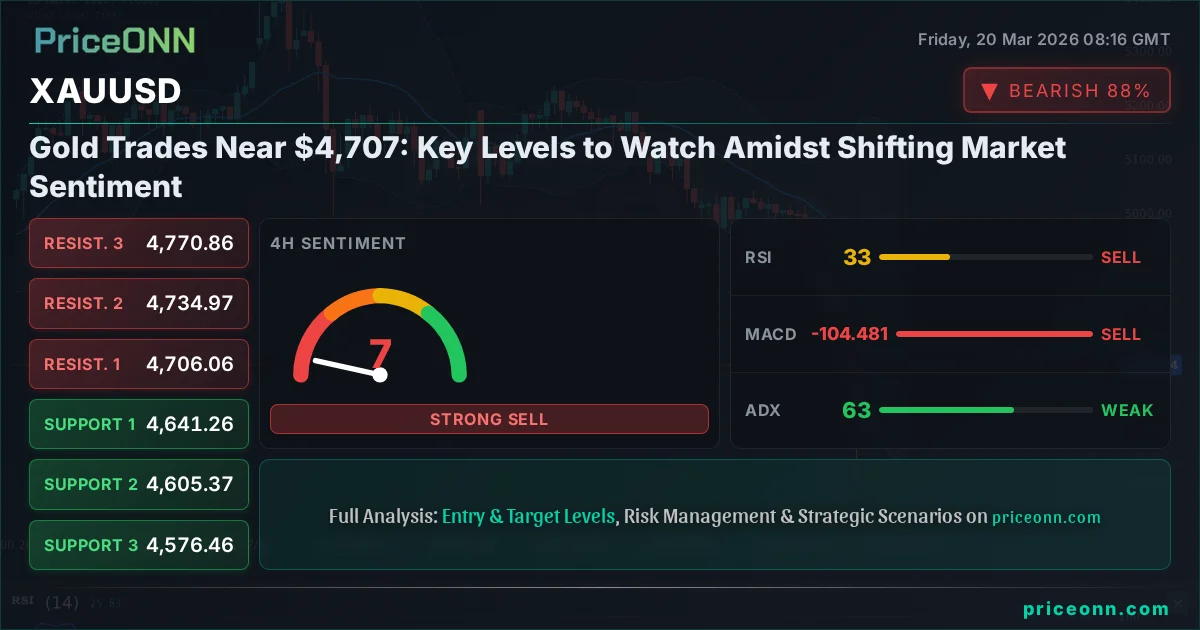
Front-month Comex gold futures for April delivery shed $30.10, representing a 0.65% drop to settle at $4,575.60 per troy ounce. The downturn was mirrored, and indeed amplified, in the silver market. April silver futures plummeted by $1.489, a steep 2.10% decline, closing at $69.485 per troy ounce.
The catalyst for this market turmoil appears to be a series of aggressive strikes within the vital energy infrastructure of the Gulf region. Reports indicate that Iranian drones targeted Kuwait's primary oil refinery, Mina al-Ahmadi, a facility capable of processing approximately 730,000 barrels daily. The attack forced the shutdown of multiple operational units.
This incident follows closely on the heels of retaliatory actions initiated yesterday. Following substantial Israeli strikes on Iran's South Pars gas field, Iran launched counter-attacks on an oil refinery in Haifa, Israel, and the Ras Laffan energy hub in Qatar. Ras Laffan, home to Qatar's largest liquefied natural gas (LNG) plant, has halted production. QatarEnergy has indicated that extensive damage will necessitate over a year for repairs.
Prior to these latest developments, Iran had also conducted drone assaults on Saudi Aramco's SAMREF refinery located in Yanbu. The cumulative impact of these assaults since the conflict's inception on February 28 has been the near-total blockade of tanker traffic through the critical Strait of Hormuz. This disruption has sent crude oil prices soaring, simultaneously amplifying global inflation anxieties and pushing major central banks toward a more restrictive, or hawkish, policy stance that bolsters the U.S. dollar.
Consequently, investors are showing a clear preference for the U.S. dollar over gold. As the yellow metal becomes a more expensive proposition for international purchasers amid a strengthening dollar, capital flows are shifting away. Adding to the fiscal strain, the Pentagon is reportedly requesting over $200 billion from the U.S. Congress to sustain military operations in the ongoing conflict. With over $11 billion reportedly expended by the U.S. in the war's inaugural week alone, the total cost could potentially eclipse more than half of Iran's annual GDP, estimated at $356.51 billion for 2025, raising serious questions about the broader economic ramifications.
As the twenty-first day of the U.S.-Israel versus Iran conflict unfolds, Tehran has issued a stark warning of "zero restraint" should its facilities face further attacks. A measure of relief emerged from statements by Israeli Prime Minister Benjamin Netanyahu, who indicated Israel's intention to adhere to U.S. President Donald Trump's directive to avoid targeting Iran's critical energy infrastructure. President Trump himself affirmed that the U.S. has no plans for troop deployment in the Middle East and reiterated his administration's commitment to managing escalating oil prices.
Gold saw a brief recovery following these diplomatic assurances from U.S. and Israeli leadership. Adding to the potential supply-side easing, U.S. Treasury Secretary Scott Bessent indicated in a Fox Business interview that the U.S. is contemplating the removal of sanctions on certain Iranian crude oil shipments already en route. This move could potentially free up approximately 140 million barrels of Iranian oil, benefiting nations like India, Japan, and Malaysia.
The U.S. Federal Reserve maintained its benchmark interest rate at 3.50% to 3.75% during its meeting on Wednesday. Citing persistent inflationary pressures and the "uncertainty" engendered by the Gulf war, the central bank signaled a possibility of rate adjustments later in the year, contingent on inflation control. It is worth noting that in 2025, gold and silver experienced substantial rallies, with gains of nearly 66% and 135%, respectively. However, the recent surge in oil price volatility and its inflationary impact has caused a significant redirection of investor interest toward the U.S. dollar.
The U.S. dollar index was last observed at 99.56, registering a gain of 0.28 points or 0.28%. The CME Group's FedWatch Tool now reflects a complete scaling back of expectations for a rate cut. Investors are currently pricing in only a 14.5% probability of a 25-basis-point rate hike and an 85.5% chance that rates will remain unchanged at the upcoming Fed meeting on April 28-29.
Market Ripple Effects
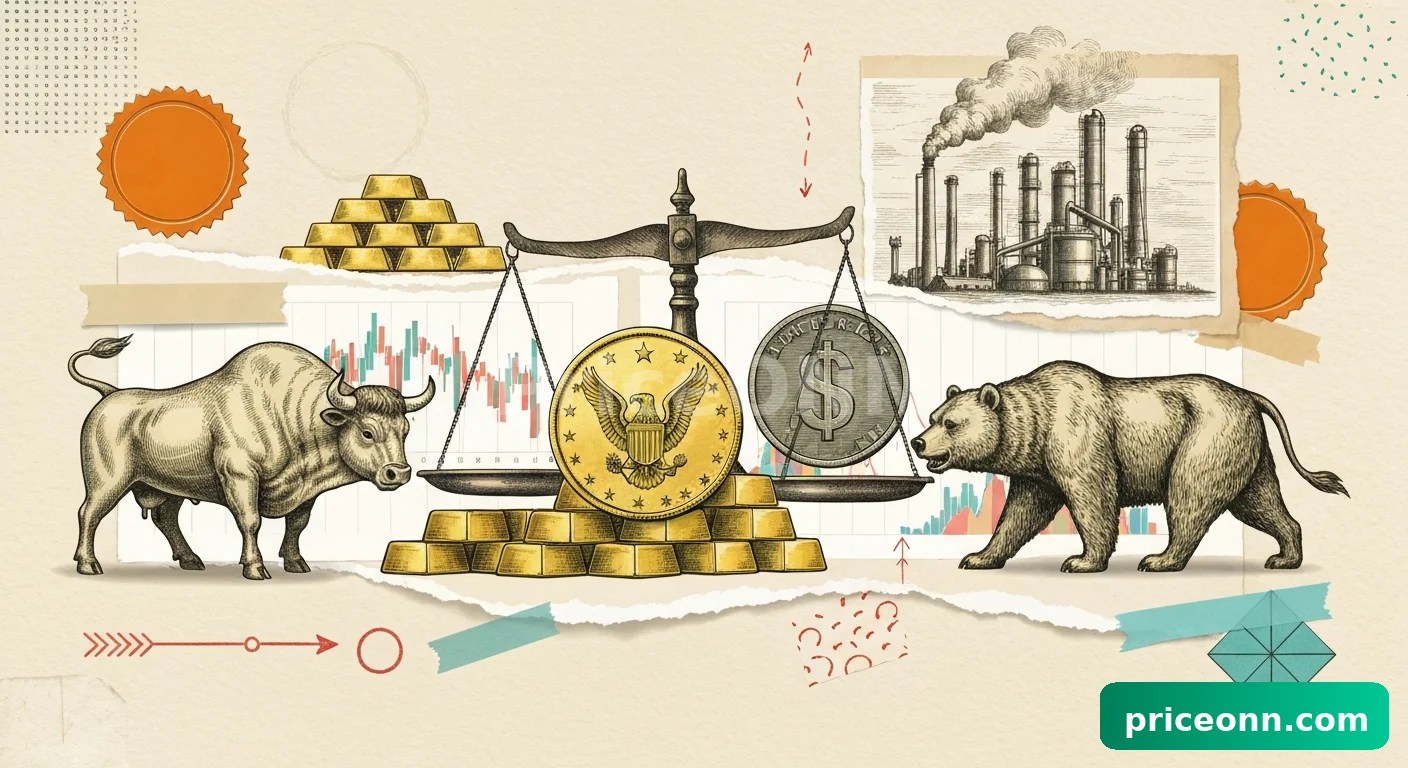
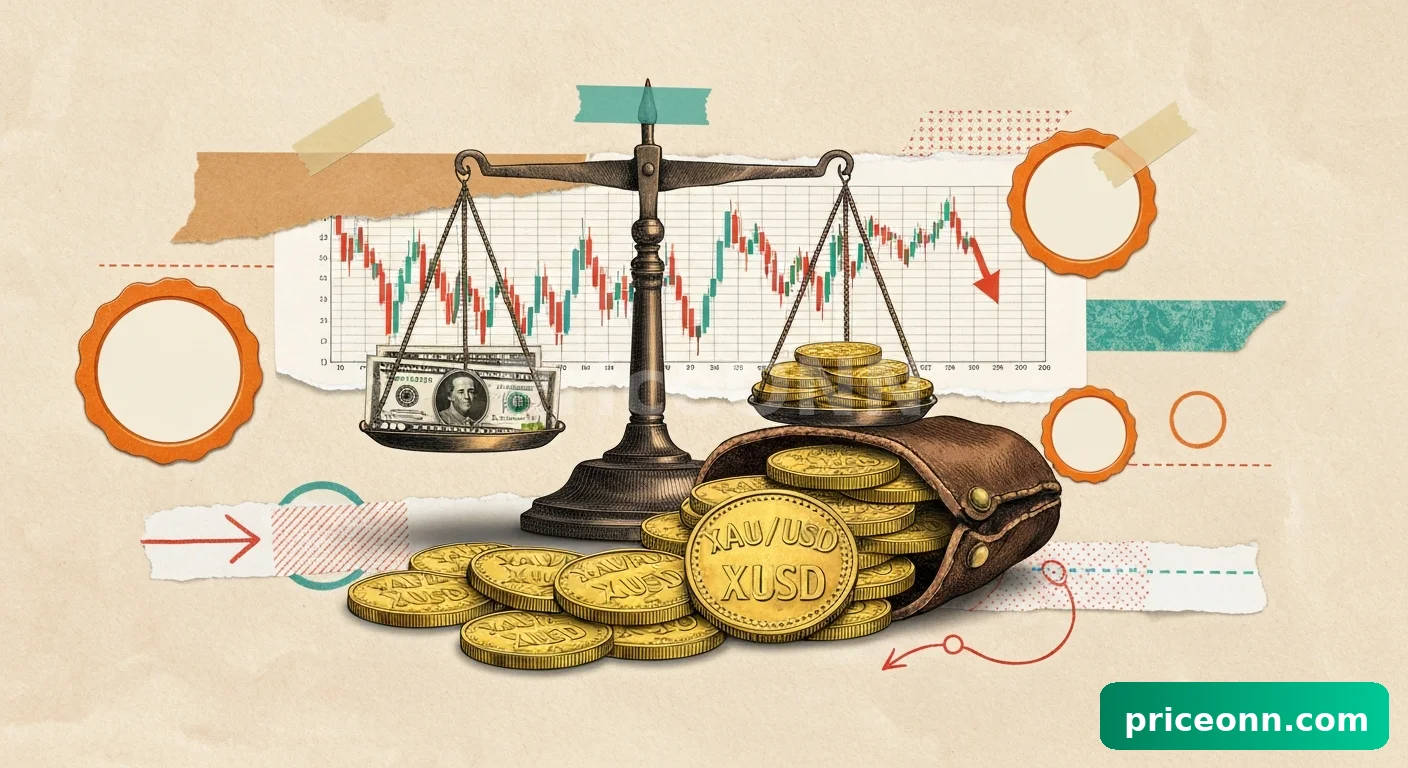
The intensifying conflict in the Persian Gulf and its direct impact on oil supply chains are creating significant headwinds for gold. As inflationary pressures mount and the U.S. Federal Reserve appears less inclined to cut rates in the near term, the appeal of the U.S. dollar strengthens, drawing capital away from safe-haven assets like gold. Traders should monitor the U.S. Dollar Index (DXY) closely, as its upward trajectory directly correlates with pressure on gold prices.
Furthermore, the heightened geopolitical risk premium on crude oil benchmarks, such as Brent Crude and WTI Crude, will continue to be a primary driver of inflation expectations. This volatility in energy markets could also have knock-on effects on global equity indices, particularly those with significant exposure to energy costs or sensitive to consumer spending, like the S&P 500. The prospect of prolonged conflict and its economic fallout warrants a cautious approach, with attention focused on key support and resistance levels for gold and the dollar.
Track markets in real-time
Empower your investment decisions with AI-powered analysis, technical indicators and real-time price data.
Join Our Telegram Channel
Get breaking market news, AI analysis and trading signals delivered instantly to your Telegram.
Join Channel