
Why Did Gold Plunge 6% as Oil Prices Skyrocket Amid Middle East Conflict?
Gold prices experienced a sharp sell-off on Thursday, extending recent losses as a fresh escalation in the Middle East conflict sent shockwaves through energy markets and ignited widespread inflation concerns. The precious metal plunged, with front-month Comex gold for April delivery shedding 5.91% to trade at $4,606.70 per troy ounce, marking a significant retreat from its recent highs.
Market Context
The dramatic downturn in gold, which has now seen seven consecutive sessions of losses, the longest streak since 2023, coincides with a substantial surge in crude oil prices. This surge is directly linked to escalating military actions between Israel and Iran, which have targeted energy facilities in the Gulf region. Spot gold tested the critical $4,500 per ounce level, a price point not witnessed since the market correction at the end of January. Silver fared even worse, tumbling over 8.50% to trade at $70.755 per troy ounce, and has now retracted over 45% from its January peak. This broad-based decline in precious metals underscores a shift in investor sentiment away from safe-haven assets as inflation risks intensify.
Analysis & Drivers
The primary catalyst for this precipitous drop in gold and silver prices is the heightened geopolitical risk in the Middle East. Attacks on energy infrastructure, including Qatar's critical LNG hub Ras Laffan and Iranian gas fields, have sent oil prices soaring. This spike in energy costs directly translates into increased inflationary pressures across the global economy. Such an environment typically diminishes the appeal of non-yielding assets like gold and silver. Furthermore, the prospect of sustained high inflation makes central banks, such as the Federal Reserve, less inclined to implement interest rate cuts. Market data indicates the Federal Reserve recently maintained its benchmark interest rate, with projections suggesting potentially only a single rate cut for the year, contingent on a sustained deceleration in inflation. The U.S. military, while engaged in operations against Iran-linked groups, faces a challenging timeline for conflict resolution, further contributing to market uncertainty and the flight from precious metals towards perceived inflation hedges like energy commodities.
Trader Implications
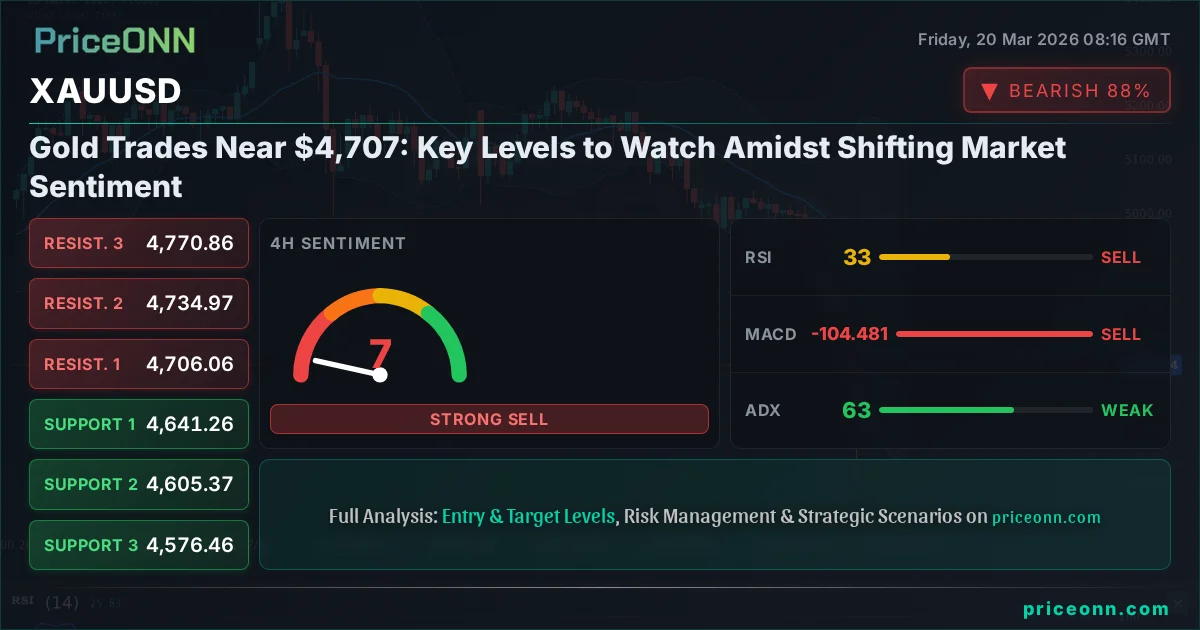
Traders should closely monitor the ongoing developments in the Middle East, as any further escalation or de-escalation will significantly impact oil prices and, consequently, inflation expectations. Key price levels to watch for gold include the recent low around $4,500 as a potential support, with resistance overhead near its previous highs. For silver, the $66 per ounce level is a significant psychological and technical marker. The Federal Reserve's stance on interest rates, particularly any forward guidance on inflation, will also be crucial. A sustained increase in energy prices could force the Fed to adopt a more hawkish stance, pressuring gold further. Conversely, any signs of diplomatic resolution or a cooling of tensions could lead to a rebound in precious metals as inflation fears subside.
Outlook
The immediate outlook for gold and silver remains volatile, heavily dependent on the trajectory of the Middle East conflict and its impact on global energy markets. While the current inflationary pressures driven by oil shocks favor a bearish sentiment for precious metals in the short term, a sudden geopolitical de-escalation could trigger a sharp reversal. Investors and traders will be looking for concrete signs of stability in energy prices and a clearer path towards disinflation to regain confidence in gold and silver as investment assets.
Frequently Asked Questions
What caused the recent sharp decline in gold prices?
Gold prices plunged by 5.91% to $4,606.70 due to escalating Middle East tensions that sent oil prices soaring. This surge in energy costs fueled inflation fears, making non-yielding assets like gold less attractive.
How has the conflict impacted silver prices?
Silver experienced an even steeper decline, falling over 8.50% to trade at $70.755 per ounce. This level is the lowest since late December, and the metal has now lost over 45% from its January peak of $121.65.
What are the key levels traders should watch for gold?
Traders should monitor the $4,500 per ounce level as a critical support area, representing a significant psychological and technical floor. Resistance is expected near gold's previous higher price points as the market gauges inflationary impacts and geopolitical stability.
Track markets in real-time
Empower your investment decisions with AI-powered analysis, technical indicators and real-time price data.
Join Our Telegram Channel
Get breaking market news, AI analysis and trading signals delivered instantly to your Telegram.
Join Channel
PriceONN