
Middle East Tensions Spark Oil Price Volatility as IEA Considers Stock Releases

Geopolitical tensions in the Middle East have intensified, casting a long shadow over global energy markets and leading to increased price volatility for crude oil. The situation is severe enough that the International Energy Agency (IEA) is actively discussing potential coordinated releases from strategic oil stocks with governments worldwide, according to market data.
Market Context
The fragile state of energy security, particularly in the Middle East, is a primary concern for global policymakers and market participants. West Texas Intermediate (WTI), a key benchmark for crude oil, is experiencing fluctuating prices as traders assess the potential impact of regional instability on global supply. WTI, known for its light and sweet characteristics, is easily refined and its pricing is heavily influenced by its distribution network within the United States, notably through the Cushing, Oklahoma hub.
While the IEA has not disclosed specific details of its ongoing discussions, the agency's chief, Fatih Birol, indicated that governments are prepared to deploy reserves if necessary to mitigate severe supply shocks. This readiness to intervene highlights the critical juncture at which global energy markets find themselves. The fundamental balance of supply and demand for oil remains susceptible to disruptions, with geopolitical events in key producing regions posing the most immediate threat.
Analysis & Drivers
The primary driver behind the current market unease is the escalating conflict in the Middle East. Any significant disruption to oil production or transit routes in this vital region could have immediate and far-reaching consequences for global oil prices. The IEA's consideration of strategic petroleum reserve (SPR) releases is a direct response to these heightened risks. Historically, SPR releases have been employed to stabilize markets during periods of acute supply shortages or price spikes.
Beyond immediate geopolitical concerns, broader energy transition narratives also play a role in market sentiment. In India, for example, a nation heavily reliant on coal for its energy needs, there is a significant push towards decarbonization. The country is rapidly expanding its renewable energy capacity, aiming for 500 gigawatts by 2030. However, this transition is capital-intensive, with estimates suggesting a need for approximately $900 billion over the next three decades for a just shift away from coal. Despite this ambitious green agenda, India's energy security remains a paramount concern, with continued reliance on oil, gas imports, and critically, coal, which still constitutes about three-quarters of its energy mix. This dynamic underscores the complex interplay between energy security, economic development, and climate goals, which can indirectly influence global energy demand and supply perceptions.
Trader Implications
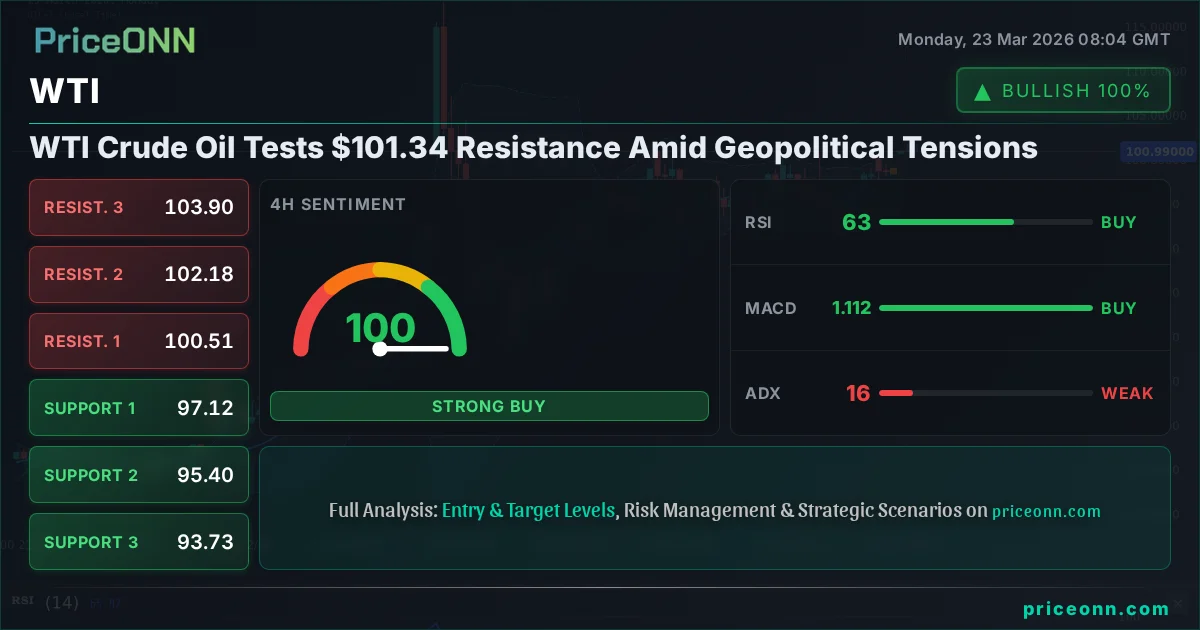
Traders should closely monitor developments in the Middle East for any signs of supply disruptions. Key price levels for WTI crude oil will be crucial. Support is currently seen around the $75 per barrel mark, with resistance levels to watch near $82 per barrel. Any confirmation of SPR releases could lead to a short-term price dip, but the underlying geopolitical risk premium is likely to persist.
For those engaged in commodity trading, understanding the dual pressures of geopolitical risk and the long-term energy transition is vital. While immediate price action may be driven by Middle East tensions, the structural shift towards renewables, exemplified by India's ambitious targets, will continue to shape the energy landscape. Traders should consider hedging strategies that account for potential volatility stemming from both immediate supply concerns and the gradual, albeit complex, global energy transition.
Outlook
The outlook for crude oil prices remains highly sensitive to geopolitical developments in the Middle East. Should tensions de-escalate, prices could see a modest pullback. However, any further escalation or a confirmed disruption to supply could send WTI prices sharply higher, potentially testing resistance levels above $85 per barrel. The IEA's actions will be a key indicator of market sentiment and the perceived severity of supply risks. In the longer term, the pace of India's energy transition and global efforts to achieve climate targets will continue to influence demand dynamics.
Frequently Asked Questions
What is the immediate risk to oil prices from the Middle East situation?
The immediate risk is supply disruption due to escalating geopolitical tensions. This can lead to sharp price increases as traders price in potential shortfalls, with West Texas Intermediate (WTI) potentially challenging resistance levels around $82 to $85 per barrel if supply fears intensify.
When might the IEA release strategic oil stocks?
The IEA is discussing potential releases if necessary, indicating a readiness to act if supply shocks materialize. A formal decision would likely be triggered by a significant, confirmed disruption to oil flows or a sustained spike in prices beyond acceptable levels, potentially impacting WTI prices by pushing them lower in the short term.
How does India's energy transition affect global oil markets?
India's significant energy demand growth and its ongoing reliance on fossil fuels, including oil, contribute to global demand. While its transition to renewables is progressing, requiring an estimated $900 billion, the pace of this shift and its impact on overall energy consumption will influence long-term oil market dynamics.
Track markets in real-time
Empower your investment decisions with AI-powered analysis, technical indicators and real-time price data.
Join Our Telegram Channel
Get breaking market news, AI analysis and trading signals delivered instantly to your Telegram.
Join Channel
PriceONN