
The Oil Crisis Is Far From Over
 PriceONN Editorial Desk
Multi-source verification
PriceONN Editorial Desk
Multi-source verification
The Approaching Energy Precipice
Despite the recent signing of a Memorandum of Understanding (MOU) outlining terms for a U.S.-Iran conflict settlement, the global energy landscape faces a severe test. This agreement, inked last week, appears unlikely to shield the world from an impending energy crunch. The core of this crisis lies in the rapid depletion of both commercial and strategic oil reserves worldwide. These reserves have served as vital buffers, particularly during the significant disruption of tanker traffic through the Strait of Hormuz, a vital chokepoint for approximately 20 percent of global oil transit, which was suspended amid the hostilities.
The world is rapidly approaching what industry observers term "tank bottoms" – a state where usable oil and oil product inventories are critically low. When these buffers effectively vanish, a fierce bidding war for oil is anticipated. This competition will be driven by the persistent global demand for millions of barrels per day that will no longer be readily available from existing stockpiles as the geopolitical drama in the Persian Gulf unfolds. The Strait of Hormuz remains closed, a move by Iran in response to ongoing military actions in Lebanon.
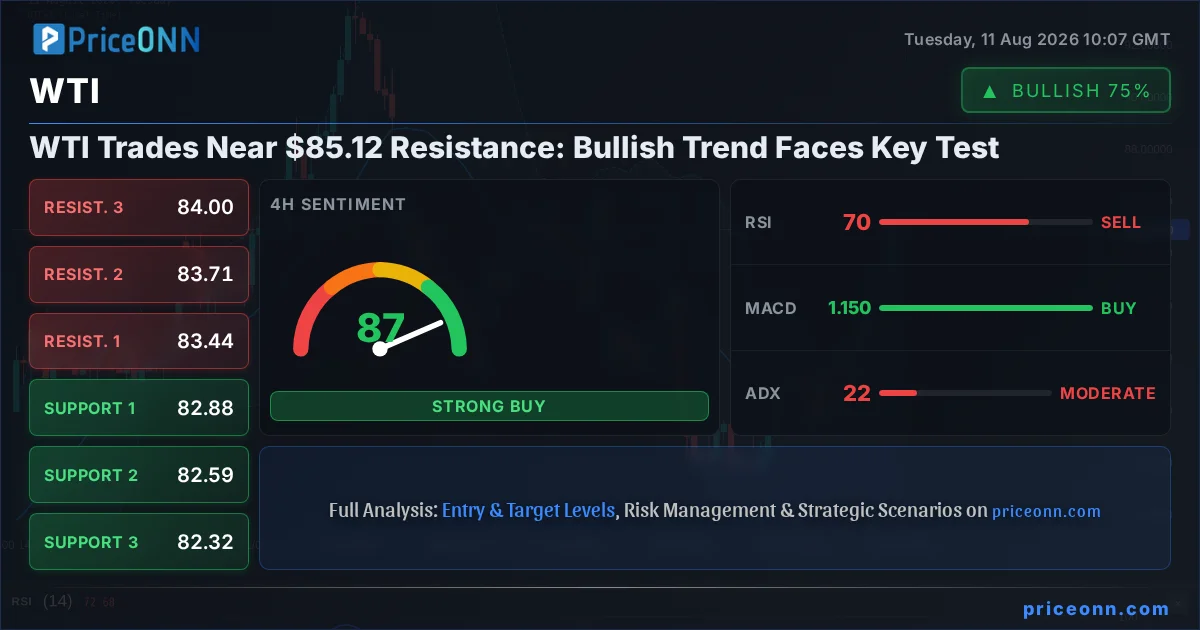
Navigating the Strait's Uncertain Waters
A primary stipulation within the MOU mandates an immediate cessation of all hostilities, including in Lebanon, as a prerequisite for further diplomatic engagement. However, the true challenge extends beyond simply reopening the Strait. Crucial questions linger regarding the precise definition of "open" from each party's perspective and how shipping firms and their insurers perceive the risks associated with transiting this vital waterway. Reports from unofficial Iranian government spokespeople suggest that even if the Strait reopens, traffic will likely be meticulously metered, flowing at rates significantly lower than those observed before the conflict.
While insurance premiums for passage through the Strait have reportedly surged to five times pre-war levels, the actual cost of chartering tankers for the journey is escalating dramatically, with availability becoming increasingly scarce. A persistent fear among shipping operators centers on the uncertainty of whether vessels entering the Persian Gulf will be permitted to depart, given the volatile day-to-day shifts in conditions. This pervasive uncertainty is a powerful tool for Iran, allowing its newly established Persian Gulf Strait Authority to claim the Strait is "open" while simultaneously asserting it cannot compel shipping companies to traverse it.
There is a strong strategic incentive for Iran to maintain traffic at the bare minimum necessary to project an "open" Strait, thereby facilitating ongoing negotiations. Simultaneously, this approach continues to restrict adequate supplies of oil, liquefied natural gas, and crucial commodities like sulfur and fertilizer to the global economy. As this energy precipice draws nearer, crude oil prices are poised to reclaim, and potentially surpass, their previous peaks.
The Economic Fallout and Diplomatic Pressure
The transmission of economic pain from rising energy costs is expected to reverberate globally, impacting nations including the United States. This pressure will likely incentivize the U.S. administration to pursue a stabilizing agreement with greater urgency. Such an accord, however, is contingent on successful negotiations, and Iran has clearly signaled that progress is tied to the U.S. adhering to the conditions stipulated in the MOU. Reports indicate that the Iranian delegation intends to "demand the other side implement its commitments" during talks.
Iran's ability to control the flow of traffic through the Strait of Hormuz has become the principal mechanism for enforcing the terms of the MOU. Furthermore, even if the current closure is resolved swiftly and negotiations commence, the MOU itself outlines a 60-day negotiation period. Iranian officials likely recognized when signing the agreement that global "tank bottoms" would almost certainly be reached during this negotiation window. This scenario would inevitably lead to significant oil price spikes, weakening the United States' negotiating position and compelling U.S. diplomats to concede more to Iran in exchange for a swift resolution.
The initial euphoria surrounding the MOU's signing is expected to wane as the reality of ongoing inventory drawdowns becomes increasingly apparent. While the U.S. administration may attempt to verbally influence oil prices lower, a tactic employed previously, its effectiveness is likely to be short-lived. Ultimately, verbal interventions cannot overcome fundamental physical limitations. The world faces a stark choice: either find a resolution to the supply constraints or contend with the unavoidable consequences of depleted reserves.
Market Ripple Effects
The escalating tensions and potential supply disruptions in the Strait of Hormuz create a complex web of interconnected market risks. Traders and investors must closely monitor several key areas that will likely experience significant volatility.
Firstly, the price of crude oil futures, both Brent and West Texas Intermediate (WTI), will remain highly sensitive to developments in the Persian Gulf. Any perceived escalation or de-escalation will trigger sharp price movements. Secondly, the US Dollar Index (DXY) could see fluctuations. A sustained energy crisis could potentially weaken the dollar if it hampers U.S. economic growth, or strengthen it if it's perceived as a safe-haven asset amidst global turmoil.
Thirdly, the Canadian Dollar (CAD), often influenced by oil prices due to Canada's significant oil exports, may face headwinds. A sustained drop in oil prices due to demand destruction or prolonged supply issues could pressure the CAD. Finally, broader equity markets, particularly energy sector stocks and companies with significant supply chain dependencies on oil or LNG, will be under scrutiny. A prolonged energy crisis could dampen overall market sentiment and corporate earnings expectations, leading to sell-offs.
Traders should focus on the actual flow of oil, not just rhetoric. Key indicators to watch include shipping data for tanker traffic through the Strait, inventory reports from major consuming nations, and the forward curves for oil futures. The interplay between geopolitical pronouncements and the physical reality of supply will dictate market direction. The 60-day negotiation window, coinciding with projected inventory lows, presents a critical period of heightened risk and potential opportunity.
Track markets in real-time
Empower your investment decisions with AI-powered analysis, technical indicators and real-time price data.
Join Our Telegram Channel
Get breaking market news, AI analysis and trading signals delivered instantly to your Telegram.
Join Channel PriceONN News
Crude oil inventories in the United States saw a massive increase of 17.4 million barrels during the week ending August 7, according to new data from the U.S. Energy Information Administration (EIA) released on Wednesday. The increase brings commercial stockpiles to 424.4 million barrels, according to government data, which are now just 2% below the five-year average for this time of year. The EIA’s data release follows API’s figures that were released a day earlier, which reported that crude...
PriceONN News
Indian state-controlled oil refiners continue to search the market for spot crude supply as term deliveries are constrained by the ongoing crisis in the Middle East and its key oil chokepoint, the Strait of Hormuz. Mangalore Refinery and Petrochemicals Limited (MRPL) and Hindustan Petroleum Corporation Limited (HPCL) are looking to buy a combined 6 million barrels of crude oil via spot tenders, Reuters reported on Wednesday, citing tender documents it has seen. HPCL is seeking up to 4 million...
PriceONN News
The IEA has slashed its 2026 global oil supply forecast, with output now expected to plunge 4.3 million barrels per day this year as the failure to reopen the Strait of Hormuz pushes the market deeper into deficit. The latest forecast is considerably worse than the 3.7-million-bpd decline the agency projected just last month and would leave global supply at 102.02 million bpd, its lowest forecast for 2026 yet. Supply is now expected to fall 1.27 million bpd short of demand for the year,...
PriceONN News
(RTTNews) - Crude oil prices have surged on Tuesday, extending the gains from the two previous sessions as the U.S.-Iran stalemate over new demands for compensation for war-related damages continued, diminishing the expectations of an early reopening of the Strait of Hormuz.
PriceONN News
Five months after the U.S. and Israel opened a war with Iran, global fuel markets still haven't settled down, and the latest IEA data prove it. The IEA's monthly end-use price tracker, updated Aug. 7 and covering prices through July, shows the average per-liter cost of automotive diesel across the countries it tracks sitting near $1.94 in U.S. dollar terms. That's roughly 14% above where it stood in February, before the war started, and it's actually higher than June, even as crude oil kept...
PriceONN News
Hormuz tensions are flaring again as Iranian exports collapse, pushing Brent toward $87 and raising the risk of another run toward $100. China’s Crude Drawdown Puts Iranian Barrels Back in Demand - Shrinking crude inventories in China might spur a buying spree over the upcoming weeks, particularly for Russian and Iranian crude, buoyed by a record-high July stock draw in Shandong. - Chinese teapots are expected to boost their purchases of Iranian oil in the upcoming days as stockpiles in the...
PriceONN News
Brent Crude oil prices rose above $89 per barrel in early trade in Europe on Wednesday as Iran and the United States offered contrasting claims about who controls the Strait of Hormuz. Brent Crude prices were up by 0.64% at $89.60 in the morning in Europe, and WTI Crude was rising by 0.94% at $83.90, amid persistent supply concerns and risks despite claims from the U.S. that traffic at Hormuz had normalized. Iran, for its part, said on Tuesday that the Strait of Hormuz will remain closed unless...
PriceONN News
Oil flows from the Middle East have normalized, with Sunday traffic alone above pre-conflict averages, U.S. Secretary of Energy Chris Wright said on Tuesday in a claim that appears not to be backed by ship-tracking data. On Tuesday, Secretary Wright posted on X that “Thanks to the coordinated efforts of the U.S. military and our gulf allies, the seven-day average for oil leaving the Strait of Hormuz is currently up to almost 9 million barrels per day.” He went on to add that “When combined with...
PriceONN News
A drone has struck a power station at the Zawiya oil export terminal in Libya, suggesting continued attacks on one of the country’s main oil hubs. The power plant is in close proximity to the largest oil refinery in Libya, the AP noted in a report on the news. The attack follows earlier ones that caused an explosion at an oil storage tank. No one has claimed responsibility for the drone attacks, the AP also reported. The tank, according to the company operating the facility, had 4.5 million...
PriceONN News
Russia has started importing fuels from India, Bloomberg reported today, citing Kpler data that shows one cargo of 42,000 tons of gasoline from Nayara Energy’s Vadinar refinery arriving in Russia earlier this month. The Vadinar refinery is partly owned by Rosneft, which supplies the crude oil that is processed at the facility. Those shipments were disrupted last November, after the United States sanctioned Russia’s largest oil exporter. The Vadinar cargo was loaded in mid-June, the report said,...
PriceONN News
Whatever officially occurs next in the on-again/off-again negotiations towards a peace deal between the U.S. and Iran, unofficially Tehran knows that it has established de facto control over both the world’s two key maritime energy transit routes -- the Strait of Hormuz and the Bab el-Mandeb Strait -- for at least as long as the Islamic regime remains in place in Iran. Washington, London, Brussels, Beijing, and Moscow know it too. The Strait of Hormuz remains effectively controlled by vast...
PriceONN News
The Middle East conflict and the heightened threats to shipping in the Red Sea have prompted China to boost the use of the Arctic to move containers from the Chinese east coast to Europe. The fast-melting Arctic ice offers an alternative shipping route in the summer as the Houthi threats to shipping in the Red Sea and the Bab el-Mandeb Strait make cargo operators more cautious in transiting the key chokepoints in the Middle East. Shipping through the Arctic is not something new, but this time...