
Oil Prices Eye $80 as Turkey Begins Drilling in Somalia Amid Supply Concerns


Crude oil prices are hovering near the critical $80 per barrel mark as Turkey initiates deepwater drilling operations off the coast of Somalia. This development introduces new geopolitical considerations into an already tight global oil market, potentially impacting supply dynamics and price volatility.
Market Context
The commencement of drilling by Turkish Petroleum Corporation (TPAO) in Somalia's offshore blocks follows a strategic exploration and production agreement signed in March 2024. This agreement grants Turkey the right to conduct seismic surveys and drilling across a vast area of approximately 16,000 square kilometers. The drilling operation, which began on February 15 with the vessel Cagri Bey, is supported by Turkish naval forces. Somalia's estimated reserves of 30 billion barrels of oil and 6 billion cubic meters of natural gas position it as a significant player in the African energy landscape. This move comes as Brent crude has traded between roughly $75 and $85 a barrel over the past several months, with traders keenly aware of any factors that could push prices higher.
Analysis & Drivers
Several factors underpin the potential impact of Turkey's drilling activities on oil prices. First, the addition of a new source of supply, even if years away from full production, can influence long-term price expectations. Second, the geopolitical implications of Turkey's expanded presence in the Horn of Africa introduce an element of uncertainty. Turkey's broader "Africa Opening Strategy," initiated in 1998 and revamped in 2005, aims to strengthen its ties across the continent. Its involvement in Somalia, including the establishment of a military base (Camp TURKSOM) in 2017 and a recent 10-year defense and economic agreement, underscores its strategic interest in the region. However, the energy agreement has faced criticism for its terms and potential impact on Somali sovereignty, raising questions about long-term stability and operational risks.
Trader Implications
Traders should closely monitor several key factors:
- Drilling Progress: Any announcements regarding the success or challenges of the initial drilling phase will likely impact market sentiment.
- Geopolitical Developments: Monitor regional reactions to Turkey's presence and any potential conflicts that could disrupt operations.
- Somali Political Stability: Instability within Somalia could jeopardize the project and impact investor confidence.
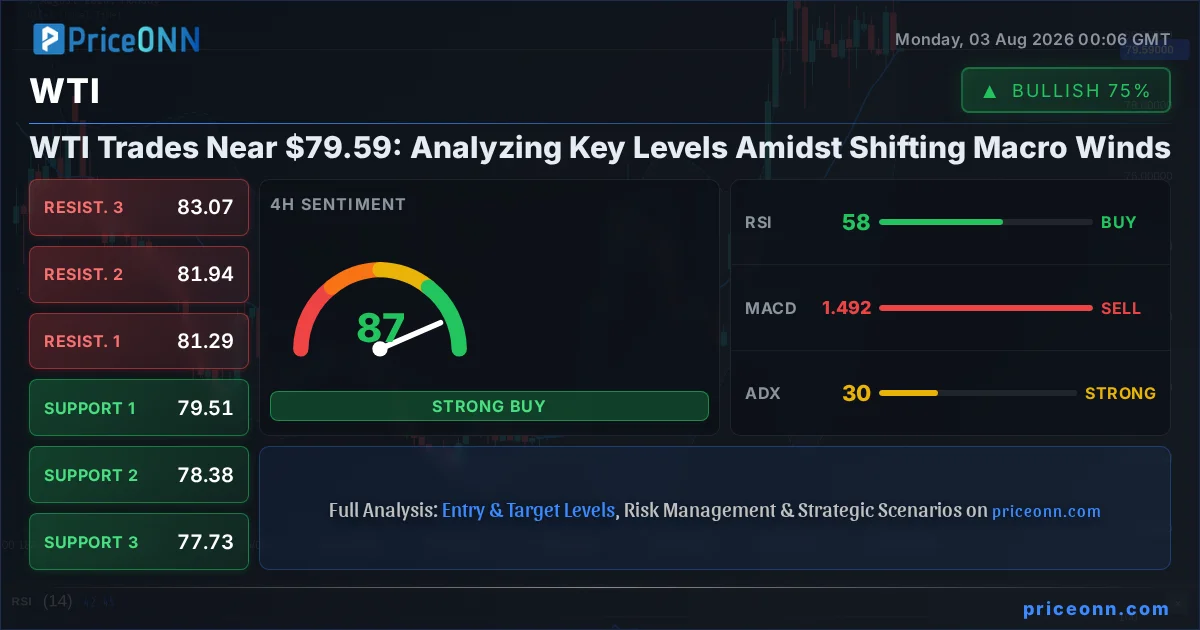
- Key Price Levels: Watch for movements above $80 per barrel for potential bullish signals and below $75 as a possible bearish trigger.
Given the inherent risks, traders should exercise caution and manage their positions accordingly. A break above $80 could signal a test of higher resistance levels, while failure to sustain gains could lead to a pullback.
Furthermore, keep an eye on the spread between Brent and WTI crude. Significant divergence could indicate regional supply imbalances or differing perceptions of risk. Use options strategies to hedge against volatility and protect against unforeseen events.
Outlook
Looking ahead, the oil market will likely remain sensitive to geopolitical developments and supply-side factors. Turkey's drilling activities in Somalia add another layer of complexity. While the immediate impact on global supply may be limited, the long-term potential and associated risks warrant close attention. Upcoming OPEC+ meetings and economic data releases will further shape market sentiment and price direction. Expect continued volatility as traders weigh these competing forces.
Track markets in real-time
Empower your investment decisions with AI-powered analysis, technical indicators and real-time price data.
Join Our Telegram Channel
Get breaking market news, AI analysis and trading signals delivered instantly to your Telegram.
Join Channel PriceONN News
(RTTNews) - Reversing the gains from Friday's session, crude oil prices have gone into freefall on Monday, with supply-disruption threats diminishing after U.S. President Donald Trump called off an earlier planned attack on Iran. However, Iran's staunch denial of negotiating with
PriceONN News
Brent crude fell back to around $80 per barrel after renewed optimism over a potential US-Iran draft agreement eased geopolitical fears, even as President Trump criticized US refiners for high fuel profits. Trump Takes Aim at Big Oil’s War Profits - Runaway Q2 earnings of US oil majors have brought bumper profits of energy companies back into the political limelight, with US President Trump ordering retailers to ‘get retail prices down’ as soon as possible. - Donald Trump accused ExxonMobil...
PriceONN News
Indian state-owned refiner Hindustan Petroleum Corporation Limited (HPCL) has bought 2 million barrels of crude from Nigeria, trading sources told Reuters on Tuesday, as India looks to offset the loss of supply from the Middle East with deliveries from producers farther away. HPCL has acquired Okwuibome and Utapate crudes from Nigeria from commodity trader Glencore via a tender, the sources told Reuters. The Nigerian crude will go to feed HPCL’s refinery in the state of Rajasthan, HPCL...
PriceONN News
The Houthi threat to shipments of Saudi crude oil from the Red Sea hasn’t abated and more tankers laden with Saudi oil appeared to have made the transit through the Bab el-Mandeb chokepoint in dark mode. Two tankers that had loaded Saudi crude at the Red Sea port of Yanbu have likely exited the Bab el-Mandeb Strait in southern direction with their transponders off, Bloomberg reported on Monday, citing vessel-tracking data it is monitoring. The Greece-owned Lesvos tanker of the Suezmax size and...
PriceONN News
Oil prices fell sharply in early Asian trade on Monday after President Trump called off another round of military strikes on Iran, raising hopes that a diplomatic route to reopening the Strait of Hormuz and averting a broader regional conflict could be found. At the time of writing, West Texas Intermediate futures were trading at $79.77 per barrel, down 5.88%, while Brent futures had fallen to $83.47, down 5.07%. The most recent selloff comes after a very volatile July in which both benchmarks...
PriceONN News
The U.S. Department of Defense has canceled a tender to buy up to $300 million worth of lithium carbonate for the national strategic stockpile in another blow to the Administration looking to secure critical minerals for the defense and other strategic industries. DoD’s Defense Logistics Agency, which manages the end-to-end defense supply chain from raw materials to end-user disposition, canceled the solicitation in its entirety, effective August 3, 2026. The deadline for bids was extended...
PriceONN News
Venezuela exported 1.16 million barrels of crude oil daily last month, a slight decline from June’s 1.2 million barrels daily, on lower withdrawals from storage, Reuters has reported, noting that exports to the United States during that month increased. July exports to Venezuela’s biggest oil destination averaged 786,000 barrels daily, which was the highest since early 2019, Reuters noted in its report. U.S. imports from Venezuela following Washington’s toppling of President Nicolas Maduro in...
PriceONN News
The world is running short on fuels-the warning was first issued by some analysts who were watching the physical market rather than futures charts. Now, Big Oil is joining the chorus of warnings, with Shell, Exxon and Chevron all saying that prices at the pump are set to stay higher, regardless of where crude oil prices go. “The constraint pain point in the energy system is refining," Exxon’s chief financial officer Neil Hansen told Bloomberg in an interview last week. This, according to him,...
PriceONN News
Over 1,600 days into Russian President Vladimir Putin’s 10-day special military operation and the situation for the Kremlin continues to deteriorate. Since Moscow ordered its troops illegally into Ukraine on 24 February 2022, more than 450,000 of them have been killed, with another 1 million wounded or missing. Ukraine’s extraordinary development of its own military -- including a stunning build-out of its drone capabilities -- now means Russian monthly casualties have reached the critical...
PriceONN News
Russian crude processing fell to its lowest level in more than two decades in July after Ukraine expanded its drone campaign from refineries to tankers, pipelines and export infrastructure, according to The Moscow Times, citing Bloomberg analysis. Russian refineries processed an estimated 3.6 million barrels per day in July, the lowest monthly level since May 2002 and roughly one-third below the seasonal average. Between 2020 and 2025, Russian refineries typically processed between 5.3 million...
PriceONN News
President Donald Trump demanded that U.S. oil companies immediately lower gasoline prices on Monday after crude futures plunged following his decision to suspend another planned military strike on Iran. In a Truth Social post, Trump instructed producers to “get your consumer (retail!) Oil Prices DOWN, NOW!” Trump singled out Chevron CEO Mike Wirth after the executive appeared on television discussing the company’s business. Trump said Wirth failed to acknowledge the administration’s role in...
PriceONN News
Georgia’s only oil refinery has begun replacing Russian crude with supplies from Kazakhstan and Libya as owner Black Sea Petroleum races to avoid European Union sanctions that will go into effect in January. The Kulevi refinery received and processed Kazakh crude in July and will continue taking Kazakh barrels during August, Black Sea Petroleum said Monday, as reported by Interfax news agency. A Libyan cargo is due to arrive between August 20 and August 30 under a supply agreement signed with...