
Recession Fears Surge as Geopolitical Risk and Oil Prices Bite US Economy

The probability of a U.S. economic contraction is climbing rapidly, with market analysts and economists on Wall Street significantly revising their recession forecasts upwards. This heightened concern is driven by a dual threat of escalating geopolitical instability and emerging weaknesses in the labor market, creating a complex and uncertain economic outlook.
Market Context
Recent assessments indicate a substantial shift from historical norms. Moody's Analytics has raised its 12-month recession outlook to 48.6%, a stark increase from the typical baseline risk of around 20% seen in other economic cycles. Goldman Sachs now estimates the probability at 30%, while Wilmington Trust places it at 45%. EY Parthenon suggests these figures could accelerate dramatically if the Middle East conflict intensifies or persists longer than anticipated.
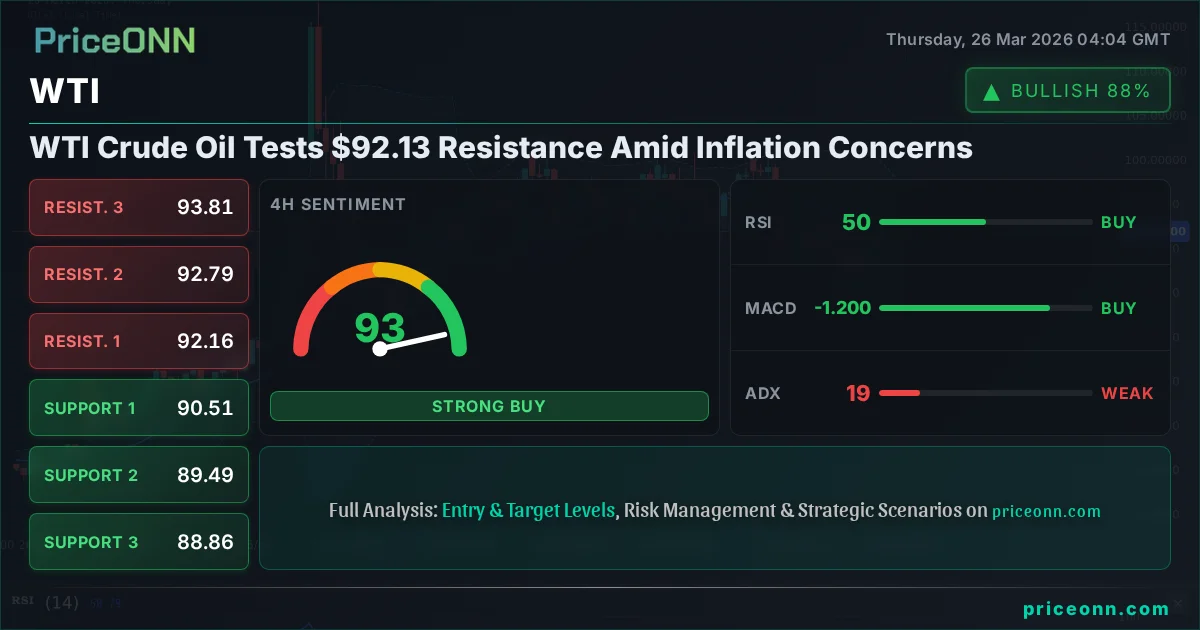
This elevated risk profile is particularly influenced by the ongoing conflict in the Middle East. Historically, periods of elevated oil prices have frequently preceded U.S. recessions, with the exception of the COVID-19 pandemic. Current data shows a notable increase in gasoline prices, which have jumped approximately 35% to $1.02 per gallon over the last month, according to AAA reports.
Analysis & Drivers
The primary catalysts for this elevated recessionary risk are multifaceted. Geopolitical tensions, particularly the ongoing conflict in the Middle East, are directly impacting global energy markets. This has led to a significant surge in crude oil prices, which in turn drives up gasoline costs for consumers and businesses. Analysts note that sustained high energy prices can act as a potent drag on economic activity, reducing consumer spending and increasing operational costs for industries.
Furthermore, signs of strain within the U.S. labor market are contributing to the darkening economic outlook. While specific data points on labor market slump were mentioned in research, the general sentiment indicates a cooling that, combined with other factors, increases recessionary probabilities. Policymakers face a delicate balancing act: addressing inflation without further stifling economic growth, a challenge exacerbated by external shocks like rising oil prices.
Trader Implications
For traders and investors, the rising recession odds necessitate a cautious approach. Key levels to watch include the $1.02 per gallon mark for gasoline, which, if sustained, could signal continued pressure on consumer spending. Any further escalation in geopolitical events that could disrupt oil supply should be monitored closely as a potential trigger for increased market volatility.
Traders should consider defensive strategies, potentially reallocating capital towards assets that historically perform better during economic downturns. Monitoring central bank commentary for any shift in policy stance regarding inflation and growth will be crucial. The market sentiment appears to be shifting towards risk aversion, which could favor safe-haven assets.
Outlook
The immediate outlook for the U.S. economy remains precarious. The confluence of geopolitical uncertainty and rising energy costs presents a significant headwind. If crude oil prices remain elevated through the second quarter, economists warn that this could be the tipping point into a recession. Market participants will be closely watching economic indicators for further signs of weakness and any policy responses from central banks and governments. The potential for a recession within the next 12 months has moved from a possibility to a significant probability, demanding vigilance from all market participants.
Frequently Asked Questions
What is the current probability of a U.S. recession?
Market data shows that the probability of a U.S. recession within the next 12 months has significantly increased. Moody's Analytics estimates this risk at 48.6%, with other major institutions also placing the odds substantially higher than the historical baseline of 20%.
How are geopolitical events impacting the economy?
Escalating geopolitical tensions, particularly in the Middle East, are driving up crude oil prices. This has led to a 35% increase in gasoline prices over the past month, directly impacting consumer spending and business costs, and historically has been a precursor to economic downturns.
What should traders watch for in the coming weeks?
Traders should monitor sustained gasoline prices above $1.02 per gallon and any further geopolitical escalations that could affect oil supply. A shift towards defensive assets and careful observation of central bank policy are advisable given the increased recessionary risk.
Track markets in real-time
Empower your investment decisions with AI-powered analysis, technical indicators and real-time price data.
Join Our Telegram Channel
Get breaking market news, AI analysis and trading signals delivered instantly to your Telegram.
Join Channel


PriceONN