
Is the S&P 500 Headed for a Deeper Downturn After Breaking Key Support?

The S&P 500 index has experienced a significant downturn, breaching the 6,570 mark for the first time this year and now sits below its 200-day moving average. This development places the equity market on track for a fourth consecutive weekly decline, signaling a potentially deepening bearish trend.
Market Context
The recent slide in the S&P 500 marks a pivotal moment for the equity market. Yesterday's close below 6,570 represents a new year-to-date low and a significant break from established technical levels. This downward momentum suggests that the index may struggle to regain its footing in the short term, particularly as it navigates below its long-term trend indicator, the 200-day moving average. The current weekly trajectory points towards a fourth consecutive period of losses, intensifying concerns among investors about the sustainability of the prior bull run.
Analysis & Drivers
Several potent factors are contributing to the prevailing bearish sentiment. Chief among these is the heightened geopolitical tension in the Middle East, which has led to elevated oil prices. Market data shows that this surge in energy costs is fueling expectations of a renewed inflationary wave. Consequently, analysts anticipate that the Federal Reserve may be compelled to maintain higher interest rates for an extended duration, a stance that typically pressures corporate earnings and overall economic growth. Adding to investor anxieties is the potential for a prolonged conflict involving the United States in the region. Despite official assurances aimed at calming market nerves, such as statements from President Donald Trump regarding the non-deployment of ground troops and Treasury Secretary Scott Bessent’s remarks on potential internal collapse within the Iranian regime, the specter of further escalation looms. Reports indicate that Israeli Prime Minister Benjamin Netanyahu has suggested a potential de-escalation on energy infrastructure, which could offer some relief, but the underlying instability persists.
Trader Implications
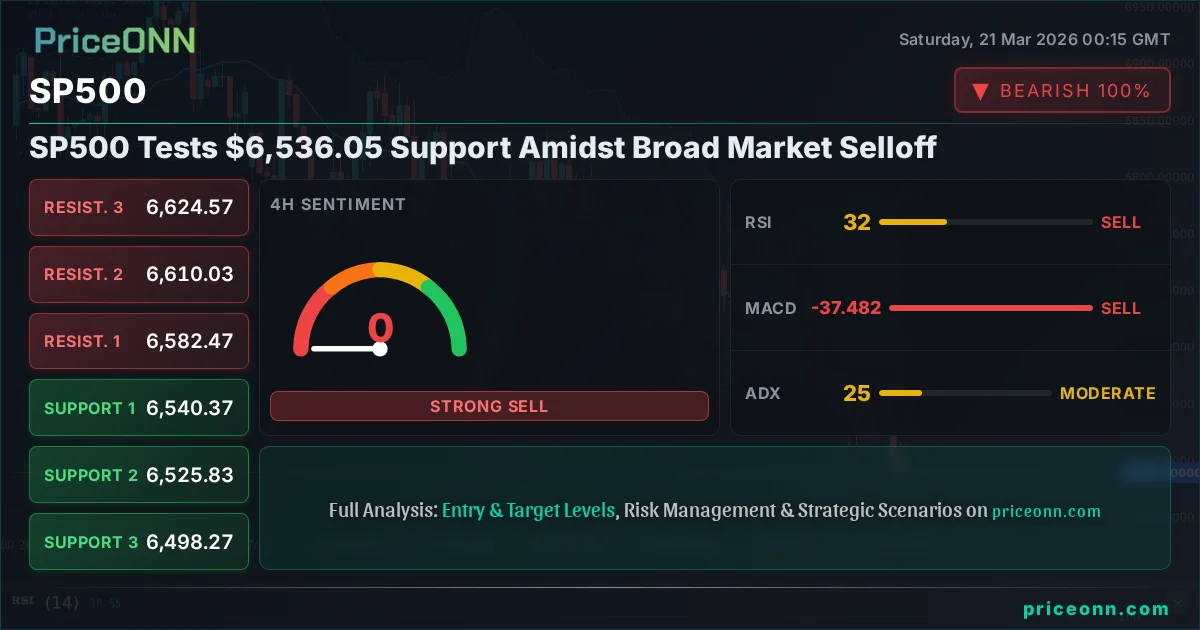
From a technical perspective, the S&P 500's descent below the 6,570 level and its 200-day moving average is a bearish signal. Market data indicates the formation of a steeper descending trendline, pushing the index to new lows. Analysis from a Smart Money Concepts viewpoint suggests that the price may have entered a Sell-Side Liquidity zone. This could imply that the recent bearish breakout below the established channel might be a false signal, potentially leading to a reversal. However, in the immediate term, traders should remain cautious. Key support levels to monitor include the recent lows around 6,550. Resistance is now expected around the broken channel boundary, potentially near 6,650. A decisive move below 6,500 could trigger further significant selling pressure, while a reclaim of the 200-day moving average would be a crucial first step towards a bullish recovery.
Outlook
The immediate outlook for the S&P 500 remains uncertain, heavily influenced by geopolitical developments and the Federal Reserve's monetary policy trajectory. While some statements suggest a potential de-escalation in the Middle East, the underlying inflationary pressures and the Fed's commitment to price stability will continue to be key determinants of market direction. Traders should closely watch for any further escalation in the Middle East conflict or hawkish commentary from Fed officials. Upcoming economic data releases, particularly inflation and employment figures, will be critical in shaping expectations for interest rate policy and, consequently, the performance of the equity market.
Frequently Asked Questions
What is the current support level for the S&P 500?
The S&P 500 has recently broken below the 6,570 level, marking a new year-to-date low. Immediate support is now anticipated around the recent lows near 6,550.
Why are stock markets falling recently?
Stock markets are declining due to a combination of factors, including rising oil prices stemming from Middle East tensions, which fuels inflation concerns. This is leading to expectations that the Federal Reserve will keep interest rates higher for longer, negatively impacting corporate performance and investor sentiment.
What is the outlook for the S&P 500 in the near term?
The near-term outlook for the S&P 500 is cautious, contingent on geopolitical stability in the Middle East and Federal Reserve policy. A break below 6,500 could signal further declines, while reclaiming the 200-day moving average would be a positive sign for a potential recovery.
Track markets in real-time
Empower your investment decisions with AI-powered analysis, technical indicators and real-time price data.
Join Our Telegram Channel
Get breaking market news, AI analysis and trading signals delivered instantly to your Telegram.
Join Channel



PriceONN