Standard Chartered Predicts Oil Prices Will Remain Higher For Longer
Geopolitical Tensions Escalate, Supply Fears Ignite
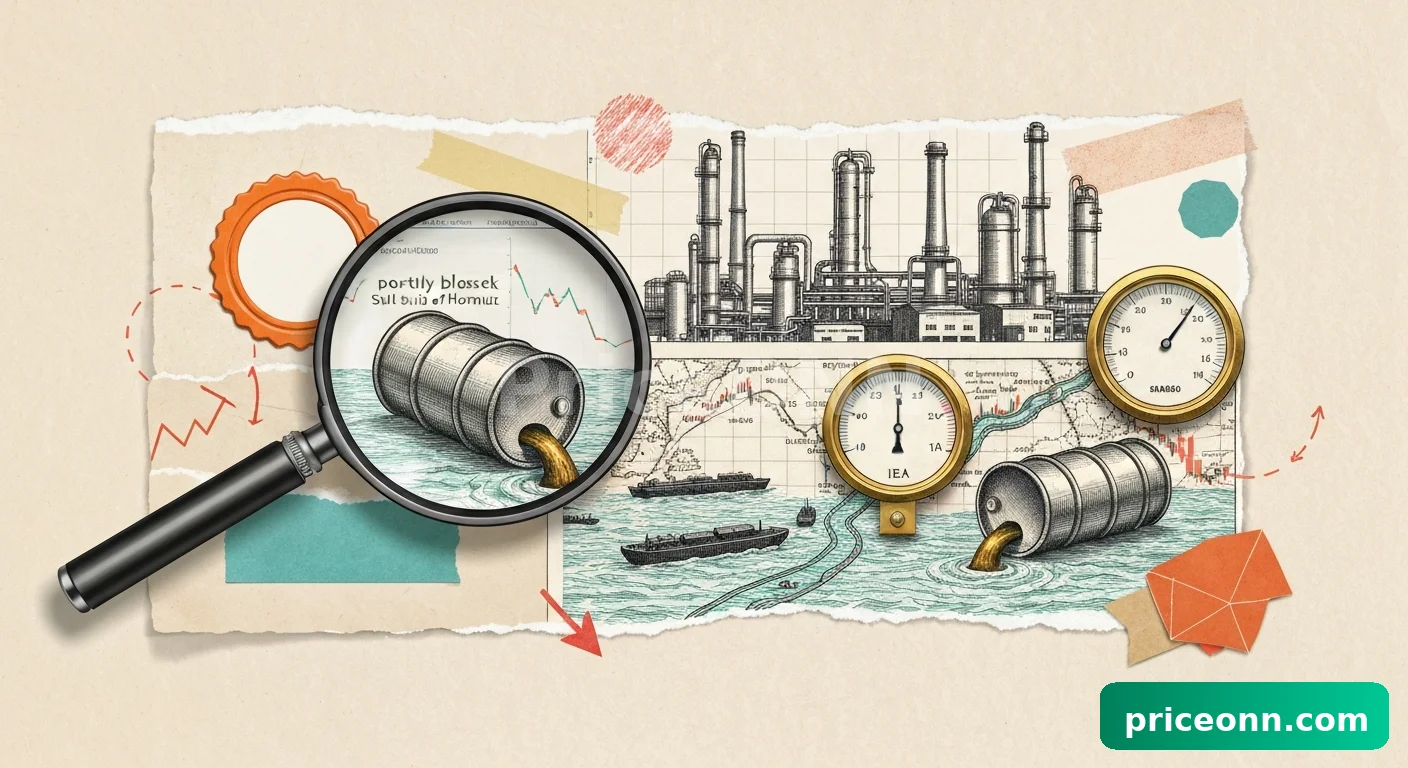
A significant geopolitical standoff is unfolding as European Union foreign ministers on Monday rebuffed direct appeals from U.S. President Donald Trump. The request centered on military contributions to secure the critical Strait of Hormuz, a vital artery for global oil transit. Instead, European nations signaled a preference for reinforcing their own regional military installations, indicating a reluctance to become directly involved in escalating Middle East conflicts.
This stance comes amid a backdrop of heightened tensions and mounting concerns over energy supply chain stability. Kaja Kallas, a key figure within the European Commission, had previously put forward a proposal to expand the operational scope of the EU's Operation Aspides. This existing military mission, launched in 2024, is tasked with protecting commercial vessels and ensuring navigational freedom through the Red Sea, Gulf of Aden, and adjacent waters. However, the broader objective of bolstering security in the Strait of Hormuz appears to be a step too far for many European leaders.
German Defence Minister Boris Pistorius articulated a clear sentiment shared by many in Europe, stating, "This is not our war. We have not started it." He further questioned the practical impact of a limited European naval presence in the Strait, contrasting it with the considerable capabilities of the U.S. Navy. "What does … Trump expect a handful or two handfuls of European frigates to do in the Strait of Hormuz that the powerful US Navy cannot do?" he queried, highlighting a divergence in strategic priorities and risk appetite.
Oil Price Outlook Gets a Hawkish Revision
Against this backdrop of geopolitical uncertainty and fractured alliances, energy and commodity specialists at Standard Chartered have issued a stark forecast: oil prices are poised to remain higher for longer than previously anticipated. The primary driver behind this revised outlook is the perceived lack of clear de-escalation pathways or 'off-ramps' from the current regional conflict.
The financial institution has significantly adjusted its price projections. Standard Chartered now forecasts the average Brent crude price for 2026 to reach $85.50 per barrel, a notable increase from the prior estimate of $70.00. Similarly, the 2027 forecast has been revised upward to $77.50 per barrel from $67.00. Despite this upward revision for the medium term, the analysts do foresee a gradual easing of prices as the immediate pressures subside. Their granular forecast suggests Brent crude averaging $78.00 per barrel in the first quarter of 2026, climbing to $98.00 in the second quarter, before settling at $85.00 in the third and $80.50 in the fourth quarter of that year.
The commodity experts at Standard Chartered estimate that the ongoing Middle East conflict has already curtailed global oil supply by a staggering 7.4 to 8.2 million barrels per day. This substantial reduction is attributed to significant output decreases from key producers. Iraq's production is reportedly down by 2.9 million barrels per day, Saudi Arabia by 2.0 to 2.5 million barrels per day, the UAE by 0.5 to 0.8 million barrels per day, and Qatar and Kuwait each by approximately 0.5 million barrels per day. Furthermore, Iranian output is estimated to be 1 million barrels per day below pre-conflict levels.
Crucially, Standard Chartered points out that any oil exports that could be rerouted away from the Strait of Hormuz have already been adjusted. This means that substantial increases in global oil supply are unlikely unless the current maritime blockade eases. Saudi Arabia, for instance, is leveraging the temporary surge capacity of its East-West pipeline to boost transit volumes to the Red Sea, aiming for 7 million barrels per day. This highlights the logistical contortions required to circumvent the chokepoint.
Despite the supply constraints, Standard Chartered identifies a price floor forming in the low-to-mid $70s per barrel. This is partly attributed to the unprecedented release of oil from strategic reserves coordinated by the International Energy Agency (IEA). Just a week prior, the IEA announced a record-breaking release of 400 million barrels from the reserves of 32 member nations. This move dwarfs the 182 million barrels released in 2022 following Russia's invasion of Ukraine. While such releases inject immediate supply, Standard Chartered cautions that they also signal grave market conditions, potentially creating a future demand for replenishment that could underpin prices.
Natural Gas Markets Face Structural Shocks
The ripple effects of regional instability are also profoundly impacting natural gas markets. In Europe, natural gas futures have remained stubbornly above €50 per megawatt-hour, a level nearly 30% higher than the 12-month average, driven by significant disruptions to gas flows.
Just two weeks ago, QatarEnergy was compelled to halt liquefied natural gas (LNG) production and declare force majeure. This action followed drone strikes attributed to Iran targeting facilities in Ras Laffan and Mesaieed, two critical export hubs. This disruption effectively removed approximately 77 million tonnes per annum of LNG capacity from the global market, immediately sending gas prices soaring as buyers scrambled for alternative sources.
The cessation of tanker traffic through the Strait of Hormuz has compounded the issue, cutting off roughly 20% of global LNG supply. Standard Chartered's analysis highlights the structural vulnerability exposed in the Persian Gulf, particularly Qatar's significant reliance on this maritime route. With nearly all of its LNG exports originating from Ras Laffan, passage through the Strait of Hormuz is indispensable for reaching international buyers. The immediate inability to replace Qatari LNG volumes has injected significant volatility into global gas markets.
Consequently, major LNG importers across Asia are actively recalibrating their energy strategies. To mitigate reliance on volatile spot markets and ensure energy security, nations are shifting their power generation mix. China is prioritizing domestic gas production, increasing pipeline imports (notably from Russia), and accelerating coal and nuclear power development. Japanese utilities are similarly favoring coal-fired generation and expediting nuclear reactor restarts to conserve gas inventories. South Korea is also lifting restrictions on coal power and increasing nuclear utilization to manage escalating energy expenses.
Reading Between the Lines
The European Union's decision to sidestep direct military involvement in securing the Strait of Hormuz, despite U.S. pressure, underscores a fundamental divergence in strategic interests and risk tolerance. While the U.S. seeks to actively project power and maintain unimpeded energy flows, Europe appears more focused on defensive posturing and avoiding entanglement in a conflict it did not initiate. This geopolitical friction, coupled with actual supply disruptions, paints a picture of sustained upward pressure on energy prices.
Standard Chartered's revised oil price forecasts reflect the market's growing acknowledgment of these persistent supply-side risks. The significant cut in Middle Eastern oil output, coupled with the logistical challenges of bypassing the Strait of Hormuz, creates a tight supply environment. Even with strategic reserve releases, the underlying structural deficit appears set to persist, establishing a higher price floor than previously envisioned.
The natural gas market's reaction further amplifies these concerns. The vulnerability of Qatar's LNG exports, which must traverse the Strait of Hormuz, highlights the systemic risks inherent in concentrated supply routes. The scramble for alternative supplies and the shift towards coal and nuclear power in Asia demonstrate the profound impact of these disruptions on global energy security and consumption patterns. Traders should monitor the effectiveness of these alternative energy strategies and any potential shifts in demand that could influence future gas prices. The ongoing reliance on coal, for instance, could present environmental policy challenges down the line. The market's sensitivity to supply shocks suggests that any further escalation or prolonged instability in the Middle East will likely continue to translate into heightened volatility across both oil and gas commodities.
Track markets in real-time
Empower your investment decisions with AI-powered analysis, technical indicators and real-time price data.
Join Our Telegram Channel
Get breaking market news, AI analysis and trading signals delivered instantly to your Telegram.
Join Channel