
Is the USD Set to Rally as Geopolitical Tensions and Inflation Fears Grip Markets?

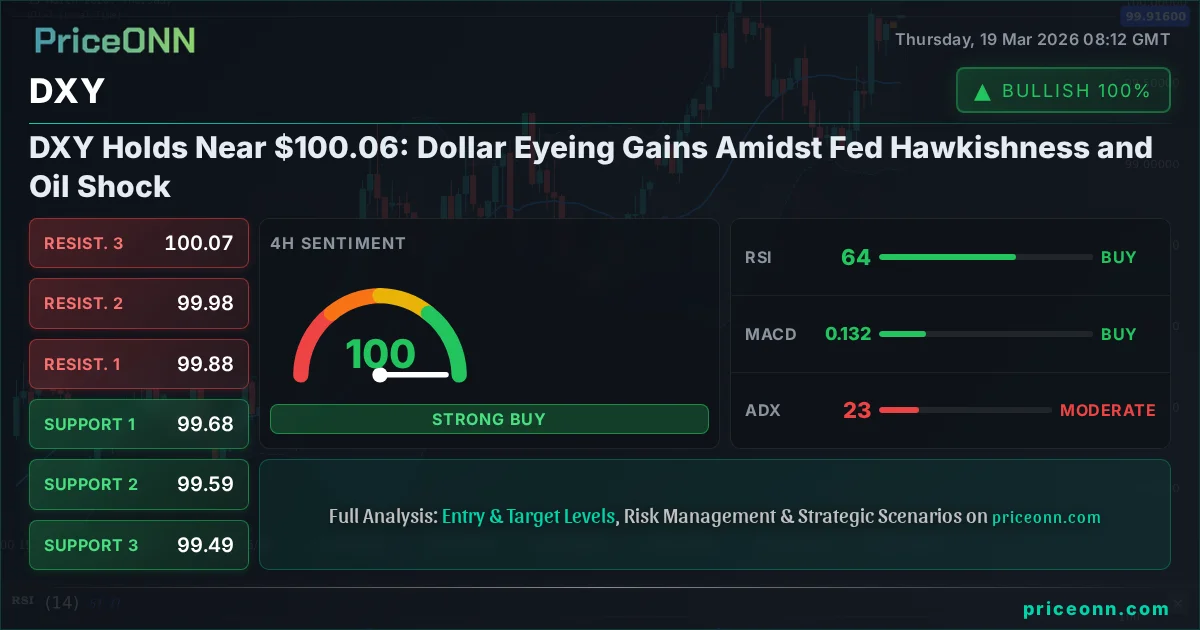
The US Dollar is showing signs of potential strength as a confluence of escalating geopolitical tensions and a more inflation-focused Federal Reserve spurs a wave of risk aversion across global financial markets. The recent surge in oil prices, coupled with a hawkish outlook from the Fed, suggests a challenging environment for riskier assets and could bolster demand for safe-haven currencies like the USD.
Market Context
Risk aversion intensified following reports of critical energy infrastructure being targeted in an escalating conflict involving Iran. Initial market reactions saw a sharp selloff in US equities, but the late-session decline was further fueled by the Federal Reserve's latest commentary. Analysts note that markets are increasingly pricing in a higher inflation trajectory, driven by geopolitical uncertainty and the Fed's commitment to combating it. The targeting of energy supply nodes, including the Ras Laffan LNG hub, signals a potential for structurally higher energy prices, even if direct escalations subside. This uncertainty creates a backdrop where traditional safe-haven assets could see renewed interest.
Analysis & Drivers
The primary drivers behind the current market sentiment are twofold: the geopolitical conflict impacting energy supply and the Federal Reserve's updated economic projections. The escalation in the Middle East, with reports of retaliatory attacks on energy facilities in Saudi Arabia, the UAE, and Qatar, introduces a significant risk premium to oil prices. This dynamic suggests that elevated energy costs may prove persistent, regardless of the immediate conflict's trajectory. Concurrently, the Federal Reserve's decision to hold interest rates steady was accompanied by an upward revision in its inflation forecasts for 2026, with the PCE price index projected to reach 2.7%. Fed Chair Jerome Powell emphasized that progress on inflation is crucial for any rate cuts, stating, "if we don’t see that progress, then you won’t see the rate cut." This hawkish stance indicates the central bank is prioritizing inflation control over aggressive easing, even if it means a potentially slower economic growth path. Powell's remarks downplayed immediate growth concerns, suggesting the Fed is more focused on the inflation battle.
Trader Implications
Traders should closely monitor the unfolding geopolitical situation in the Middle East, particularly any further developments impacting oil supply and prices. Key resistance for Brent crude oil could be tested if tensions continue to mount, potentially pushing prices towards the $95-$100 per barrel range. On the forex front, the USD is likely to find support against risk-sensitive currencies such as the Australian Dollar (AUD) and emerging market currencies. Key support levels for EUR/USD may be tested around 1.0750, while USD/JPY could see upward pressure towards 152.00 if risk aversion prevails. Investors will also be looking for confirmation of sustained inflation pressures and the Fed's reaction function. Any signs of inflation proving more stubborn than anticipated could further strengthen the dollar.
Outlook
The immediate outlook suggests continued market volatility, with a bias towards risk aversion. The interplay between geopolitical energy shocks and a Fed committed to fighting inflation creates a potent mix for currency markets. The US Dollar appears poised to benefit from its safe-haven status, especially if energy prices continue to climb and global growth concerns mount. Upcoming economic data releases, particularly US inflation figures and employment reports, will be critical in shaping the Fed's future policy path and, consequently, the direction of the dollar. Traders should anticipate potential upside for the USD against a basket of currencies in the short to medium term, provided these risk-off conditions persist.
Frequently Asked Questions
What is the primary driver of the current market risk aversion?
The primary driver is a combination of escalating geopolitical tensions in the Middle East impacting energy infrastructure and a more hawkish stance from the Federal Reserve, which has signaled increased concern over inflation. Reports indicate critical energy hubs like the Ras Laffan LNG facility have been targeted, raising fears of persistent supply disruptions and higher oil prices.
How might the Federal Reserve's inflation focus impact the US Dollar?
The Fed's commitment to combating inflation, evidenced by revised higher inflation forecasts (PCE to 2.7% in 2026) and a conditional approach to rate cuts, suggests a higher-for-longer interest rate environment. This could make the US Dollar more attractive to investors seeking yield and stability, potentially strengthening it against other major currencies.
What key price levels should traders watch for EUR/USD and USD/JPY?
Traders should monitor EUR/USD for potential declines towards the 1.0750 support level amid risk aversion. Conversely, USD/JPY may see upward momentum, with 152.00 acting as a potential upside target if safe-haven flows into the dollar continue to dominate market sentiment.
Track markets in real-time
Empower your investment decisions with AI-powered analysis, technical indicators and real-time price data.
Join Our Telegram Channel
Get breaking market news, AI analysis and trading signals delivered instantly to your Telegram.
Join Channel
PriceONN