
Why Did Crude Oil Climb 1.75% Today Amid Escalating Gulf Tensions?
Crude oil prices experienced a sharp ascent on Friday, with West Texas Intermediate (WTI) futures for April delivery climbing 1.75% to $97.82 per barrel. This significant gain marks the continuation of a three-week trend of escalating oil costs, predominantly driven by heightened geopolitical tensions in the Persian Gulf.
Market Context
The latest surge in oil prices was triggered by fresh attacks targeting energy infrastructure in Kuwait, attributed to Iran. This development has rekindled concerns about a protracted conflict in the region, overshadowing earlier hopes for a de-escalation. The market is now grappling with the potential for substantial supply disruptions, a factor that has historically sent energy prices soaring. The current price action represents a notable shift from earlier in the week when signs of potential diplomatic progress had offered some respite.
Analysis & Drivers
The core driver behind the recent price volatility is the escalating conflict that began on February 28, involving U.S.-Israel allied forces and Iran. Key events include Israel's earlier targeting of Iran's South Pars gas field, a critical facility for domestic energy supply. Iran's retaliatory strikes impacted energy installations across Saudi Arabia, Qatar, and the United Arab Emirates, with a particularly severe blow to Qatar's primary Liquefied Natural Gas (LNG) plant in Ras Laffan. Industry reports indicate that repairs to the Qatari LNG facility could take over a year, significantly impacting global supply chains. Furthermore, Iran's prior actions, such as blockading the Strait of Hormuz, had already led to production curtailments by Arab nations due to storage limitations. While there were indications that Israel might refrain from targeting Iran's energy infrastructure following a request for restraint, the latest attacks suggest a complex and volatile situation with ongoing risks to supply.
Trader Implications
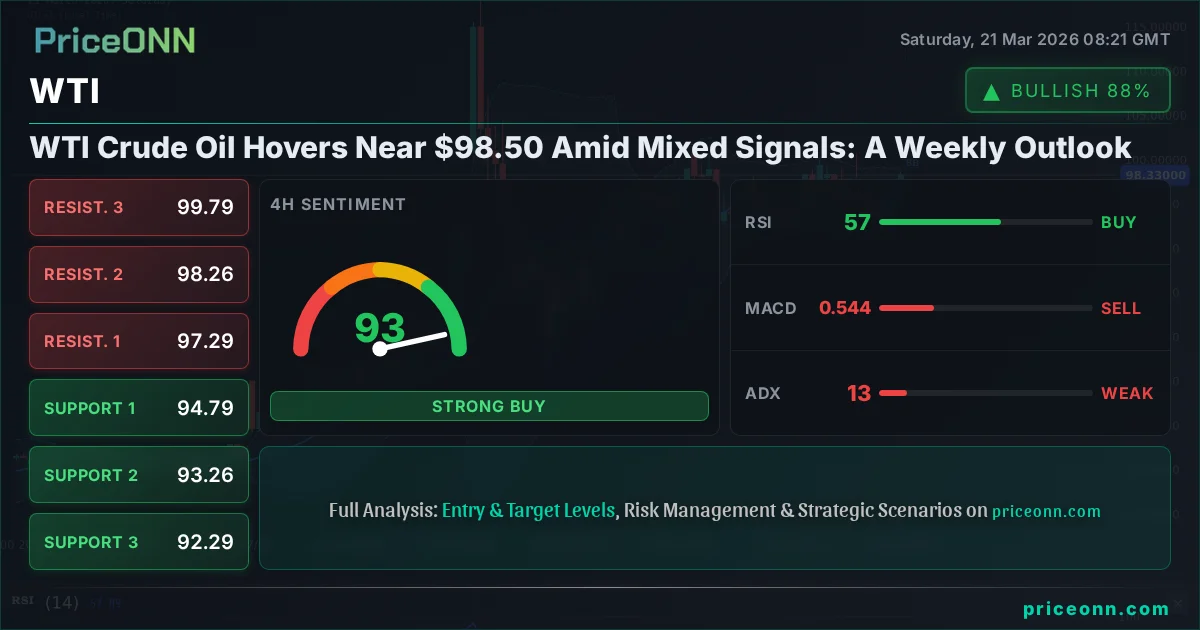
Traders should closely monitor developments in the Persian Gulf, as geopolitical events remain the primary catalyst for crude oil price movements. Key levels to watch for WTI crude include the $98 resistance mark, with a decisive break above this level potentially signaling a move towards the $100 psychological barrier. Conversely, support can be found around the $95 level. Any news regarding further escalation or de-escalation of hostilities, as well as official statements from OPEC+ nations regarding production adjustments, will be critical. The market sentiment is currently skewed towards a bullish outlook due to supply disruption fears, but any positive diplomatic breakthroughs could lead to rapid price retracements. Traders should consider employing risk management strategies such as stop-loss orders to protect against sudden price swings.
Outlook
The outlook for crude oil remains highly sensitive to geopolitical developments. While recent attacks have pushed prices higher, the potential for a prolonged conflict poses a significant upside risk. However, if diplomatic efforts gain traction and de-escalation becomes a reality, prices could face downward pressure. Upcoming economic data releases, particularly inventory reports and inflation figures, will also play a role in shaping market sentiment. For now, the immediate focus remains on the stability of energy supply from the Middle East.
Frequently Asked Questions
What caused crude oil prices to rise by 1.75% on Friday?
Crude oil prices, specifically WTI futures, climbed 1.75% to $97.82 per barrel due to renewed geopolitical tensions. Fresh attacks on Kuwait's energy infrastructure, attributed to Iran, reignited fears of a prolonged Persian Gulf conflict and potential production disruptions.
What is the estimated repair time for Qatar's damaged LNG plant?
Industry reports indicate that the extensive damage to Qatar's primary Liquefied Natural Gas (LNG) plant in Ras Laffan could require over a year for repairs. This significant outage contributes to global supply concerns and supports higher oil prices.
What key price levels should traders watch for WTI crude?
Traders should monitor the $98 resistance level for WTI crude, with a potential push towards $100 if broken. Key support is identified around the $95 mark. Geopolitical news and OPEC+ production decisions will be crucial factors influencing price direction.
Track markets in real-time
Empower your investment decisions with AI-powered analysis, technical indicators and real-time price data.
Join Our Telegram Channel
Get breaking market news, AI analysis and trading signals delivered instantly to your Telegram.
Join Channel
PriceONN