
Why Did Crude Oil Jump 1.75% Today Amid Escalating Gulf Tensions?
Crude oil experienced a sharp upward trend on Friday, with West Texas Intermediate (WTI) for April delivery climbing 1.75% to $97.82 per barrel. This significant price jump was driven by renewed geopolitical tensions in the Persian Gulf, following fresh attacks attributed to Iran targeting energy infrastructure in Kuwait. The development has reignited concerns over potential production disruptions and the likelihood of a protracted regional conflict.
Market Context
The surge in oil prices marks the culmination of a three-week period of escalating costs, directly linked to the intensifying conflict that began on February 28. The recent escalation followed Israel's targeting of Iran's South Pars gas field. Iran's retaliatory strikes impacted energy installations across Saudi Arabia, Qatar, and the United Arab Emirates. A particularly severe blow was dealt to Qatar's primary Liquefied Natural Gas (LNG) plant in Ras Laffan, with state-owned QatarEnergy confirming extensive damage that could necessitate over a year for repairs. Prior actions by Iran, including the blockade of the Strait of Hormuz, had already led to production curtailments by Arab nations due to storage limitations.
Analysis & Drivers
The primary driver behind Friday's oil price rally is the palpable fear of prolonged supply chain instability in a critical global energy hub. The attacks on Kuwait, coupled with the extensive damage to Qatar's LNG facilities, underscore the vulnerability of the region's energy infrastructure. Analysts note that the market is pricing in a higher probability of extended conflict, which could severely limit the flow of crude oil and natural gas. While there were earlier signs of de-escalation, including assurances from Israel to refrain from targeting Iran's energy facilities, the latest attacks have overshadowed these developments. The market's reaction highlights its sensitivity to any perceived threat to production or transit routes, especially given that these events have already led to significant output adjustments across several Arab nations.
Trader Implications
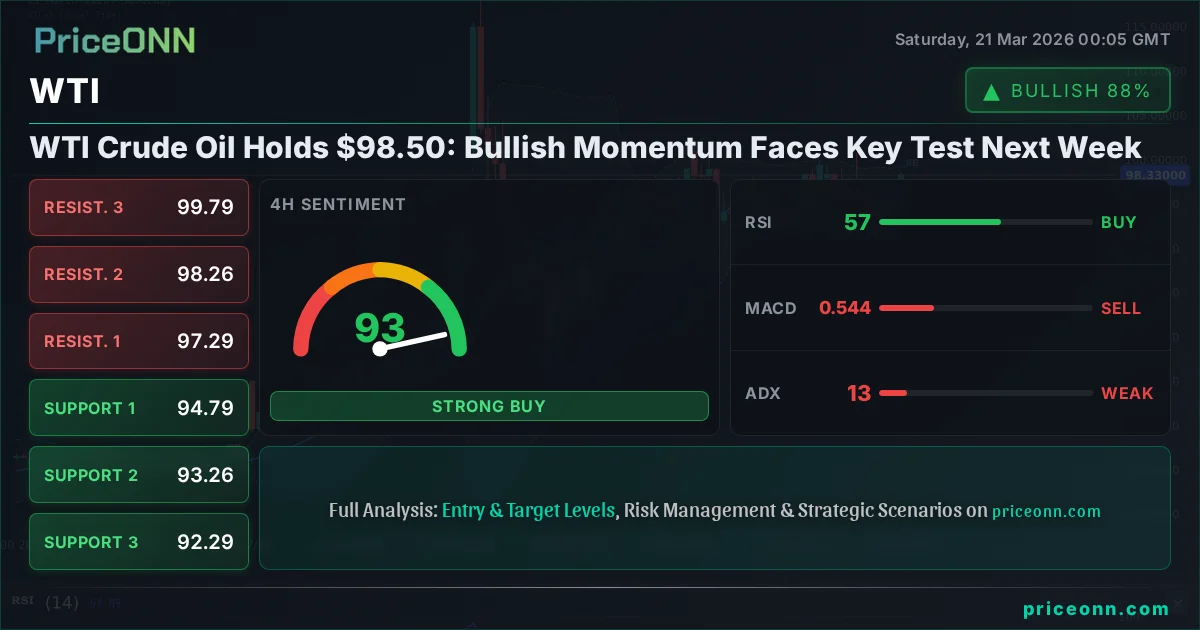
Traders should closely monitor the geopolitical situation in the Persian Gulf, as any further escalation or de-escalation will likely dictate short-term price movements for crude oil. Key levels to watch for WTI include the recent high of $97.82 as immediate resistance, with a break above this level potentially signaling further upward momentum. Support can be found around the $95-$96 range. The market sentiment remains heavily influenced by supply disruption fears, suggesting a bullish bias in the immediate term, but also a heightened risk of sharp reversals on positive geopolitical news. Traders should consider implementing strategies that account for increased volatility, such as options with wider strike bands or carefully managed stop-losses.
Outlook
The outlook for crude oil remains highly sensitive to the geopolitical landscape. While Israel has indicated a willingness to exercise restraint, the ongoing tit-for-tat attacks suggest a volatile path ahead. The extensive repair timeline for Qatar's LNG plant ensures that supply concerns will persist. Traders and investors should anticipate continued price fluctuations, with potential for prices to test higher levels if tensions escalate further. Conversely, a genuine de-escalation and a clear path towards a resolution could lead to a swift price correction. Upcoming economic data and inventory reports will also play a role in shaping market sentiment, but geopolitical risks are currently the dominant factor.
Frequently Asked Questions
What specific event caused crude oil to rise by 1.75%?
Crude oil prices surged by 1.75% to $97.82 per barrel on Friday due to renewed attacks on Kuwait by Iran, which reignited fears of prolonged conflict and potential supply disruptions in the Persian Gulf.
How long will it take to repair Qatar's damaged LNG plant?
QatarEnergy has estimated that repairs to its primary Liquefied Natural Gas (LNG) plant in Ras Laffan, which sustained extensive damage, could take over a year to complete, contributing to ongoing supply concerns.
What are the key price levels for WTI crude oil traders to watch?
Traders should watch the recent high of $97.82 as immediate resistance. Support is anticipated around the $95-$96 range. The market remains volatile, with prices sensitive to geopolitical developments.
Track markets in real-time
Empower your investment decisions with AI-powered analysis, technical indicators and real-time price data.
Join Our Telegram Channel
Get breaking market news, AI analysis and trading signals delivered instantly to your Telegram.
Join Channel
PriceONN