
Why Did Crude Oil Surge Past $100 and What Does It Mean for GBP/USD?

Brent crude oil prices have breached the significant $100 per barrel threshold, driven by escalating geopolitical tensions in the Middle East. This surge in energy costs comes as the Pound Sterling experiences renewed weakness, with the GBP/USD pair notably declining below the 1.3350 level during early Asian trading on Monday.
Market Context: Geopolitics Fueling Energy and Pressuring Sterling
The global markets are reacting to a heightened sense of uncertainty stemming from the Middle East. The upward trajectory of Brent crude oil prices, a key global benchmark, underscores the immediate impact of these geopolitical developments on commodity markets. This rise in oil prices, often a harbinger of broader inflationary pressures and economic slowdowns, is simultaneously weighing on risk sentiment across financial assets.
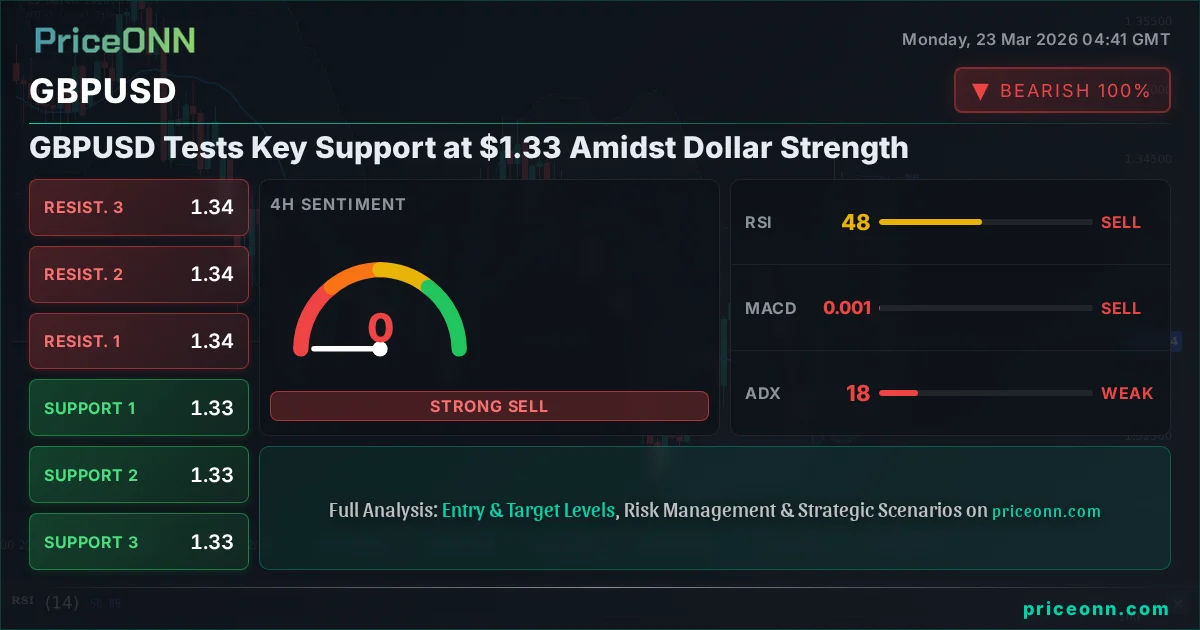
Concurrently, the US Dollar has shown considerable strength, adding a dual layer of pressure on currencies like the British Pound. The GBP/USD, a pair representing approximately 11% of global foreign exchange transactions, is particularly sensitive to shifts in the greenback's value and global risk appetite. Its recent retreat below 1.3350 indicates that bearish momentum is building for the Sterling.
Analysis & Drivers: Oil Above $100 and the Fed's Shadow
The primary catalyst for the oil price surge is the intensification of conflicts in a region critical for global energy supply. A sustained period above $100 per barrel for Brent crude could have significant implications for inflation globally, potentially forcing central banks to adopt a more hawkish stance or maintain restrictive monetary policies for longer.
For the Pound Sterling, its historical significance as the world's oldest circulating currency belies its current vulnerability. While it remains a major player in FX markets, its value is heavily influenced by the Bank of England's monetary policy and broader market sentiment. The BoE's mandate to maintain price stability around a 2% inflation target is under renewed scrutiny as energy prices climb. Higher energy costs can feed into broader inflation, potentially complicating the BoE's efforts to manage the economy.
The strengthening US Dollar is another critical factor. Market data shows that the USD's recent upward move may be driven by a combination of safe-haven demand amidst global uncertainty and expectations regarding future Federal Reserve policy. If the Fed signals a more hawkish outlook or maintains higher-for-longer interest rates, it could continue to exert downward pressure on GBP/USD.
Trader Implications: Watching Key Levels and Risk Factors
Traders in the GBP/USD pair should closely monitor the $100 per barrel level for Brent crude as a key indicator of geopolitical risk and potential inflationary pressures. A sustained breach above this level could signal further weakness for risk-sensitive assets like the Pound.
For GBP/USD, key levels to watch include immediate support around 1.3300 and resistance near 1.3400. A decisive break below 1.3300 could open the door for further declines towards 1.3250. Conversely, any signs of de-escalation in the Middle East or a shift in US Dollar sentiment could offer temporary respite for the Sterling.
Actionable Insight: Traders might consider short positions on GBP/USD with a stop-loss above 1.3400, targeting 1.3250, provided that crude oil prices remain elevated and geopolitical tensions do not abate. Conversely, a confirmed move back above 1.3400 could signal a short-term reversal, warranting a review of short positions.
Outlook: Energy Prices Dictate Sentiment
The immediate outlook for GBP/USD remains cautious, heavily influenced by the trajectory of oil prices and geopolitical developments in the Middle East. Should energy prices continue to climb, the narrative of inflation and potential economic headwinds will likely dominate, keeping the Sterling under pressure. However, any positive shifts in geopolitical stability or a change in the US Dollar's strength could see a reversal. Traders will be keenly awaiting further economic data releases from both the UK and the US, as well as any official statements from central banks regarding inflation and monetary policy in this volatile environment.
Frequently Asked Questions
What is the immediate impact of Brent crude oil surpassing $100 per barrel on the GBP/USD?
When Brent crude oil prices surge above $100 per barrel, it typically increases global inflationary concerns and can strengthen the US Dollar as a safe-haven asset. This combination has contributed to the recent decline in GBP/USD below the 1.3350 level.
What are the key technical levels for GBP/USD traders to watch in the near term?
Traders should monitor immediate support at 1.3300, with a potential downside target of 1.3250 if this level breaks. Resistance is seen around 1.3400; a sustained move above this could signal a recovery for the Sterling.
What factors could cause GBP/USD to recover from its current downtrend?
A recovery in GBP/USD would likely require a de-escalation of geopolitical tensions in the Middle East, leading to a drop in oil prices, and a weakening of the US Dollar. Positive UK economic data or a more dovish signal from the Bank of England could also support Sterling's upward movement.
Track markets in real-time
Empower your investment decisions with AI-powered analysis, technical indicators and real-time price data.
Join Our Telegram Channel
Get breaking market news, AI analysis and trading signals delivered instantly to your Telegram.
Join Channel

PriceONN