
Why Did Gold, Silver, and Copper Prices Tumble This Week?
The commodities complex experienced a severe downturn this week, with major precious and industrial metals entering bear market territory. Gold futures tumbled significantly, shedding approximately $225 per ounce from opening levels to settle near $4,492 per ounce. This represented a 3.5% loss for the day and a steeper over 11% slide for the week, marking gold's worst performance in decades.
Market Context
The sell-off has been broad and deep, pushing several key metals into technically defined bear markets. Copper futures concluded the trading session 4.0% lower at $5.30 per pound ($11,690 per tonne), capping a 7.4% weekly loss. Silver, often more volatile, saw its price fall by 6.9% in a single session, contributing to a substantial 40% decline from its recent peak. Gold itself has now fallen over $1,100, or more than 20%, from its record high set on January 29th. Silver's decline is even more pronounced at 44% from its zenith, while copper has shed nearly 20%, or over $2,800 per tonne, from its concurrent all-time peak.
This commodity collapse has had a direct and brutal impact on mining stocks. The world's largest mining companies have seen their market capitalizations plummet by approximately 30% since the start of the recent geopolitical conflict. Major players like Newmont, a leading gold producer, are trading nearly 26.3% below their pre-conflict levels, with its market valuation shrinking significantly from a January peak. Barrick Mining has also experienced a similar valuation decrease of 26.8% over the same period.
Analysis & Drivers
While the exact catalysts remain multifaceted, market data suggests a confluence of factors is driving this aggressive price depreciation. Heightened geopolitical tensions have previously supported safe-haven assets like gold, but a shift in market sentiment appears to be underway. Reports indicate that investors are rotating out of riskier commodity assets, possibly anticipating a de-escalation in global conflicts or reacting to broader economic slowdown fears. The sharp decline in industrial metals like copper also points to concerns about global demand, particularly from major manufacturing hubs.
Central bank policies, though not explicitly detailed in recent commentary, often play a crucial role in commodity pricing. Any signals of tighter monetary policy or reduced economic stimulus globally could dampen demand for industrial inputs and reduce speculative investment in precious metals. Furthermore, a strengthening U.S. dollar, if it materializes, typically exerts downward pressure on dollar-denominated commodities like gold and silver, making them more expensive for holders of other currencies.
Trader Implications
For traders, the current environment presents significant risk but also potential opportunities. The sharp declines suggest that market sentiment has turned decidedly bearish for these key commodities. Key support levels that were previously considered robust have now been decisively broken. For gold, a close below $4,500 per ounce could signal further downside, with the next major psychological level being $4,000.
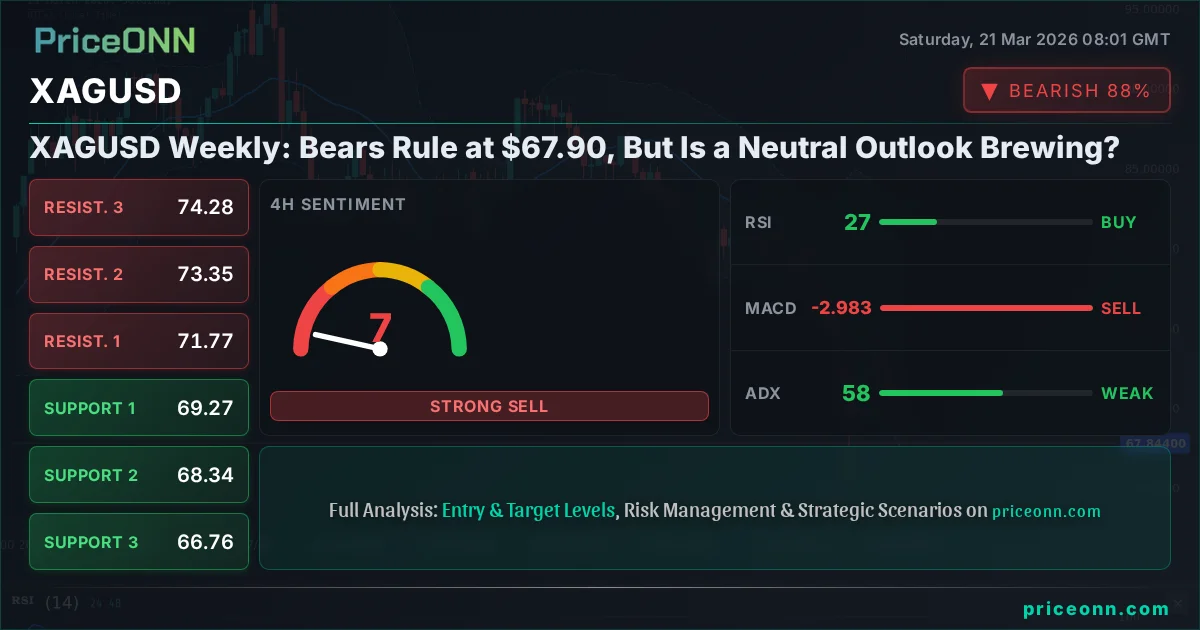
Silver traders should monitor the $65 per ounce level closely; a break below this could lead to a rapid descent towards the $50-$55 range. Copper's move below $5.00 per pound ($11,000 per tonne) would confirm its bear market status and could trigger further selling pressure towards the $4.50-$4.80 range.
Mining stocks are likely to remain under pressure as long as commodity prices continue to fall. Investors and traders should be cautious of further downside in the mining sector, with companies like Newmont and Barrick potentially testing lower support levels if the commodity slump persists. Any upward price action in gold, silver, or copper would need to be sustained to signal a potential reversal and offer relief to the equities of producers.
Outlook
The immediate outlook for gold, silver, and copper remains challenging. The speed and severity of this week's decline suggest that bearish sentiment is deeply entrenched. Traders will be closely watching upcoming economic data releases for signs of global economic health and any new geopolitical developments that could shift market risk appetite. Until a clear catalyst for recovery emerges, or a significant shift in macroeconomic policy occurs, the path of least resistance for these commodities appears to be downwards, with mining stocks likely to follow suit.
Frequently Asked Questions
What is the current price range for gold after its sharp decline?
Gold futures settled near $4,492 per ounce after a significant drop, marking its worst week in decades and falling over 20% from its January peak of over $5,600.
How much has silver fallen from its recent high?
Silver has experienced a more severe decline of approximately 44% from its recent peak, trading down to around $67.81 per ounce following a 6.9% fall in Friday's session.
What are the key support levels to watch for copper?
Copper is currently trading around $5.30 per pound. A break below the $5.00 per pound level could signal further declines towards the $4.50-$4.80 range.
Track markets in real-time
Empower your investment decisions with AI-powered analysis, technical indicators and real-time price data.
Join Our Telegram Channel
Get breaking market news, AI analysis and trading signals delivered instantly to your Telegram.
Join Channel

PriceONN