
Why Did Gold Prices Tumble Over 0.6% on Friday?
Gold prices experienced a notable downturn on Friday, extending losses for a third consecutive session. April Comex gold futures settled down $30.10, or 0.65%, at $4,575.60 per troy ounce. This decline reflects a market grappling with heightened geopolitical risks that are simultaneously stoking inflationary pressures and pushing back the timeline for anticipated monetary easing from the U.S. Federal Reserve.
Market Context: Geopolitical Storm Hits Precious Metals
The precious metals complex bore the brunt of a significant market shock on Friday. The catalyst appears to be a series of escalating attacks targeting critical energy infrastructure in the Persian Gulf region. These aggressive actions have not only disrupted supply chains but have also intensified global inflation anxieties. The fading prospect of an imminent Federal Reserve rate cut has further weighed on non-yielding assets like gold.
The sell-off was particularly pronounced in the silver market. April silver futures experienced a steep drop of $1.489, a 2.10% decline, to close at $69.485 per troy ounce. The broader market sentiment turned risk-averse, punishing both gold and silver as investors repositioned themselves amid rising uncertainty.
Analysis & Drivers: Escalating Gulf Conflict and Inflation Fears
The primary driver behind the sharp decline in gold and silver prices appears to be the intensification of conflict in the Persian Gulf. Reports indicate a series of drone attacks targeting key oil facilities. Specifically, Iranian drones reportedly struck Kuwait's Mina al-Ahmadi refinery, a facility with a processing capacity of approximately 730,000 barrels per day, leading to the shutdown of several operational units. This incident followed retaliatory actions, including Iranian attacks on an Israeli refinery and Qatar's Ras Laffan energy hub, which houses the nation's largest LNG plant. The latter sustained significant damage, with QatarEnergy estimating repairs could take over a year. Prior to these events, Saudi Aramco's SAMREF refinery in Yanbu also faced drone assaults.
These cumulative attacks, beginning around February 28, have effectively led to a near-total blockade of tanker traffic through the vital Strait of Hormuz. This disruption has sent crude oil prices sharply higher, a development that directly fuels global inflation concerns. As inflation expectations rise, the Federal Reserve is increasingly likely to maintain a higher interest rate environment for longer, diminishing the appeal of gold as an inflation hedge and increasing the opportunity cost of holding the metal.
Trader Implications: Watching Support Levels and Fed Signals
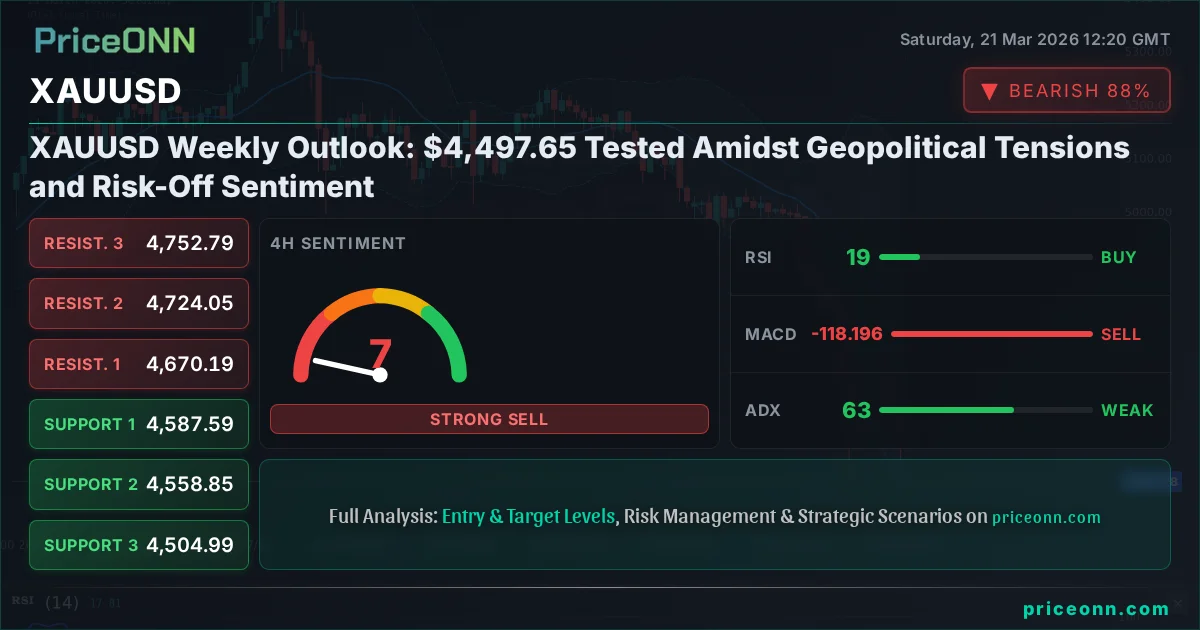
For traders, the current environment presents significant volatility. The immediate downside pressure on gold suggests a potential test of key support levels. Traders should monitor the $4,500 psychological level closely, as a break below this could signal further downside momentum. Conversely, any de-escalation in the Gulf conflict or dovish signals from the Federal Reserve could provide a short-term reprieve for the precious metal.
Silver's sharper decline highlights its greater sensitivity to broader market risk and industrial demand expectations. Traders should watch for a potential retest of the $68.00 support level. A sustained break below this could open the door for further losses, potentially targeting the $65.00 mark. The ongoing geopolitical instability and its impact on energy prices and inflation remain the dominant factors influencing price action.
Outlook: Geopolitical Risk and Inflation to Dictate Next Moves
The outlook for gold and silver remains heavily contingent on the geopolitical situation in the Persian Gulf and its subsequent impact on energy markets and inflation. Should tensions continue to escalate, leading to further supply disruptions, gold could find renewed strength as a safe-haven asset, despite the Federal Reserve's hawkish stance. However, any signs of de-escalation could lead to a sharp unwinding of risk premiums, potentially pushing prices lower. Traders will be keenly watching upcoming economic data for inflation clues and any further commentary from Federal Reserve officials regarding their monetary policy path.
Frequently Asked Questions
What caused gold to fall on Friday?
Gold prices fell by 0.65% on Friday, settling at $4,575.60, due to escalating geopolitical tensions in the Persian Gulf. Attacks on energy infrastructure fueled inflation fears and reduced expectations for an imminent Federal Reserve rate cut.
What are the key support levels for gold and silver?
Traders should watch the $4,500 level for gold. For silver, a key support level to monitor is $68.00, with a potential target of $65.00 if this level breaks.
What is the outlook for gold prices?
The outlook for gold remains tied to geopolitical developments in the Gulf and their impact on inflation. Further escalation could support gold as a safe haven, while de-escalation might lead to price declines. Upcoming inflation data and Fed commentary will be crucial.
Track markets in real-time
Empower your investment decisions with AI-powered analysis, technical indicators and real-time price data.
Join Our Telegram Channel
Get breaking market news, AI analysis and trading signals delivered instantly to your Telegram.
Join Channel


PriceONN