
Why Is Iraq's Economy Collapsing Amid Strait of Hormuz Blockade?
Iraq finds itself at the sharp end of escalating regional tensions, with its economy teetering on the brink of collapse. The disruption to oil exports, a lifeline for the nation, has triggered a severe revenue crunch, exacerbated by the ongoing closure of the vital Strait of Hormuz shipping lane.
Market Context
As OPEC's second-largest producer, Iraq's economic structure is strikingly singular in its reliance on crude sales, a dependency that has seen little diversification over the past decades. A staggering 90% of the state's budget is funded through petroleum sales, a proportion that dwarfs that of its Middle Eastern neighbors. This profound vulnerability has translated into collapsing revenues and an economy in distress.
The closure of the Strait of Hormuz, a critical artery for global energy shipments, has forced Iraq into drastic measures. Unlike energy powerhouses such as Saudi Arabia and the United Arab Emirates, Iraq lacks alternative export routes that bypass this vital waterway. This absence of contingency planning means Baghdad must slash production as storage facilities and available tankers in the Gulf reach capacity.
Analysis & Drivers
The primary driver behind Iraq's current economic peril is the geopolitical crisis leading to the blockage of the Strait of Hormuz. This critical chokepoint accounts for a significant portion of global oil trade, and its closure immediately impacts nations with limited alternative export infrastructure.
Iraq's unique vulnerability stems from its extreme dependence on oil revenue. With 90% of its state budget tied to petroleum sales and a lack of substantial sovereign wealth funds, the country has no financial cushion to absorb prolonged export disruptions. Market data indicates that Iraqi output has reportedly plummeted by as much as 70% within the first week of the crisis, a far steeper decline than experienced by other regional producers who may have more diversified export options or larger financial reserves.
In a bid to circumvent the impasse, Iraq has initiated efforts to reactivate an old northern oil export pathway. This route aims to channel crude from the Kirkuk fields directly to Turkey's Mediterranean port of Ceyhan, offering a potential, albeit limited, reprieve from the effective weeks-long closure of the southern export route through the Strait.
Trader Implications
Traders should closely monitor the developments surrounding the Strait of Hormuz and Iraq's efforts to reroute its oil exports. The prolonged disruption to Iraqi supply, even if partial, could create upward pressure on global oil prices, particularly if other producers face similar limitations or choose to cut production to support market stability.
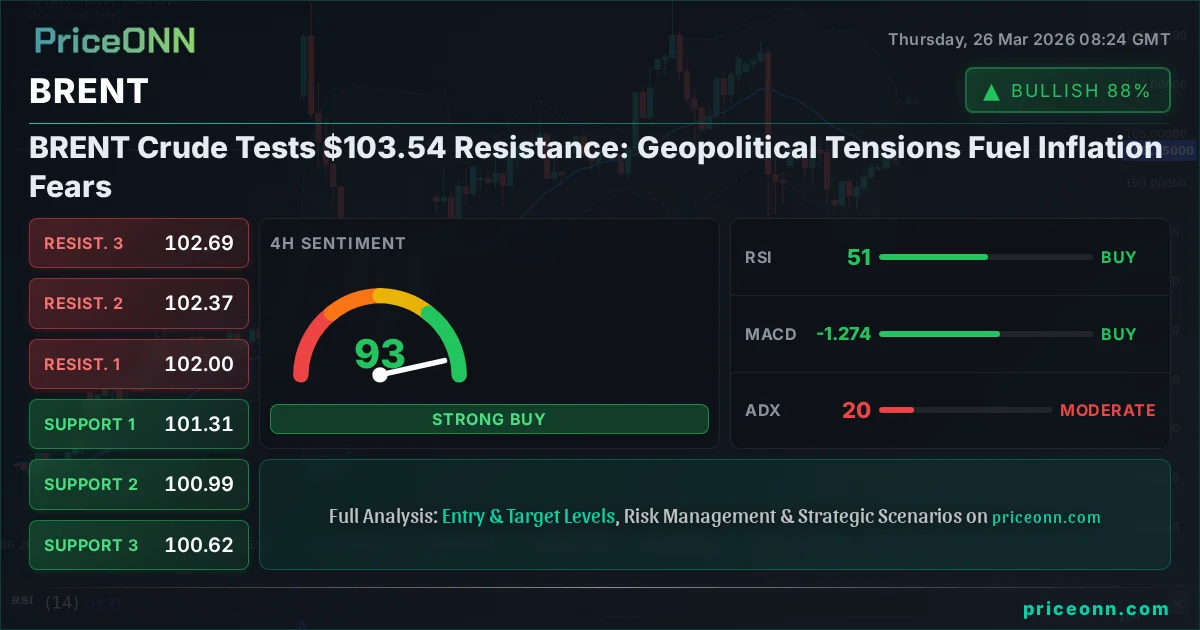
Key levels to watch for Brent crude will be influenced by the duration and severity of the Hormuz blockade and Iraq's production response. A failure to quickly resolve the export issue could see prices test higher resistance levels, potentially pushing towards the $90-$100 per barrel range if supply concerns intensify significantly. Conversely, a swift resolution or successful activation of alternative routes could cap upside potential.
Traders should also be aware of the potential for increased volatility in energy markets. The news flow regarding regional stability and the effectiveness of Iraq's alternative export plans will be critical. The reactivation of the Kirkuk-Ceyhan pipeline, if successful, could provide a marginal easing of supply fears, but its capacity is significantly lower than the southern export route.
The outlook for Iraq's economy remains precarious. The current situation underscores the urgent need for diversification away from oil dependency. Without significant policy changes and investment in other sectors, Iraq will remain highly susceptible to external shocks affecting global energy markets. The provisional government faces immense pressure to address this crisis, which could have broader implications for regional stability and energy security.
Frequently Asked Questions
What is the Strait of Hormuz blockade's impact on Iraq's oil production?
The blockade has severely impacted Iraq's oil exports, leading to a reported production drop of as much as 70% in the initial week. This is due to the lack of alternative export routes bypassing the vital waterway.
How much of Iraq's state budget relies on oil revenue?
Iraq's economy is heavily dependent on oil, with petroleum sales accounting for a staggering 90% of its state budget. This makes the nation particularly vulnerable to disruptions in oil exports.
What are Iraq's options to circumvent the Hormuz blockade?
Iraq is attempting to reactivate an old northern oil export pathway to Turkey via the Kirkuk fields to Ceyhan port. However, this route has limited capacity compared to its primary southern export terminals.
Track markets in real-time
Empower your investment decisions with AI-powered analysis, technical indicators and real-time price data.
Join Our Telegram Channel
Get breaking market news, AI analysis and trading signals delivered instantly to your Telegram.
Join Channel
PriceONN