Why Oil Majors Are Quietly Betting Big on Libya Again
A Surprising Haven for Energy Investment
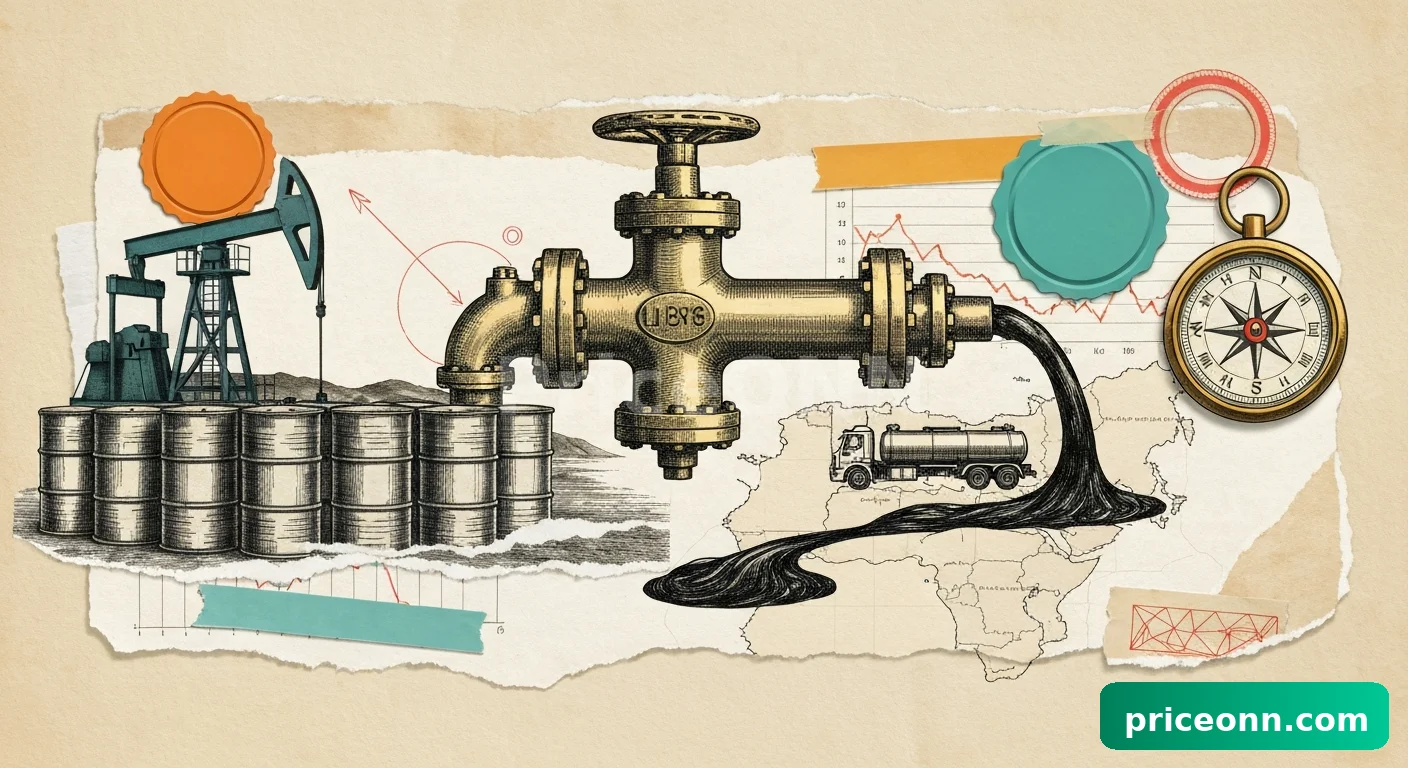
In a remarkable geopolitical twist, Libya is emerging as a surprisingly attractive prospect for international oil companies, even as some traditional Middle Eastern powerhouses face their own uncertainties. This renewed investor confidence arrives despite localized disruptions, such as the recent fire at the critical Sharara oil field, a stark reminder of the factional challenges that persist within the country. Yet, the strategic imperative for Western nations to diversify energy supplies, amplified by Russia's invasion of Ukraine in early 2022, has dramatically reshaped the landscape.
Libya's ambition to significantly ramp up its crude oil output to 2 million barrels per day by 2028 is a key driver. This objective is supported by plans to license 22 offshore and onshore blocks, signaling a concerted effort to attract foreign capital and expertise. Recent developments strongly suggest these initiatives are gaining traction, with significant new discoveries and project restarts underscoring a palpable shift.
European Energy Majors Expand Libyan Footprint
Italy's energy titan, Eni, has been at the forefront of this resurgence. The company recently unveiled substantial offshore gas discoveries near its existing Bahr Essalam field, Libya's largest offshore gas producer. Preliminary estimates for the two newly identified structures, Bahr Essalam South 2 and Bahr Essalam South 3, indicate reserves exceeding 1 trillion cubic feet of gas. These discoveries are strategically located just 16 kilometers south of current facilities, paving the way for rapid development through tie-ins, thereby supporting both Libya's domestic energy needs and valuable export revenues to Italy.
This commitment to deepwater exploration is a powerful signal of Western firms' long-term conviction in Libya's future. Such capital intensive projects, requiring significant security assurances, are not undertaken lightly. They reflect a belief that Libya is entering a more stable, Western-leaning era. Eni's involvement also extends to initiating the first deepwater offshore well in nearly two decades within the Sirte basin, a region rich in energy resources.
Collaborative Exploration in the Sirte Basin
This exploration work, focusing on the Matsola prospect in Contract Area 38/3, marks a significant operational collaboration between Eni and the UK's BP. Their joint venture, each holding a 42.5% stake with the Libyan Investment Authority holding the remaining 15%, is poised to drill an additional 16 wells across both onshore and offshore territories. BP has further signaled its intent by exploring options for redeveloping the massive Sarir and Messla onshore fields and assessing unconventional resource potential.
William Lin, BP's Executive Vice President for Gas and Low Carbon, emphasized the agreement's importance, stating it "reflects our strong interest in deepening our partnership with Libya’s NOC and supporting the future of Libya’s energy sector." This sentiment is echoed by France's TotalEnergies, which recently resumed production at the Mabruk oil field, a site that had been dormant since 2015. TotalEnergies holds a 37.5% stake in the field.
Renewed Production and Infrastructure Upgrades
Julien Pouget, TotalEnergies' Director for Exploration & Production in the Middle East and North Africa, highlighted the restart as proof of their "long-term commitment in Libya." The Mabruk field's low-cost, low-emissions oil production aligns with the company's strategic growth objectives. TotalEnergies has also committed to increasing output from other key Libyan fields, including Waha, Sharara, Al Jurf, and Mabruk, by at least 175,000 barrels per day. Furthermore, the company is prioritizing the development of the Waha concession's North Gialo and NC-98 fields, which possess a combined estimated capacity of at least 350,000 bpd.
Beyond upstream production, infrastructure development is also on the horizon. U.S.-based KBR has been contracted to manage and provide technical services for the South Refinery Project in Ubari, signaling a broader commitment to enhancing Libya's refining capabilities.
Market Ripple Effects
The renewed interest from major energy players in Libya, despite its inherent political risks, speaks volumes about the global energy market's current dynamics. The push for supply diversification away from Russia has created a unique window for countries like Libya to re-enter the international spotlight. While the country's historical production capacity, reaching 1.65 million bpd before 2011 and boasting Africa's largest crude oil reserves at 48 billion barrels, remains a significant draw, the path forward is contingent on resolving deep-seated revenue distribution issues.
The lack of progress on a joint technical committee to oversee oil revenues, initially proposed in a 2020 peace agreement, represents a critical unresolved challenge. Without a clear framework for equitable resource distribution, the long-term stability required for sustained foreign investment remains uncertain. The increased presence of Western firms could potentially influence these political negotiations, but until a concrete resolution is achieved, Libya's energy sector, and by extension its economy, will continue to operate under a cloud of potential instability.
Track markets in real-time
Empower your investment decisions with AI-powered analysis, technical indicators and real-time price data.
Join Our Telegram Channel
Get breaking market news, AI analysis and trading signals delivered instantly to your Telegram.
Join Channel