
Why is Brent Crude Topping $100 as Middle East Tensions Escalate?
Brent crude has surged past the $100 per barrel mark, driven by escalating geopolitical tensions in the Middle East and significant production cutbacks among key oil-producing nations.
Market Context
The price rally in crude oil is a direct consequence of military actions initiated on February 28, which have led to a drastic reduction in oil output, estimated between 7 and 12 million barrels per day. This has severely disrupted global energy flows, with Iran reportedly imposing a $2 million fee per vessel for passage through the Strait of Hormuz, a critical maritime chokepoint. The impact is being felt across major Asian economies and global refinery operations, highlighting the fragility of current energy supply chains.
Analysis & Drivers
Reports indicate that Saudi Arabia is privately urging the White House to maintain its campaign against Iran, viewing the current conflict as an opportunity to rebalance regional power. This stance, however, is met with internal concerns within the Kingdom about potential retaliatory attacks on its own oil infrastructure. While Saudi Arabia publicly advocates for regional stability, the internal dynamics suggest a complex interplay of strategic interests and security anxieties. The Kingdom is leveraging its East-West pipeline, with a capacity of up to 7 million barrels per day, to reroute some oil to its Red Sea port of Yanbu. However, this route is not without its own risks, as evidenced by reports of an attack on a refinery in Yanbu operated by Saudi Aramco in partnership with Exxon.
In a stark contrast to the Middle East's volatility, Libya is increasingly being viewed as a relative beacon of stability for energy investment. Despite localized disruptions, such as a recent fire at the Sharara oil field, international oil companies are showing renewed confidence. This shift is partly driven by the global imperative to diversify energy supplies, amplified by the conflict in Ukraine, and Libya's own ambitious target to boost crude oil production to 2 million barrels per day by 2028. Key to this strategy are plans to license 22 offshore and onshore blocks. European energy giant Eni has been a frontrunner, announcing significant offshore gas discoveries near its Bahr Essalam field, with estimates suggesting reserves exceeding 1 trillion cubic feet of gas. These discoveries are strategically located for rapid development, underscoring a long-term commitment from Western firms to Libya's energy future.
Trader Implications
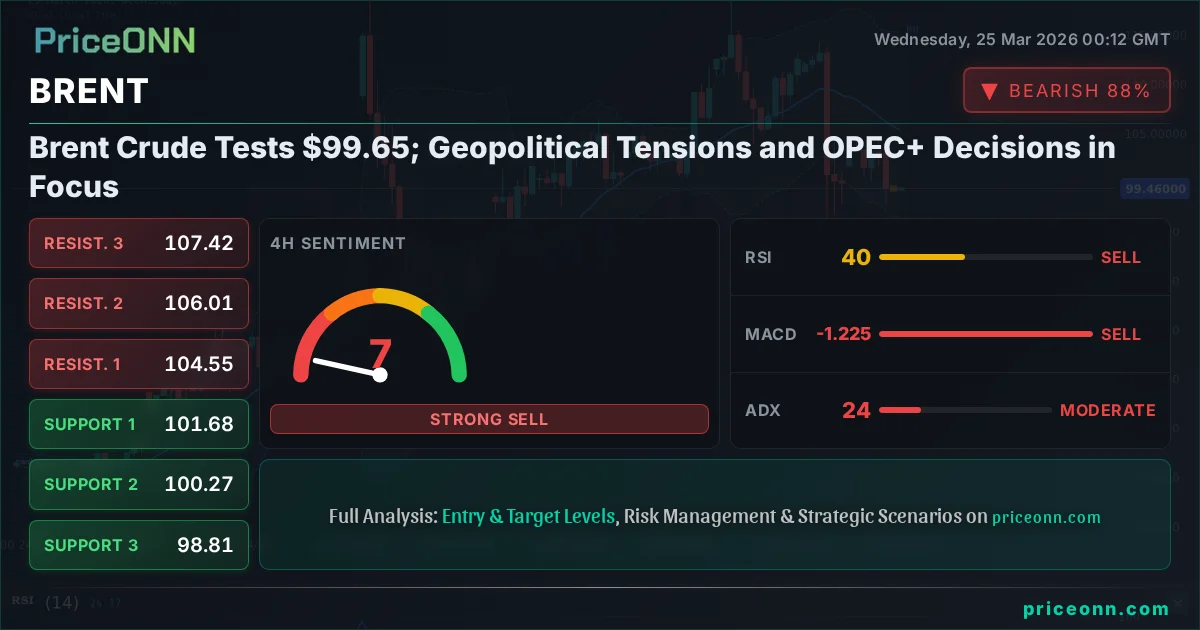
Traders should closely monitor the ongoing geopolitical developments in the Middle East, as any escalation or de-escalation will have immediate effects on crude prices. Key levels to watch for Brent crude are the $100 psychological barrier and potential resistance around $105. Support can be found near the $95 level. The effectiveness and security of Saudi Arabia's East-West pipeline will also be a critical factor. On the other hand, the renewed interest in Libya presents a potential long-term diversification play, though security risks remain paramount. Traders looking to capitalize on this could monitor developments related to Libya's upcoming licensing rounds and the progress of projects like Eni's gas discoveries. Any sign of increased instability in the Middle East could push prices higher, while a diplomatic resolution might trigger a sharp sell-off. Given the current supply constraints, the market remains sensitive to any further disruptions.
Outlook
The immediate outlook for oil prices remains heavily influenced by the geopolitical situation in the Middle East. Continued conflict and supply disruptions are likely to keep Brent crude prices elevated, potentially testing higher resistance levels. However, the risk of demand destruction at these elevated price points is a significant counterbalancing factor. The strategic diversification efforts, particularly in regions like Libya, may offer some relief to global supply concerns in the medium to long term, but such developments require sustained stability and significant investment. Market participants will be keenly watching diplomatic efforts and any further military actions to gauge the trajectory of oil prices in the coming weeks.
Frequently Asked Questions
What is driving Brent crude prices above $100 per barrel?
Brent crude is trading above $100 per barrel due to significant production cutbacks in the Middle East, stemming from escalating geopolitical tensions and military actions. These disruptions have severely impacted global supply and created a market crunch.
How is Saudi Arabia mitigating the impact of Strait of Hormuz disruptions?
Saudi Arabia is utilizing its East-West pipeline, which has a capacity of up to 7 million barrels per day, to reroute oil to its Red Sea port of Yanbu. However, this alternative route is also facing security concerns.
What is the outlook for oil investment in Libya?
Libya is attracting renewed interest from international oil companies, with ambitions to reach 2 million barrels per day of production by 2028. Eni's recent discovery of over 1 trillion cubic feet of gas highlights this growing confidence, despite ongoing security challenges.
Track markets in real-time
Empower your investment decisions with AI-powered analysis, technical indicators and real-time price data.
Join Our Telegram Channel
Get breaking market news, AI analysis and trading signals delivered instantly to your Telegram.
Join Channel
PriceONN