
Will Escalating Middle East Tensions Push Brent Crude Past $110?
Brent crude has decisively breached the $100 per barrel threshold, a significant milestone that underscores the escalating geopolitical tensions in the Middle East. This price surge, with West Texas Intermediate (WTI) trading in the low $90s, is primarily fueled by disruptions impacting crucial shipping lanes and actual supply constraints, moving beyond mere risk premiums.
Market Context
The current market dynamics are heavily influenced by reports indicating that Saudi Arabia is privately urging the White House to maintain pressure on Iran. This strategic stance, according to sources, is viewed as a window to reshape regional power balances, though it carries the inherent risk of further attacks on Saudi oil infrastructure. Official statements from Saudi Arabia emphasize a commitment to peaceful resolutions, but the divergence between public and private positions highlights the complex geopolitical chess match underway. The impairment of flows through the Strait of Hormuz, while partially mitigated by Saudi Arabia's East-West pipeline, continues to exert upward pressure on oil prices. This price environment is beneficial for Saudi Arabia's budget, supporting its ambitious Vision 2030 spending plans, yet the very disruptions driving these prices also pose a direct threat to the Kingdom's energy assets.
Analysis & Drivers
The interplay between geopolitical strategy and energy markets is stark. While official Saudi rhetoric focuses on regional stability, private discussions reportedly aim to prolong conflict, a move that could lead to significant oil demand destruction if prices continue to climb unabated. The White House is reportedly considering a range of responses, from de-escalation to more aggressive actions. Simultaneously, Libya is emerging as a surprising, albeit fragile, beacon for energy investment. Despite ongoing internal factional challenges, evidenced by recent incidents like the fire at the Sharara oil field, international oil companies are increasing their engagement. This is partly driven by a global imperative to diversify energy supplies, a lesson underscored by the conflict in Ukraine. Libya's ambitious target of reaching 2 million barrels per day by 2028, supported by plans to tender new exploration blocks, is attracting significant foreign capital. Italian energy giant Eni's substantial offshore gas discoveries, estimated at over 1 trillion cubic feet, near existing infrastructure signal a strong long-term conviction, suggesting that despite risks, the potential rewards are compelling.
Trader Implications
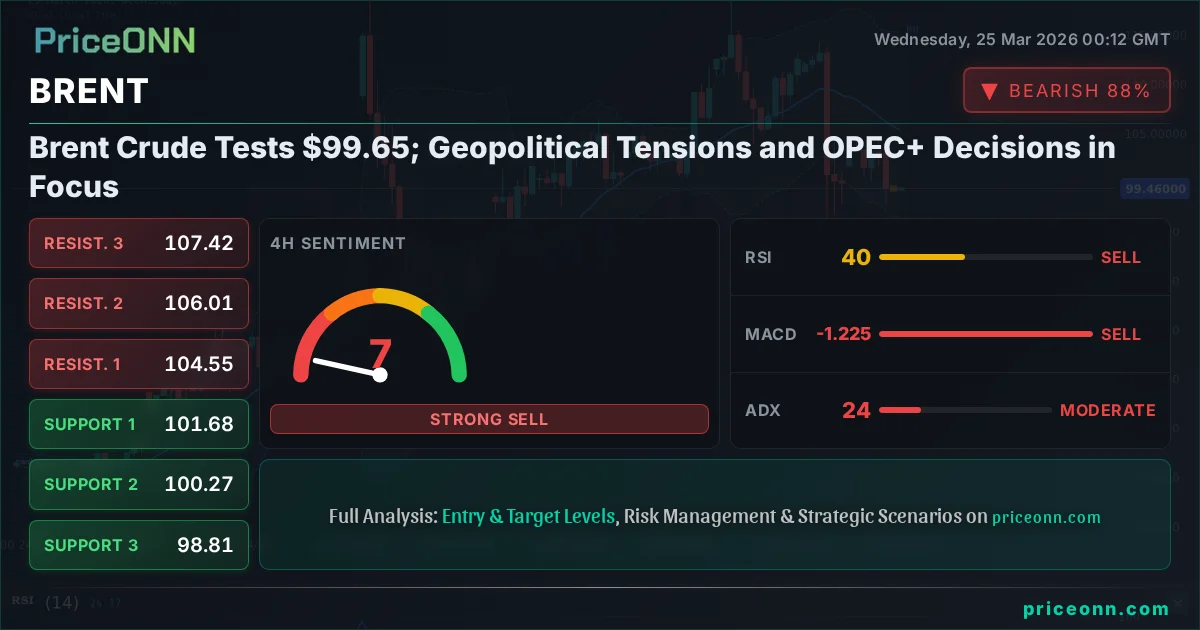
Traders should closely monitor geopolitical developments in the Middle East, particularly any shifts in the US administration's stance toward Iran and Saudi Arabia's responses. Key price levels to watch for Brent crude include immediate resistance around $105-$110, with a sustained break above this range potentially signaling a move towards $120. Support is currently seen around the $95-$98 area. The market sentiment remains heavily skewed towards bullishness due to supply uncertainties. Traders should also keep an eye on Libyan production updates and new exploration tender results, as any significant positive developments there could offer a modest counter-balance to Middle Eastern supply fears, though the impact is likely to be secondary in the short term. The risk of demand destruction remains a significant overhang; if economic growth falters or if high prices force substantial demand cuts, the rally could reverse sharply.
Outlook
The immediate outlook for crude oil prices remains highly sensitive to geopolitical rhetoric and actions in the Middle East. A de-escalation of tensions could see prices retreat rapidly, while further escalation or direct attacks on major energy infrastructure could propel Brent well past the $110 mark. Libya's progress in boosting production could offer some long-term supply relief, but its current output levels and the persistent internal security challenges mean it is unlikely to be a significant moderating factor in the near term. Market participants should brace for continued volatility as strategic interests and energy security needs collide.
Frequently Asked Questions
What is the current price range for Brent crude, and what is the immediate upside target?
Brent crude is currently trading above $100 per barrel. Immediate upside resistance is eyed between $105 and $110, with a potential acceleration towards $120 if geopolitical tensions escalate further.
How is the situation in Libya impacting global oil markets?
Libya is attracting renewed interest from oil majors despite internal instability. While its ambition is to reach 2 million barrels per day by 2028, its current production levels and security concerns mean it's unlikely to significantly temper the impact of Middle Eastern supply fears in the short term.
What is the primary risk factor for the current oil price rally?
The primary risk is oil demand destruction. If elevated prices persist or worsen, and global economic growth slows, consumers and industries may significantly reduce oil consumption, potentially triggering a sharp price reversal from current highs.
Track markets in real-time
Empower your investment decisions with AI-powered analysis, technical indicators and real-time price data.
Join Our Telegram Channel
Get breaking market news, AI analysis and trading signals delivered instantly to your Telegram.
Join Channel

PriceONN