Oil Prices Tumble Back Below $100 on Ceasefire Optimism
Markets React to Shifting Geopolitical Winds
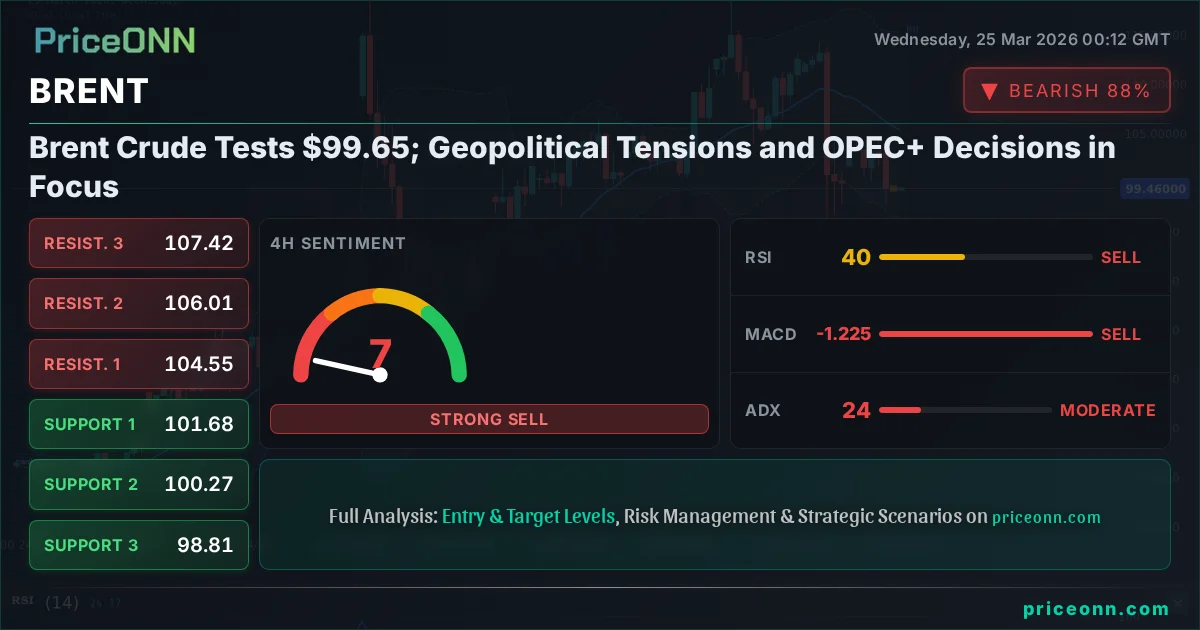
The global oil market experienced a dramatic reversal in early Asian trading on Wednesday, witnessing both WTI and Brent crude benchmarks shed over 5% of their value. This sudden downturn followed closely on the heels of what had been a volatile 48-hour period, where prices had initially spiked on heightened geopolitical concerns. At the time of this report, WTI was trading at $87.51, marking a 5.24% decline, while Brent had slipped below the psychologically significant $100 mark to trade at $98.03, a 6.08% loss.
The catalyst for this sharp selloff appears to be a growing sentiment that diplomatic channels may be opening in the Middle East. Reports have surfaced suggesting that the United States has presented a potential framework for peace to Iran, fueling hopes for a temporary cessation of hostilities. This development has directly countered the earlier anxieties that had propelled oil prices upward.
Adding to the downward pressure, Iran has communicated through official channels to the International Maritime Organization. A circulated letter indicated that “non-hostile vessels” could continue to navigate the critical Strait of Hormuz, provided they coordinate with Iranian authorities. This suggests a move to ease maritime transit concerns in a vital global chokepoint.
Further amplifying the optimism, President Trump commented on the progress of negotiations, stating that Iran was “talking sense.” Indications from various sources pointed towards a potential 15-point settlement proposal that could serve as the basis for a one-month ceasefire. However, it is important to note that Iranian officials have publicly refuted claims of direct talks occurring.
Inventory Data and Lingering Risks
Compounding the bearish sentiment, particularly for West Texas Intermediate, was the release of inventory data from the American Petroleum Institute (API). The report indicated an unexpected build in both crude oil and gasoline stockpiles for the week concluding March 20. Such an inventory increase typically signals weakening demand or increased supply, further weighing on prices.
Despite the current price retreat, the underlying geopolitical risks in the region remain far from extinguished. The Pentagon is reportedly making preparations to deploy elements of the 82nd Airborne Division to the Middle East, a move that underscores the persistent security concerns. Simultaneously, Israeli officials have issued threats to escalate operations against Hezbollah, including the possibility of a ground offensive in southern Lebanon. These actions highlight that while diplomatic hopes flicker, the potential for renewed conflict remains a tangible threat.
The recent drone attack targeting a fuel tank at Kuwait International Airport on Wednesday serves as a stark reminder of the ongoing instability. This incident is merely the latest in a series of strikes and security challenges that continue to plague the Middle East, a region vital to global energy supply.
Reading Between the Lines
The swift plunge in crude prices below the $100 threshold for Brent is largely a product of market participants pricing in the possibility of a de-escalation. Traders are reacting to the narrative of progress, even as concrete agreements remain unconfirmed. The market’s sensitivity to even the slightest hint of reduced conflict underscores the precarious balance of supply and demand dynamics currently at play, heavily influenced by geopolitical premiums.
While the immediate focus is on the potential for a ceasefire, the underlying tensions and military posturing suggest that any peace achieved may be fragile. The physical oil market, despite this paper price correction, continues to grapple with supply tightness in certain areas. This dichotomy between futures market optimism and persistent physical market constraints presents a complex trading environment.
The deployment of military assets and the continuation of regional security incidents indicate that the situation remains fluid. Traders should remain vigilant, as any breakdown in diplomatic efforts or escalation of regional conflict could swiftly reverse the current downward trend. The market’s reaction demonstrates its keen focus on de-risking geopolitical exposure, but the fundamental volatility of the region means that risk premiums can return with little warning.
Track markets in real-time
Empower your investment decisions with AI-powered analysis, technical indicators and real-time price data.
Join Our Telegram Channel
Get breaking market news, AI analysis and trading signals delivered instantly to your Telegram.
Join Channel