
Why Are Oil Prices Stuck Above $98 Amidst Geopolitical Tensions and Energy Transitions?

Crude oil prices are exhibiting resilience, with West Texas Intermediate (WTI) hovering around $98.32 and Brent crude surpassing $112.02 per barrel, a situation driven by a complex interplay of escalating geopolitical risks and the ongoing, albeit challenging, global energy transition.
Market Context
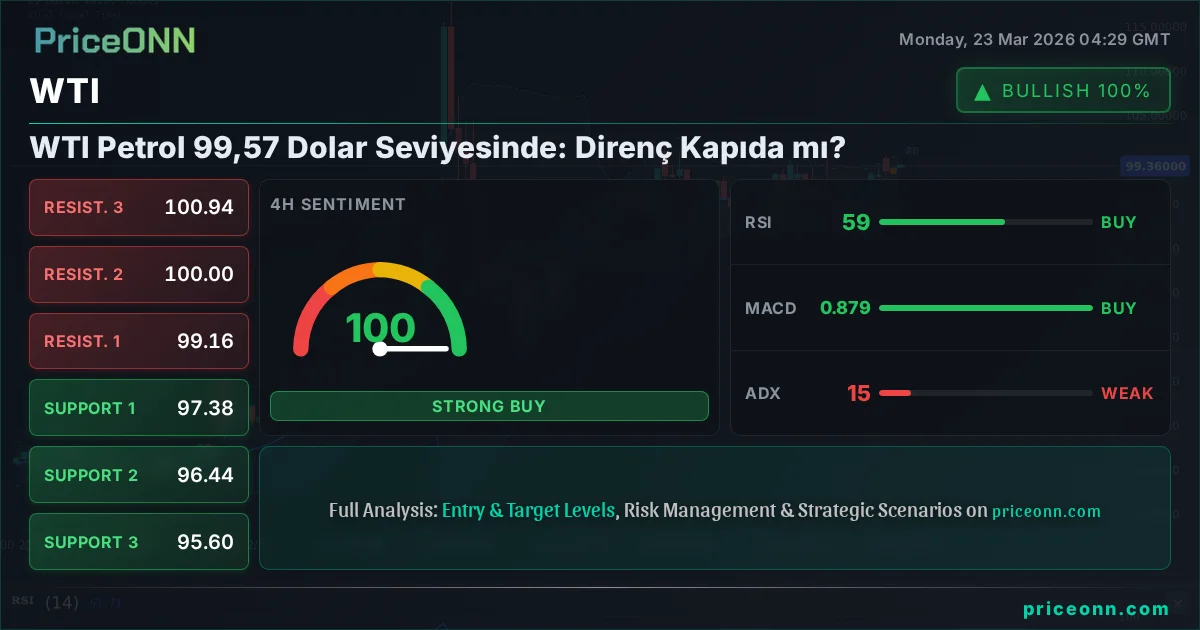
Despite recent pullbacks from higher peaks, oil prices are failing to sustain significant declines. This persistence at elevated levels is largely attributed to the unresolved strategic quandary surrounding Iran's nuclear program. The failure of airstrikes to secure enriched uranium has brought the possibility of ground troop deployment into focus, a scenario that significantly heightens the risk of wider regional conflict. This pervasive uncertainty continues to cast a shadow over global energy markets, preventing a substantial price correction. Market data shows Brent crude for May delivery trading at $112.02, down from recent highs exceeding $118, while WTI for the same period changed hands at $98.32, off its Thursday high of $101.
Analysis & Drivers
The primary driver for the current price support stems from geopolitical tensions in the Middle East. The international community faces a critical decision regarding Iran's enriched uranium, with ground intervention emerging as a potential, albeit highly risky, containment strategy. This strategic dilemma, coupled with ongoing deliberations within the U.S. administration about deploying troops, fuels market anxiety. Meanwhile, European nations have expressed a willingness to contribute to efforts ensuring safe passage through the Strait of Hormuz, as evidenced by a joint declaration from the UK, France, Germany, Italy, the Netherlands, and Japan. However, concrete commitments to specific U.S.-led military operations remain lacking, with key players like Germany, Italy, and Greece hesitant to commit naval assets due to concerns over consultation and the direct applicability of the conflict to their national interests.
Simultaneously, global energy dynamics are being shaped by significant transitions. India, a nation with a massive population and a rapidly expanding economy (growing at approximately 7.5 percent annually), remains heavily reliant on coal, which constitutes about three-quarters of its energy mix. Surging electricity demand necessitates this continued reliance, even as the country aggressively pursues renewable energy expansion. India's solar power capacity has seen an extraordinary leap, growing from 4 GW to 140 GW in the past decade, and it aims for 500 GW of renewable capacity by 2030. However, the financial implications of this transition are substantial, with estimates suggesting a need for $900 billion over the next thirty years for a just shift away from coal.
Trader Implications
Traders should closely monitor developments in the Middle East, particularly any escalation or de-escalation in rhetoric or actions concerning Iran. Key price levels to watch include resistance around the $100-$105 mark for WTI and the $115-$120 range for Brent. A decisive move by ground troops into Iran could trigger a sharp upward price spike, potentially pushing WTI towards $120 and Brent towards $130. Conversely, any signs of diplomatic resolution or a clear statement of non-involvement from major European powers could lead to price retracements. The ongoing energy transition in countries like India, while a long-term factor, currently plays a secondary role to immediate geopolitical catalysts. Traders should remain aware of potential supply disruptions and their impact on price volatility. The current market sentiment suggests a cautious upward bias, with geopolitical risk premium remaining a significant component of oil prices.
Outlook
The immediate future for oil prices will likely be dictated by the unfolding geopolitical situation in the Middle East. Should tensions escalate, prices could surge higher, driven by fear of supply disruptions. However, if diplomatic efforts gain traction or the immediate threat recedes, a more significant price correction could occur, especially considering the current elevated levels. The long-term outlook for oil demand will continue to be influenced by the pace of the global energy transition, with renewable energy growth in key economies like India playing an increasingly important role in shaping market fundamentals.
Frequently Asked Questions
What is causing oil prices to remain elevated?
Oil prices are being supported by significant geopolitical tensions in the Middle East, specifically concerning Iran's nuclear program and the potential for military intervention. Market data shows Brent crude trading above $112 and WTI near $98.32, reflecting this ongoing uncertainty.
How is India's energy transition impacting the market?
While India is rapidly expanding its solar capacity, aiming for 500 GW by 2030, it remains heavily reliant on coal for about 75% of its energy mix. This sustained demand for fossil fuels, alongside its economic growth, contributes to overall global energy consumption dynamics, though it's a secondary driver compared to immediate geopolitical events.
What are the key price levels for oil traders to watch?
Traders should monitor resistance around $100-$105 for WTI and $115-$120 for Brent. A significant geopolitical escalation could push WTI towards $120 and Brent towards $130, while diplomatic progress might lead to price declines.
Track markets in real-time
Empower your investment decisions with AI-powered analysis, technical indicators and real-time price data.
Join Our Telegram Channel
Get breaking market news, AI analysis and trading signals delivered instantly to your Telegram.
Join Channel
PriceONN