
Why Are U.S. Gas Prices Rising Despite Record Oil Production?

The United States, a perennial leader in global crude oil production, is currently grappling with a paradox: its drivers are facing higher gasoline prices even as domestic output remains robust, consistently exceeding 13.6 million barrels per day in recent months. This surge is largely attributed to escalating geopolitical tensions in the Middle East, which have sent global crude oil benchmarks soaring and directly impacted the cost at the pump.
Market Context: The Global Oil Price Link
The fundamental driver of this price discrepancy lies in the composition of gasoline costs. Market data indicates that crude oil prices represent the single largest component of the final price consumers pay for gasoline. For instance, in January 2026, when the average gasoline price stood at $2.81 per gallon, the crude oil portion alone accounted for approximately 51% of that cost. Consequently, the dramatic ascent of crude oil prices over the past three weeks, coinciding with the outbreak of conflict in the Middle East, has inevitably translated into higher prices at U.S. gas stations.
Analysis & Drivers: Supply, Demand, and Refineries
While the U.S. boasts impressive production figures, its daily consumption consistently surpasses its output, often exceeding 20 million barrels. This deficit necessitates reliance on external supply chains, making the domestic market susceptible to global price fluctuations. Furthermore, the U.S. refining infrastructure is largely optimized for processing heavier grades of crude oil. While the nation produces significant volumes of crude, a portion of its refining capacity still requires imported heavier grades. This intricate supply and demand dynamic means that any disruption or price shock in the international crude oil market, such as those stemming from the Middle East, will inevitably influence domestic fuel costs.
Adding another layer of complexity, the International Energy Agency (IEA) has signaled its readiness to release further strategic reserves if market disruptions intensify. Following an earlier coordinated release of 400 million barrels from OECD reserves, the agency's executive director, Fatih Birol, indicated a willingness to deploy additional volumes if necessary, emphasizing continuous market assessment and consultation with member states. While such releases can offer temporary market comfort, they are not a long-term solution to fundamental supply crunches, especially when geopolitical events severely hamper critical shipping routes like the Strait of Hormuz, which handles approximately 20% of global oil and LNG trade.
Trader Implications: Navigating Volatility
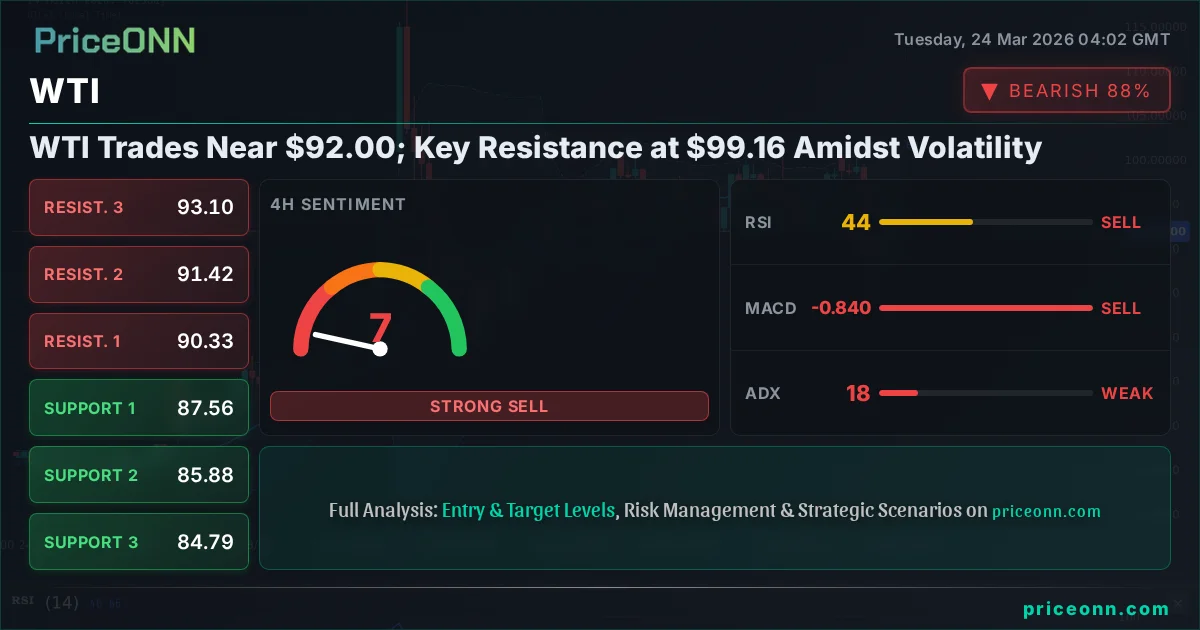
Traders should closely monitor geopolitical developments in the Middle East, as any escalation or de-escalation will directly impact crude oil prices and, by extension, gasoline futures. Key levels to watch for West Texas Intermediate (WTI) and Brent crude will be critical support and resistance zones, with recent price action suggesting significant upward momentum. The IEA's rhetoric regarding potential future reserve releases acts as a potential ceiling on extreme price spikes, but market participants will be wary of its limited efficacy in addressing structural supply issues.
The current environment presents both risks and opportunities. For short-term traders, volatility in crude oil and gasoline markets offers potential for quick gains, but requires strict risk management. Longer-term investors may consider the strategic implications of sustained high energy prices on inflation and consumer spending. Key technical indicators for crude oil suggest that the market remains sensitive to supply-side news, making it crucial to stay informed about inventory data and geopolitical risk factors.
Outlook
The outlook for gasoline prices remains closely tied to the trajectory of crude oil markets, which are heavily influenced by the ongoing geopolitical situation in the Middle East. While the U.S. maintains record domestic production, its reliance on global benchmarks and specific refinery needs means consumers will likely continue to face elevated prices in the near term. The IEA's stance provides a potential buffer, but the underlying supply vulnerabilities persist, suggesting continued price sensitivity and volatility for energy commodities.
Frequently Asked Questions
What percentage of U.S. gasoline prices is attributed to crude oil costs?
Market data from January 2026 shows that crude oil costs accounted for approximately 51% of the average gasoline price of $2.81 per gallon, highlighting its dominant influence.
How much oil does the U.S. produce and consume daily?
The U.S. produces over 13.6 million barrels of oil per day, but its daily consumption exceeds 20 million barrels, necessitating reliance on global markets.
What is the IEA's role in managing oil price surges?
The IEA can coordinate the release of crude oil from strategic reserves to cushion market shocks. They previously released 400 million barrels and have indicated readiness to do so again if necessary, though this is seen as a temporary measure.
Track markets in real-time
Empower your investment decisions with AI-powered analysis, technical indicators and real-time price data.
Join Our Telegram Channel
Get breaking market news, AI analysis and trading signals delivered instantly to your Telegram.
Join Channel

PriceONN